
Access Control
Article
2025-12-09 • 5 min read

Access Control

Access control is a foundational pillar of modern security, spanning physical spaces and digital resources. It answers a simple question with far reaching consequences: who may enter what, when, and under which conditions. In practice, it blends policy with...

Access control is a foundational pillar of modern security, spanning physical spaces and digital resources. It answers a simple question with far reaching consequences: who may enter what, when, and under which conditions. In practice, it blends policy with technology to grant credentials only to those who should have access, and to revoke rights as roles change or incidents occur. A robust system does more than keep doors locked; it creates auditable events, supports safety, and enables regulated environments to function smoothly.

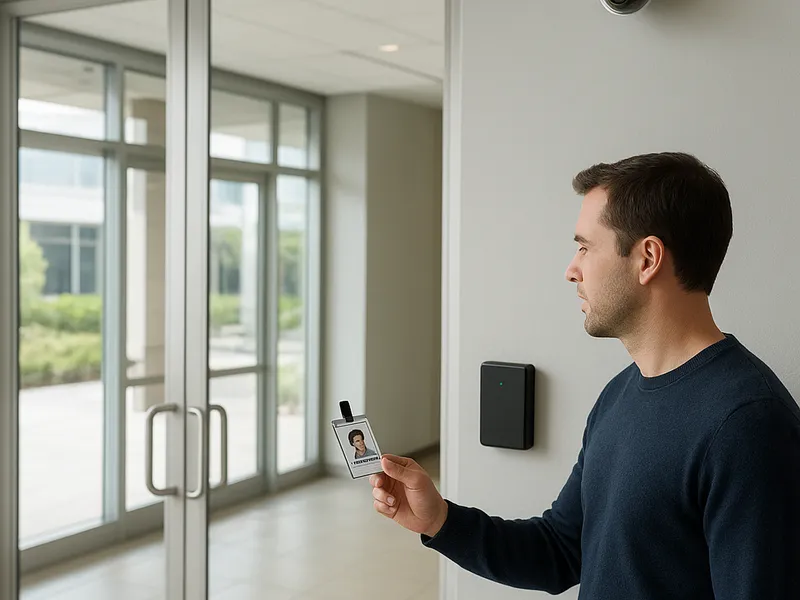
Traditional physical access control starts at the door. Badge readers embedded in walls, smart locks on doors, and a local controller form a tiny network behind the scenes. Modern systems move beyond simple magstripe cards to contactless smart cards, mobile credentials delivered to phones, and even biometric verification in high risk zones. Readers speak a common language through a door controller, often using protocols such as Wiegand or OSDP, to convey events like door opened, door forced, or tamper alarm to a central management platform. The physical layer is complemented by a software layer that stores user permissions and schedules, and that can push updates to readers across a facility in near real time. In parallel, organizations are increasingly mindful of privacy and data protection as credential data moves from a local cabinet to the cloud or to hybrid environments.

On the management side, administrators define who can access which spaces, during which times, and under what circumstances. The software enforces policies, logs every attempt, and enables routine access reviews to remain compliant with security standards. Cloud based platforms add convenience by centralizing management and enabling remote provisioning across many sites, but many organizations still rely on on premise controllers for sensitive facilities or where connectivity is a concern. Hybrid approaches blend local resilience with cloud orchestration to balance uptime with global oversight. The decision between cloud, on premises, or a hybrid model often hinges on factors such as site count, network reliability, security requirements, and the willingness to manage infrastructure or rely on a service provider for ongoing updates and incident response.

Access Control

Leading vendors cover a broad range of needs from pure hardware to comprehensive cloud solutions. HID Global provides scalable identity and access control through secure readers and controllers, complemented by cloud oriented offerings and mobile credentials. LenelS2 offers enterprise grade platforms with deep integration to video management and alarm systems, supporting complex organizations with centralized governance. Paxton is known for its straightforward installation, competitive pricing, and user friendly cloud based administration suitable for mid sized campuses and retail networks. Bosch and Honeywell combine access control with broader building management systems and energy optimization, delivering integrated solutions for large facilities and complex environments. Johnson Controls and Gallagher bring decades of security experience with robust policy frameworks and field tested hardware that endure under heavy use. On the cloud side Brivo and Kisi have carved out niches by focusing on simple onboarding, mobile keys, and rapid deployment for offices, coworking spaces, and multi site environments. Avigilon provides a strong synergy between access control and video surveillance for organizations seeking an integrated view of people and events. Each vendor has its own strengths, so the right choice often comes down to scale, existing infrastructure, and the desired level of cloud dependence.

Getting started involves more than picking a brand. It requires a clear policy, careful site survey, and a plan for ongoing governance. Start by mapping every door that needs protection and linking each door to its adjacent hardware such as strikes, door sensors, request to exit devices, and door position sensors. Decide your deployment model: a local controller with offline capability for critical areas, or a cloud managed system for broader reach and easier policy updates. Choose readers and credentials that fit your risk profile and user base; contactless cards and mobile credentials offer convenience and reduced health risks, while some high security zones may require biometric verification. Ensure your network can handle the data load, and plan for power redundancy and secure backups. Provisions for user provisioning, role based access, and periodic review are essential to maintain governance and prevent privilege creep. Finally, establish monitoring and incident response workflows so alerts reach the right people and the right action is taken.

Implementation success also rests on integration with existing systems. Access control rarely operates in isolation: it must talk to video management, visitor management, HR records, and often IT security tools. A well integrated solution can trigger automated responses, such as restricting a user who is terminated from systems, or reconciling door events with camera footage for faster investigations. As organizations move to mobile and cloud based credentials, privacy and data security must stay at the forefront. Choose vendors that offer transparent data handling, robust encryption, and clear data retention policies. Finally, pilot programs are invaluable. Start with a small set of doors in a single site to work out provisioning workflows, then scale to additional locations with lessons learned from the pilot.

Access control is not a one off purchase but a continuous capability that evolves with the organization. Today the emphasis is on safer, smarter, and more convenient access, paired with strong governance and measurable outcomes. The best systems ease daily operations while preserving security margins, allow rapid adaptation to changing staff, contractors, and visitors, and provide the data needed to understand how spaces are used and how risk is managed. For facilities leaders, IT teams, and security professionals, the right approach balances technology choice with policy discipline, continuous improvement, and a clear path to future enhancements such as seamless mobile credentials and enhanced analytics.

← Back to all articles