
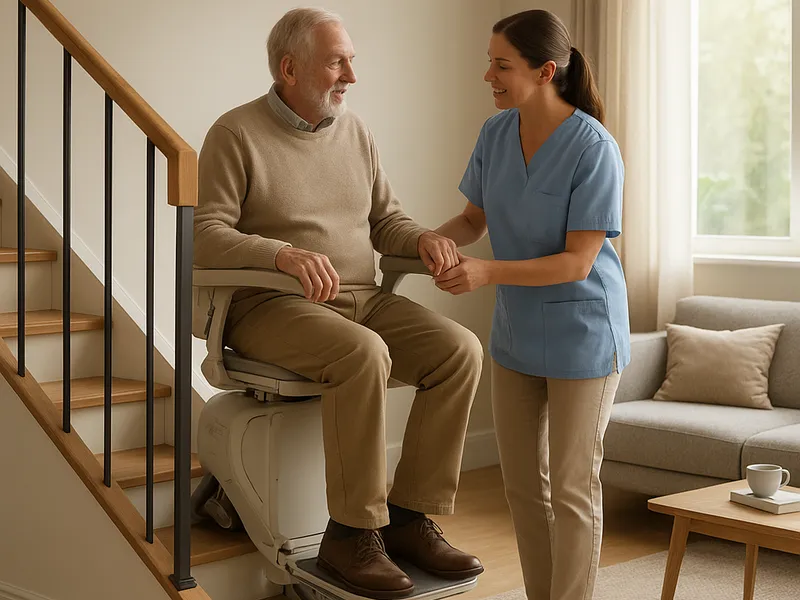
Acorn Montascale represents a notable segment of modern home mobility devices, where engineering meets everyday living to preserve independence. While the name Montascale translates from Italian to stairlift, the Acorn brand has established itself as a recognizable option in many countries, offering practical solutions that wheelchairs and walkers alone cannot provide. The appeal lies in blending form and function: a compact chair rail system that glides along a track, delivering a smooth ride from one floor to another with a touch of hospitality and safety. As a design consultant, I see Acorn Montascale not merely as equipment but as an integral part of a home’s circulation architecture—a piece that should harmonize with interior aesthetics while delivering dependable performance.
To understand how Acorn Montascale fits into contemporary home design, it helps to place it among other leading providers in the market. The landscape includes brands such as Stannah, Handicare, Harmar, and Bruno, each with its own approach to curved and straight stairlifts, warranty structures, and service networks. Stannah is renowned for its long-standing presence and robust engineering, often praised for reliability and resale value. Handicare emphasizes a blend of ease of use and sleek track aesthetics, with a broad portfolio that covers both straight and curved staircases. Harmar tends to focus on modular options, capable of integrating with platform lifts and other accessibility devices, which can be advantageous in multiuse homes. Bruno frequently highlights compact seating and user-friendly interfaces, appealing to first-time buyers and aging-in-place projects. When evaluated side by side, Acorn Montascale often competes on quiet operation, a choice of finishes, and regional service partnerships that can shorten installation lead times. The result is a marketplace where homeowners can weigh price against customization, aftercare, and the perceived “fit” with their residence.
Key considerations begin with the staircase itself. Straight stairlifts are typically simpler and quicker to install, often with shorter lead times and lower upfront costs. Curved stairlifts, necessary for staircases that bend or vary in width, demand more engineering and tighter on-site measurements, but they offer a seamless ride along the entire path. Acorn Montascale models, like other reputable brands, usually offer options for multiple seat sizes, foldable chairs, and safety features such as interlocks, seatbelts, obstruction sensors, and backup power supplies to function during a power outage. Weight capacity and seat orientation are practical concerns: can the user sit comfortably, reach the armrests, and be safely secured for ascent or descent? These questions shape both the purchase decision and the on-site installation plan.
From a shopping perspective, it helps to compare core attributes rather than only price. Start by compiling a short list of questions for dealers: What is the typical installation timeline for straight versus curved configurations? What are the exact dimensions required on the staircase, including clearances at landings and doorways? How does each offer differ in terms of remote calls, battery backup, and lighting on the chair or track? What warranties and maintenance plans come with the purchase, and what does service coverage look like in your region? Do they provide in-home measurements, and do they offer trial demonstrations or at least a detailed video walkthrough of the model you’re considering? The best providers will combine clear measurement protocols with transparent pricing, leaving you confident in the investment.
