
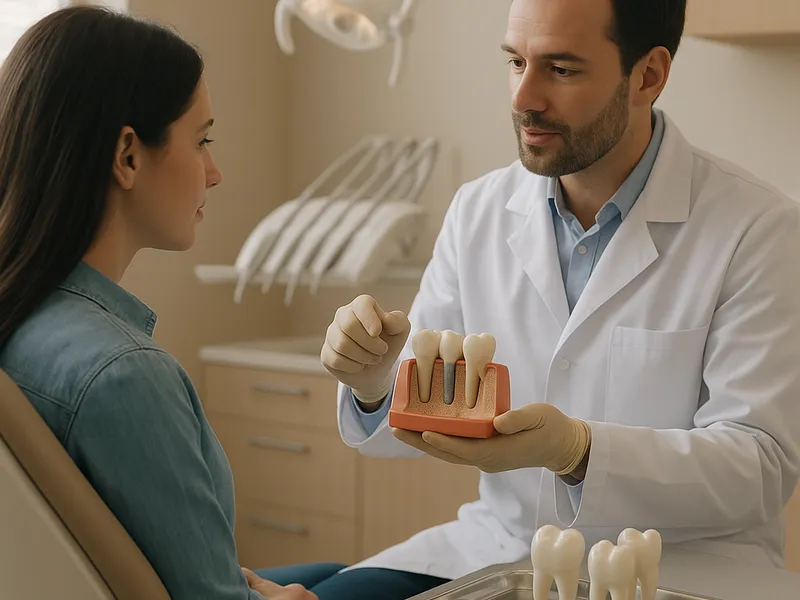
Affordable Dental Implants Cost in USA
Article
2025-12-11 • 5 min read

Affordable Dental Implants Cost in USA

Dental implants offer a reliable path to restoring function and aesthetics after tooth loss. In the United States, many patients are drawn to implants because they mimic natural teeth, help preserve jawbone, and support comfortable chewing. Yet cost remains a central concern for a large share of people who need them.

Dental implants offer a reliable path to restoring function and aesthetics after tooth loss. In the United States, many patients are drawn to implants because they mimic natural teeth, help preserve jawbone, and support comfortable chewing. Yet cost remains a central concern for a large share of people who need them. This article surveys what drives price, what you can realistically expect to pay, and practical routes to making implants more affordable without compromising quality. It also highlights a few high profile providers and pathways that people often consider when seeking value alongside clinical excellence.

The sticker price for implants is not a single number. It represents a bundle of services that may include a surgical placement of the implant fixture, the abutment that connects the implant to the crown, the final crown itself, imaging and planning, anesthesia, and any necessary preliminary work such as bone grafting or sinus lift. Geographic differences are meaningful: metropolitan areas with higher operating costs tend to price implants higher, while smaller cities or states with different market dynamics may offer more competitive quotes. The complexity of the case matters a great deal as well. A straightforward single-tooth restoration in a healthy jaw may be less expensive than a site needing bone augmentation, several implants, or a full-arch reconstruction. Materials can also influence the price; some brands and systems emphasize advanced surface designs or zirconia crowns, which can shift costs. Finally, the surgeon’s experience and the laboratory flow for custom crowns play a role in the final bill.

A practical way to think about costs is to consider the range for different parts of the process. For many patients, the complete package for a single implant and crown, including the surgical placement and final restoration, tends to fall into a broad range of several thousand dollars per tooth. In many practices across the country, a commonly cited ballpark for an implant with crown sits roughly in the mid four thousands to mid six thousands dollars per tooth, though this can be higher or lower depending on the above factors. If a bone graft or sinus lift is required to ensure a secure foundation for an implant, add-on costs can range from several hundred to a few thousand dollars. For those facing multiple implants or full-arch solutions, the price scales with the number of implants and the chosen restoration. All-on implants or other all-arch options can run substantially higher, often reaching tens of thousands of dollars per arc, depending on the materials, the number of implants used, and whether the solution is fixed or removable.

For anyone weighing affordability, the market offers a few common routes to lower out-of-pocket expense without compromising care. First, it is worth exploring different providers and comparing total cost quotes rather than merely asking for a per-tooth implant price. National and regional chains such as ClearChoice provide integrated implant solutions, coordinating surgical placement, prosthetic design, imaging, and sometimes financing. Their price quotes are typically presented after a consultation and imaging assessment, which helps patients understand what is included in the package. Aspen Dental operates as a broad network and frequently advertises financing options or promotions to reduce upfront costs, though specifics vary by location. Both organizations have websites that connect potential patients with nearby clinics, provide educational resources, and outline financing options. Pacific Dental Services and similar networks offer implant dentistry in multiple practice locations and emphasize streamlined care paths designed to optimize scheduling and outcomes.

Affordable Dental Implants Cost in USA

Beyond corporate networks, a significant portion of price-conscious patients seek care through dental schools and university clinics. In many regions, university-affiliated dental clinics offer supervised implant services at reduced fees because procedures are performed by residents under experienced faculty supervision. While wait times might be longer and treatment plans tailored to teaching clinics, the savings can be substantial. This option is particularly attractive for patients who have flexible timelines and are comfortable with a training environment that adheres to high standards of care.

Insurance and financing can also swing the affordability needle. Some dental plans offer partial coverage for implants or for components such as crowns and bone grafts, though coverage varies widely by plan and region. Financing options, including third-party lenders and care credit programs, are commonly available and can spread the cost over months or years with manageable payment terms. When evaluating financing, compare interest rates, loan periods, and whether the plan covers ongoing maintenance, as implants require regular professional cleanings and checkups to maximize longevity.

If affordability is a priority, several practical steps help you build a cost-effective plan without sacrificing outcome. Start with a transparent consultation that asks for a detailed price breakdown: surgical placement, guided imaging, abutment, crown, anesthesia, lab fees, bone grafts if needed, and any temporary restorations. Request a written estimate and a copy of the treatment plan that outlines the sequence of procedures. Ask about bundled or all-inclusive packages, which some providers offer when multiple implants or full-arch solutions are involved. Inquire about in-network pricing with your insurance and about any available discounts for paying in full or using financing. Compare not only the bottom line but also the expected longevity and warranties on implants and crowns, as a higher upfront cost can pay off with fewer replacements or complications later.

Another critical consideration is the layout of care. Some patients benefit from a staged approach: first the implant placement, a healing period, and then the final crown. Other clinics offer immediate or early-loading options in appropriate cases, which can reduce the overall number of visits and may influence price. Before committing, discuss the rationale for the chosen approach, the expected recovery timeline, and the maintenance plan. Implants require ongoing care and biannual or annual checkups to monitor integration, tissue health, and bite dynamics. A good maintenance plan helps protect the investment over the long term and can influence future costs if problems are caught early.

Ultimately, affordable care is a blend of smart choices, informed questions, and access to a range of options that balance cost with quality. By comparing providers such as integrated implant centers, national dental networks, and university clinics, patients can discover pathways that fit their budgets. The goal is not merely a lower price, but reliable results, enduring function, and a restoration plan that aligns with your overall oral health and lifestyle. With thorough research, careful budgeting, and a clear understanding of what is included in each quote, achieving a healthy, confident smile through dental implants in the USA becomes a realistic objective rather than a distant dream.

← Back to all articles