
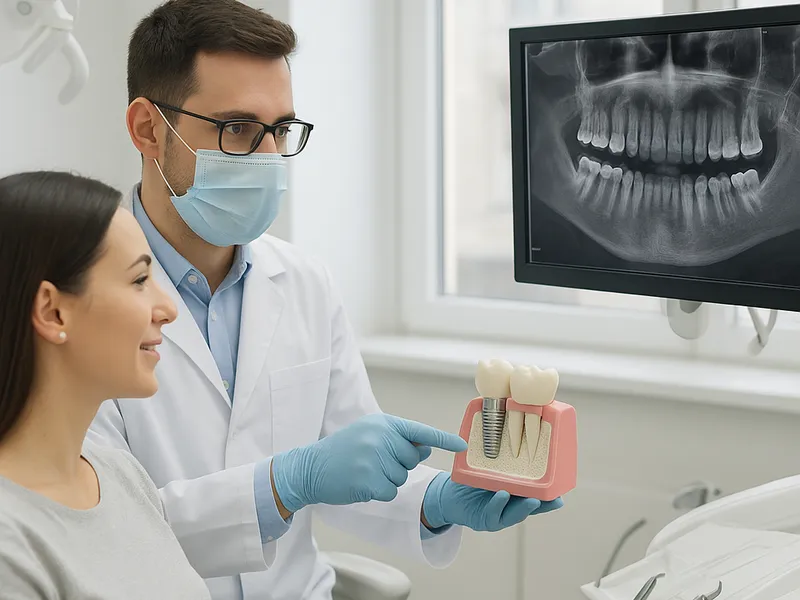
All On Two Dental Implants represents a practical approach in full-arch rehabilitation where a fixed denture or hybrid prosthesis is supported by a minimal number of implants per jaw. The concept is often contrasted with the more widely publicized all-on-four method, but both share the goal of delivering a stable, long‑lasting solution for denture wearers who seek better function, comfort, and aesthetics without removable appliances. In practice, All On Two typically implies placing two implants in each jaw to anchor a fixed prosthesis that can be either screw-retained or cemented, depending on the clinician’s protocol and the patient’s anatomy. This approach is most suitable for patients who have insufficient bone to support multiple implants or who want a more cost-efficient pathway while still achieving a strong, compatible bite and a natural appearance. Across clinics, the exact configuration can vary, but the core idea remains: use two well-positioned implants per arch to support a fixed prosthesis that restores speaking, chewing, and confidence.
The decision to pursue All On Two starts with a comprehensive evaluation. A dentist reviews medical history, conducts a clinical exam, and orders imaging such as a cone beam computed tomography scan to map bone quality and nerve anatomy. The planning phase is increasingly digital. Treatment planning software allows the dentist to simulate implant positions, angulations, and the final prosthesis before any surgery takes place. This digital roadmap aids in selecting compatible implant systems from leading manufacturers and in determining whether bone grafting or sinus considerations are necessary to optimize outcomes. If a patient has adequate bone in certain areas but deficient bone in others, the plan may call for targeted augmentation to ensure the implants gain solid purchase. The prosthetic design—whether a fixed bridge or a fixed overdenture—will be matched to the patient’s bite, jaw relations, and aesthetic goals.
A variety of prominent manufacturers and clinics play a role in delivering All On Two solutions. Nobel Biocare, Straumann, and Dentsply Sirona are among the most recognized brands in dental implants, offering robust systems, guided-surgery workflows, and extensive prosthetic libraries that clinicians use to construct fixed full-arch rehabilitations. Nobel Biocare helped shape much of the early full-arch philosophy and continues to influence practice with a wide array of implants and prosthetic components. Straumann is known for its emphasis on durable implant surfaces and precise digital planning tools that support predictable outcomes for full-arch cases. Dentsply Sirona brings integrated solutions spanning implants, digital planning software, and restorative components, which enables clinicians to streamline the path from consultation to delivery of the final prosthesis. Other well-regarded providers, such as BioHorizons and Implant Direct, offer a mix of implant platforms and supportive prosthetic options that enable clinics to tailor treatments to patient needs and budgets. In addition to manufacturers, several clinics specialize in All On Two or similar fixed-arch concepts and publish case studies, financing options, and patient education materials on their websites, which prospective patients can review to understand process timelines, recovery expectations, and aftercare.
When it comes to care delivery, many clinics emphasize the possibility of immediate loading—placing a provisional prosthesis on the day of surgery so the patient leaves with functional teeth. Immediate loading is not guaranteed for every patient; it depends on bone quality, implant stability obtained during placement, and the overall surgical plan. If immediate loading isn’t feasible, the patient may wear a temporary prosthesis during a healing period before the final prosthesis is secured. Throughout the treatment, maintaining excellent oral hygiene is crucial. The fixed prosthesis should be inspected regularly, and routine follow-ups with radiographs help ensure the implants remain osseointegrated and the prosthesis remains properly aligned.
