
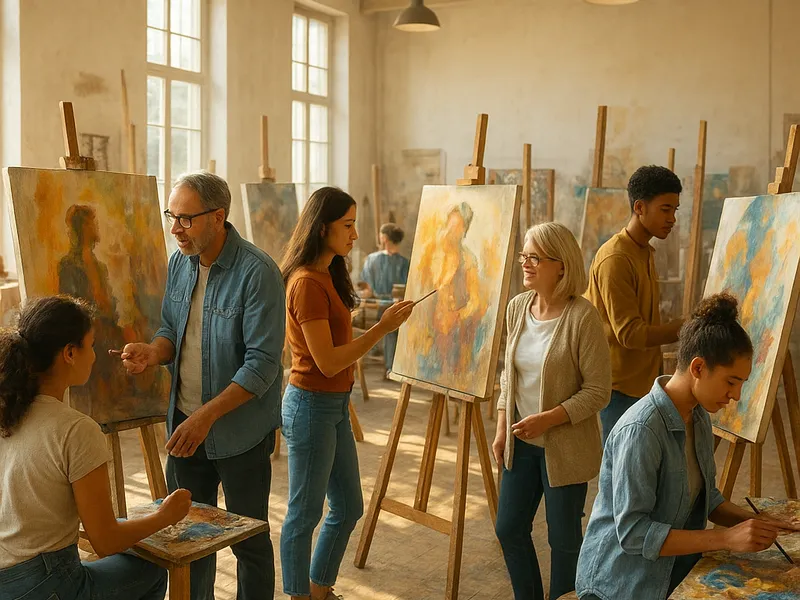
Art School is a space where curiosity meets craft and where students move through materials and ideas with the guidance of mentors, peers, and critique. It is not simply a place to learn techniques but a corridor of experimentation where you test your limits, confront failure, and learn to translate inner visions into external form. In this world, making is inseparable from thinking, and thinking is sharpened by making. The best art schools cultivate a balance between discipline and play, between skill development and concept development, between fixed traditions and new, emergent practices.
What you experience inside an art school goes beyond lessons in drawing or sculpture. You enter a studio culture that treats practice as a form of inquiry. You learn to observe closely, to frame questions, and to give and receive critique in a constructive way. You encounter a tapestry of media, from traditional graphite and oil to digital painting, sculpture, performance, video, and installation. You are encouraged to move across media, to collaborate with peers in shared projects, and to expose your ideas to a broader audience through exhibitions, presentations, and portfolio reviews. The environment is designed to push you toward a coherent body of work while preserving space for unpredictable discoveries.
The core promise of any art school is the combination of access and feedback. Access comes in the form of well-equipped studios, access to faculty who practice in the field, and opportunities to study with visiting artists. Feedback arrives through regular critiques, where work is interrogated from multiple angles. A good critique does not merely point out what is wrong; it helps you articulate what you are trying to achieve, clarifies your imagery and processes, and challenges you to justify your choices. This dynamic is what separates a casual hobby from a rigorous, professional practice. In strong programs you also find a community that sustains you after class, an ecosystem of peers who push you to experiment and who can become collaborators in your future projects.
The way art is taught and how students engage with it differs significantly from institution to institution. Traditional private universities with long histories offer deep studio resources, a broad humanities curriculum to provide context for art making, and a network of alumni and exhibitions. These programs often carry higher tuition but can offer substantial studio spaces, professional residencies, and a track toward graduate study. On the other hand, public universities may provide more affordable options and the chance to explore interdisciplinary approaches, blending studio practice with critical theory or digital media. Specialized schools emphasize specific trajectories such as graphic design, industrial design, or fine arts and they frequently provide focused access to industry connections, galleries, and curated exhibitions that foreground career outcomes.
