
Aviation safety training stands as a foundation of reliable flight operations, shaping the knowledge, skills, and behaviors that help prevent accidents and injuries across the spectrum of aviation activities. From pilots and cabin crew to maintenance technicians and air traffic management personnel, the aim is to create a proactive safety culture where risk is identified, communicated, and mitigated before it escalates. In practice, training programs blend regulatory requirements with best practices drawn from safety science, human factors, and real world experience. The result is not only compliance but also the incremental confidence that teams gain when facing unexpected scenarios with calm, coordinated responses.
A comprehensive aviation safety training program typically covers several core areas. Regulatory compliance forms the backbone, ensuring that crews stay current with training mandates set by authorities such as the FAA in the United States, EASA in Europe, and ICAO globally. Then there is human factors and crew resource management, which address how people think, communicate, and collaborate under pressure. Threat and error management teaches teams to anticipate what can go wrong, detect early signs of risk, and implement effective mitigations before mistakes cascade. Emergency procedures training, including high fidelity simulations and drill scenarios, prepares crews to maintain control and protect passengers in abnormal or emergency conditions. Ground handling, security awareness, and maintenance safety rounds out the portfolio, reinforcing safe practices across the entire operation.
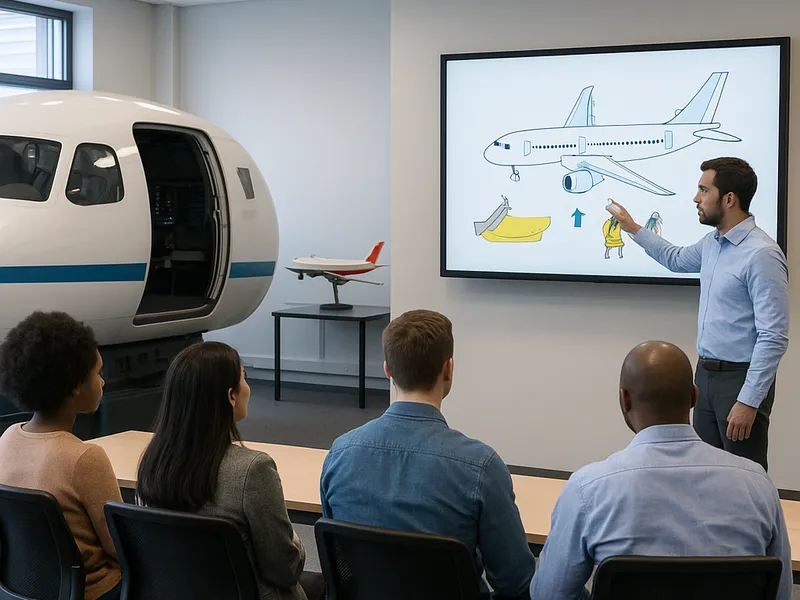
Delivery methods for aviation safety training have evolved a great deal in recent years. Online elearning modules and interactive modules provide flexible, scalable knowledge refreshers that fit into tight schedules. Classroom or instructor-led sessions help with complex topics such as regulatory interpretation or safety case discussions, while scenario-based training uses realistic role plays to practice decision making, communication, and teamwork. But the most impactful component for many operators remains hands on simulation. Full flight simulators and high fidelity cockpit trainers allow trainees to experience normal and abnormal flight conditions in a safe environment, enabling repetitive practice without risk. Blended approaches — combining online learning with simulator sessions and debriefs — are now common because they align with how people learn best and how airlines operate in real life.
The market for aviation safety training features several prominent providers, each with its own strengths. CAE is a global leader known for a broad portfolio of simulation-based training across flight, maintenance, and cabin crew disciplines. Its reach spans many regions, with a strong emphasis on scalable, standardized curricula that airlines can apply across fleets and bases. FlightSafety International offers a dense network of training centers, renowned for immersive simulator environments and expert instruction that emphasize safety cultures and aviation best practices. Their programs often serve large carriers with recurring training requirements and international crews, and they provide extensive know‑how transfer through managed training services and a central learning management system.
