
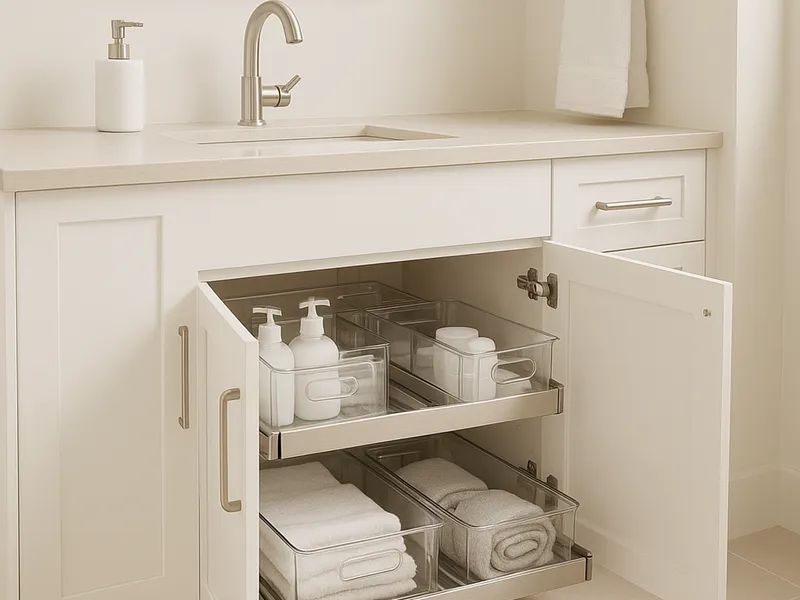
A well organized bathroom is more than a tidy vanity. It’s a small act of daily efficiency that saves time, reduces stress, and protects items from humidity and accidental leaks. When you start with under-sink and shower storage, you’re not just picking containers; you’re shaping a system that keeps cleaning supplies, grooming products, towels, and tools within easy reach while staying out of sight. The goal is to choose durable, moisture resistant solutions that fit your space and your routine, then arrange them in a way that makes sense for how you actually use the room.
Under-sink storage is all about maximizing a space that is often awkwardly narrow and oddly shaped. The cabinet can feel like a maze unless you map it first. Start by removing everything and measuring the interior: width, height, and depth, noting any obstructions like pipes or water lines. Then list what you plan to store: household cleaners, extra toiletries, spare sponges and brushes, and tools like a plunger or flashlight. With those basics in hand, you can mix and match several proven formats.
Pull-out organizers on rails are a favorite for under-sink spaces because they convert a shallow cabinet into multiple usable shelves. If you have a taller area, consider a slim vertical divider that creates narrow compartments for spray bottles and cans, so you don’t have to stack items precariously. Clear plastic bins let you see contents at a glance, which speeds up chores and prevents items from getting buried until they’re forgotten. If your cabinet doors swing open, door mounted organizers can hold wipes, rags, or packets without taking up cabinet real estate. For smaller or irregular spaces, a set of stackable trays or modular baskets can be rearranged as needs shift.
Material choice matters just as much as layout. In bathrooms, moisture, humidity, and occasional spills mean you should favor rust resistant metals, sturdy resin, or clear acrylic. Stainless steel or anodized aluminum organizers resist corrosion, while BPA free plastic bins with reinforced seams reduce cracking. Avoid raw wood near sinks or showers, as it swells and warps with moisture. A practical trick is to line shelves with a silicone mat or liner that makes it easy to wipe up spills and keeps items from sliding around.
