
As homeowners and businesses search for cleaner energy and greater resilience, the concept of pairing a battery with solar panels—often referred to as a battery storage system for solar power—has moved from niche to mainstream. A Batteri Solpanel approach emphasizes not just harvesting sunlight but keeping a portion of that energy for use when the sun isn’t shining. The result can be lower utility bills, fewer outages, and a more autonomous energy footprint.
At its core, a solar battery system stores excess electricity generated by solar panels for later use. During the day, solar panels may produce more energy than a home or business needs in that moment. Instead of exporting everything to the grid, that surplus can be stored in a battery and drawn from later, such as in the evening or during cloudy days. This capability is especially valuable in regions with time‑of‑use tariffs, frequent outages, or strong incentives for self‑consumption of solar energy.
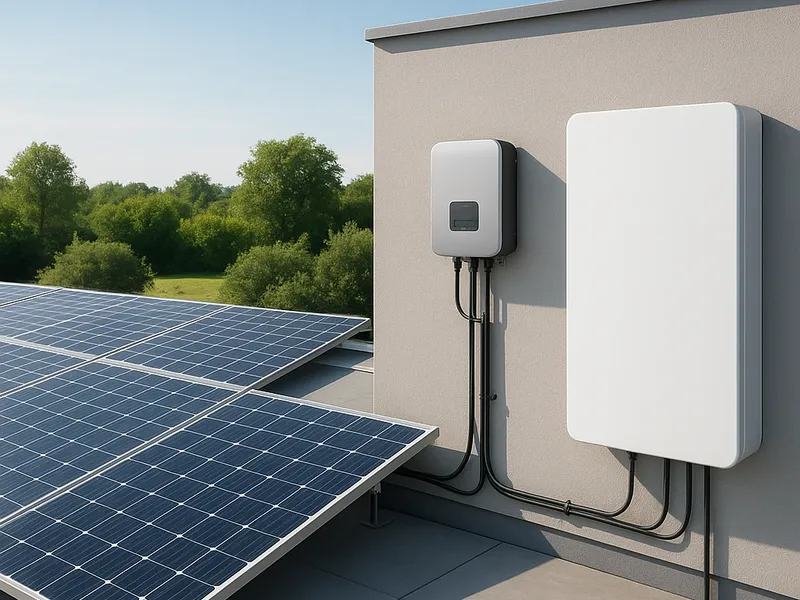
A typical battery solar setup comprises several key components. The solar array consists of panels mounted on a roof or ground rack, connected to an inverter or hybrid inverter that converts the panels’ direct current into usable alternating current. The heart of the storage is the battery bank, which stores energy chemically. A sophisticated battery management system monitors temperature, voltage, and state of charge to protect cells and optimize performance. Some systems use a separate charge controller, while others are integrated into a hybrid inverter with software that automates charging and discharging based on demand, weather forecasts, and utility rates. A monitoring app or display provides real‑time insight into solar production, storage status, and energy flow.
When evaluating storage hardware, users encounter several chemistries and form factors. Lithium‑ion chemistries, notably lithium iron phosphate and nickel manganese cobalt variants, are common for home storage due to higher energy density and longer cycle life. Some systems still rely on traditional lead‑acid batteries or newer solid‑state approaches as the technology evolves. The choice of chemistry affects depth of discharge, round‑trip efficiency, cycle life, heat tolerance, and cost. Modular designs—where multiple battery modules can be added as energy needs grow—offer scalability for growing households or changing energy prices.
System types vary with goals and local grid conditions. A grid‑tied battery system uses solar energy and draws from the grid when needed, potentially feeding surplus energy back to the grid and taking advantage of time‑based tariffs. A hybrid system blends solar, storage, and grid interaction to maximize self‑consumption and resilience. Off‑grid configurations remove dependence on the utility entirely but require a larger storage buffer and careful system sizing to meet continuous load without grid power. For most homeowners, a grid‑tied or hybrid setup is the practical path, especially in regions with reliable grid access and favorable incentives.
