
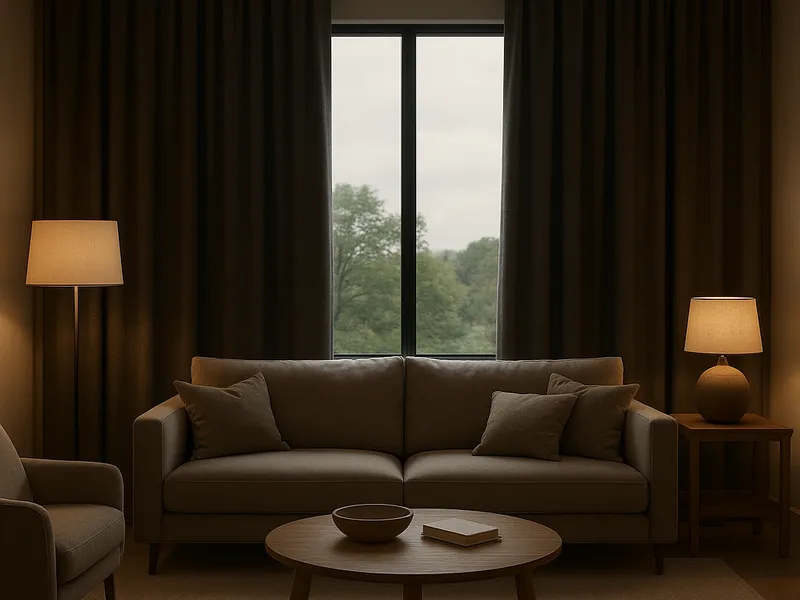
If you want the room genuinely dark, our top pick is the IKEA Rosenmandel Block-out Curtains: they are one of the very few panels reviewers found that actually stop nearly all light through the fabric, and they cost a fraction of designer drapes. For people who care as much about looks as performance we would choose NICETOWN Thermal Insulated Blackout Curtains, and on the tightest budget the Deconovo Room Darkening Blackout Curtains are the easy call.
One honest caveat up front: no rod-mounted curtain is truly 100% blackout, because light always leaks around the edges. If you need a pitch-black nursery or shift-worker bedroom, pair any of these with a wraparound rod and a wall-mounted track, or look at edge-sealing blackout shades instead.
Our picks at a glance
- IKEA Rosenmandel Block-out Curtains — among the only panels that block nearly all light through the fabric — best for serious darkness on a budget.
- NICETOWN Thermal Insulated Blackout Curtains — triple-weave fabric in dozens of colors and sizes — best for the best balance of looks, value, and light blocking.
- Deconovo Room Darkening Blackout Curtains — rock-bottom price with huge color selection — best for outfitting multiple rooms cheaply.
- IKEA Majgull Block-out Curtains — the most complete fabric blackout IKEA sells — best for when maximum darkness beats aesthetics.
- Pottery Barn Emery Blackout Drape — premium linen-blend look with a blackout liner — best for living rooms where appearance matters most.
How to choose
- Fabric blackout vs. room darkening. "Blackout" is loosely used. True blackout fabric blocks essentially all light passing through the weave; "room darkening" only knocks light down by 85-99%. Darker colors and tighter triple-weave or coated fabrics block the most.
- Edge and top light leakage. Most light sneaks in around the sides and over the top, not through the cloth. Buy panels wider than your window (roughly 2x the window width combined), hang the rod high and wide, and consider a wraparound or ceiling-mounted rod for the biggest gains.
- Heading style. Grommet (eyelet) tops slide easily and are the most common; rod-pocket panels sit flush for slightly better top coverage; pinch-pleat looks dressiest. Match the heading to your existing hardware.
- Insulation and noise. Triple-weave and thermal-lined panels add modest temperature control and a small reduction in outside noise. Useful, but do not expect soundproofing.
- Size and care. Measure drop from rod to floor before buying. Most affordable panels are machine washable on cold/gentle, which matters for kids' rooms.
IKEA Rosenmandel Block-out Curtains
A lightweight, neutral-colored panel that punches far above its price. Reviewers repeatedly single it out as one of only a couple of curtains that genuinely block nearly all light through the fabric.
- Pros: Excellent true-blackout fabric performance; very inexpensive ($); neutral colors that look surprisingly good hung; widely available.
- Cons: Plainer and less luxe than designer drapes; limited color and size range; you generally need to visit IKEA or order online.
- Best for: Anyone whose first priority is darkness and value, especially bedrooms.
- Skip it if: You want a statement drape or a wide palette of colors and textures.
NICETOWN Thermal Insulated Blackout Curtains
The default Amazon best-seller for good reason. Made from triple-weave insulated microfiber, NICETOWN panels balance solid light blocking, a clean drape, and an enormous range of colors and sizes. They are room-darkening rather than 100% blackout, but very good in their tier.
- Pros: Triple-weave blocks the large majority of light and UV; dozens of colors and lengths; thermal and modest noise benefits; machine washable; mid-range price ($$).
- Cons: Not absolute blackout through the fabric; grommet tops let a little light over the top; quality can vary slightly between colorways.
- Best for: Most people who want a good-looking, well-priced panel in an exact size.
- Skip it if: You need every last photon blocked for a true blackout sleep environment.
Deconovo Room Darkening Blackout Curtains
The value champion. Deconovo built its name on the most affordable ready-made blackout panels, and the selection is huge, with 30-plus colors. Triple-weave fabric blocks most sunlight and glare, with darker shades performing best.
- Pros: Lowest price tier ($); enormous color choice; thermal-insulated; machine washable; easy to buy in bulk.
- Cons: Room-darkening, not true blackout; lighter colors leak more; finish is more functional than refined.
- Best for: Furnishing several rooms, rentals, or kids' spaces on a tight budget.
- Skip it if: You want premium drape and feel, or guaranteed full darkness.
