
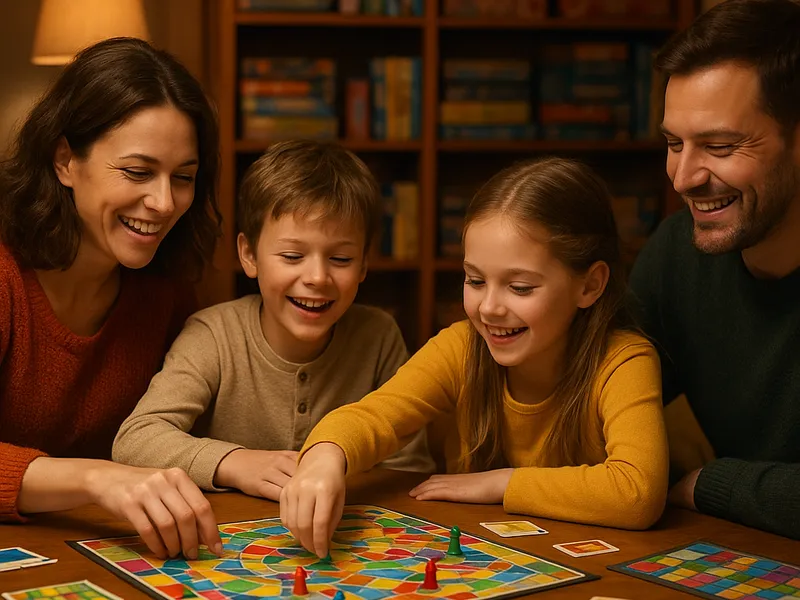
Family game night has become a staple in many homes, a weekly ritual that blends laughter, healthy competition, and shared memories. The appeal rests not only in the chance to win or lose gracefully, but in how a simple table can transform into a space where stories unfold, strategies emerge, and everyone, from the youngest to the oldest, has a role. When the living room lights dim to a warm glow and a colorful board comes to life, you can feel the room tighten with anticipation, then loosen as the first clever move sparks a chorus of cheer or a playful groan. The best games for families strike a balance between easy entry and enough depth to keep next week’s session interesting, and they come in a variety of formats to suit different ages, group sizes, and time constraints.
At the core, family games fall into a few broad categories. Cooperative titles invite everyone to work together toward a common goal, which can be especially appealing when you’re hosting players of mixed ages or confidence. Think of games where the team races against the board rather than against each other, which helps reduce pressure and encourages discussion about plans and problem solving. Then there are light strategy games that teach planning and resource management without overwhelming younger players with too much counting or rules. Party and word games shine in social gatherings, turning conversations and quick thinking into the centerpiece of the evening. For the youngest players, there are simpler, intuitive games that emphasize color, shape matching, or storytelling, while still offering moments of genuine triumph.
When choosing titles, pay attention to a few practical details. Age recommendations give a useful guide, but observing the actual player group helps a lot. A game that plays in under twenty minutes is usually a better fit for younger siblings’ attention spans and for keeping the energy high. Player count matters too; some games scale smoothly from two to six or more players, while others are best with a specific range. The theme should feel inviting rather than intimidating; bright illustrations, approachable components, and quick setup often make a big difference in how willing kids are to dive in. Finally, consider how often you plan to play. A well-chosen set of two to three core titles can cover most evenings, with an occasional party game for guests or special occasions.
Top game categories for families include cooperative games, where a shared objective builds teamwork and reduces the sting of defeat. Forbidden Island and Pandemic are popular examples that scale in difficulty and excitement, while Flash Point: Fire Rescue offers thematic thrills with accessible rules. For families eager to mix some light strategy with fast turns, Carcassonne and Kingdomino provide tactile, visually engaging experiences that teach spatial thinking and planning without becoming heavy. Ticket to Ride and its kid-friendly variants bring geography and route-building into a brisk, sociable environment that’s welcoming to newcomers. For younger players, My First Carcassonne and Outfoxed introduce family-friendly mechanics and gentle competition that still feels meaningful. On the party side, Dixit and Codenames spark imagination and conversation, while Sushi Go! and its larger party edition provide quick drafting play that scales with the group.
