
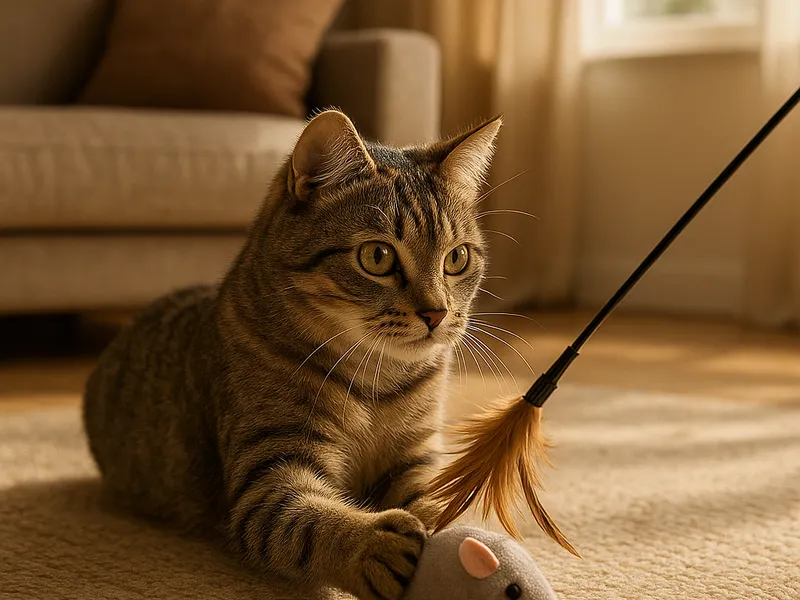
Best cat toys is not simply a keyword list; it is a practical guide for building a play routine that keeps a cat engaged, healthy, and happy. Across homes and budgets, the core challenge is matching a toy to a cat’s instinctual drives—chase, pounce, carry, and puzzle-solving—while ensuring safety and easy maintenance. This article compares common toy categories, offers a buying framework, and provides clear recommendations for different cat temperaments.
What makes a great cat toy
Engagement length: Toys should hold a cat’s interest for several minutes at a time without requiring constant human supervision.
Outlet for instinct: The best options activate hunting sequences like stalking, sprinting, pouncing, and batting.
Varied stimuli: A mix of visual, auditory, and tactile stimuli keeps play balanced and prevents burnout on a single toy.
Safety and durability: Toys should be free of small parts that could be swallowed, with sturdy construction and easy-to-clean surfaces.
Easy maintenance: Removable components that can be washed help sustain interest and hygiene.
Category snapshots
Wand toys: These consist of a flexible rod with a dangling teaser such as a feather or string. They excel at preserving owner interaction and can be adjusted to a cat’s height and reach. They shine in short, energetic sessions that burn calories and strengthen bonds.
Plush and plushy mice: Soft, comforting, and quiet, these toys appeal to cats who like carrying objects in their mouths or kneading while purring. They often become a favorite for nap-time play as well.
Puzzle feeders and edible toys: Mental challenge plus nourishment, these toys slow down fast eaters and reward problem solving. They are particularly useful for cats who need enrichment beyond chasing.
Electronic motion toys: Automations and motorized nubs simulate erratic movement, offering a dynamic hunt for cats who enjoy independent play. They are excellent for days when a human is not available to chase a toy.
Laser pointers and light toys: Fast, intense, and highly engaging, lasers create quick workouts. They require careful use to avoid overexcitement or eye contact and should be part of a balanced toy set.
Comparison table
+-------------------+-------------------------------+------------------------------------------------------------+----------------------------------------+
Toy Type — What it does — Pros — Cons
+-------------------+-------------------------------+------------------------------------------------------------+----------------------------------------+
Wand toys — Triggers chase and pounce — Builds owner cat bond, adjustable reach, quick bursts — Some cats lose interest, cords can tangle
Plush toys — Comfort and carry item — Quiet play, easy to replace, soothing for anxious cats — Can be destroyed; some cats ignore
Puzzle feeders — Mental work with feeding — Stimulates problem solving, slows eating — May frustrate shy cats, need supervision
