
Best Desk Organization Items for Small Workspaces
Article
2026-01-22 • 5 min read

Best Desk Organization Items for Small Workspaces

Small desks and compact home offices pose a unique design challenge: how to keep essentials within reach without turning the surface into a jumbled obstacle course. The best solution is a thoughtful system that combines vertical thinking, modular components...

Small desks and compact home offices pose a unique design challenge: how to keep essentials within reach without turning the surface into a jumbled obstacle course. The best solution is a thoughtful system that combines vertical thinking, modular components, and cable discipline. Rather than buying a single oversized organizer, choose a cohesive set of items that can be rearranged as your workflow shifts or as technology evolves. This approach not only saves space but also reduces friction in your daily routine, helping you stay focused during important tasks.

The first step is to map out how you actually work at your desk. Start by identifying three zones: the primary work area for your computer and keyboard, a secondary zone for reference documents and tools you reach often, and a cable management zone to keep power cords and data lines tidy. On a small desk, it is critical that every item you keep has a designated place. If you can’t justify a item’s footprint, you probably don’t need it. The simplest devices can have outsized impact when positioned thoughtfully. For example, a slim under desk tray can hide bulk of power bricks while a vertical file organizer keeps incoming papers upright but visible.

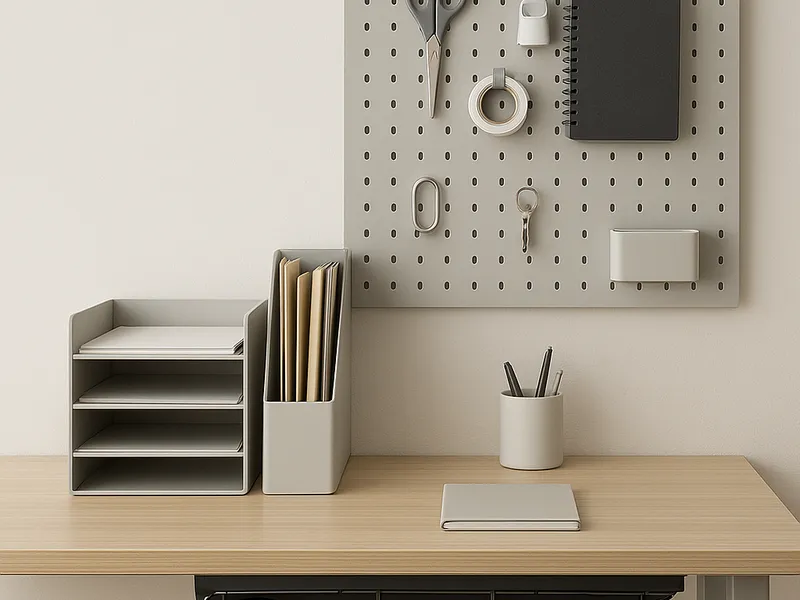
When it comes to the must have items, the first to consider are vertical organizers. A tall, slim file sorter or a wall mounted organizer can hold notebooks, folders, or reference sheets without occupying precious desk space. Pair that with a monitor stand that includes a small shelf or drawer. This keeps the monitor at eye level for better posture while giving you room for a compact keyboard, a wireless mouse, and a few essential peripherals on the surface below. The goal is clear sightlines and a calm surface, not a cluttered one.

Drawer dividers and modular drawer inserts are another crucial piece, especially if your desk includes a shallow or off the shelf drawer. These let you segment items by task, such as written notes, pens, sticky notes, and USB drives. A well designed insert can transform a single drawer into a micro work center for specific tasks. If your desk lacks a deep drawer, a slim tray or lid style organizer sits nicely on the desk and carries your most used tools in easy reach, while a small letter tray can keep correspondence or printed references in view.

Cable management deserves explicit attention, particularly in small spaces. The simplest solution is a slim under desk cable tray or a cable raceway that routes wires along the back edge, out of sight but easy to access. If you can, choose a system that hides a power strip with enough outlets for a laptop, monitor, and a USB hub, plus a spare for future devices. A small cable clip or wrap can secure cords to the edge of the desk, preventing tangles that lead to a distracting mess when you reach for a charger.

Best Desk Organization Items for Small Workspaces

In terms of materials and aesthetics, neutrality tends to work best in tight spaces. Light colors or natural wood tones reflect more light and make the workspace feel larger. If your room has a lot of natural light, a high contrast between the desk surface and organizers can give you a crisp, organized appearance that’s easy to scan quickly. If you prefer a minimalist look, choose a single finish for all major organizers to unify the space and reduce visual noise. If color coding helps your workflow, reserve a small set of hues for categories like urgent tasks, reference materials, and digital tools.

Shopping for these items is where the real value comes in. Large marketplaces like Amazon offer the widest selection, from budget plastic trays to premium wooden organizers. If you want a system that feels cohesive, you might also check Wayfair or Overstock for curated bundles that include multiple components. For brand quality and design, Ikea offers affordable modular pieces that can be stacked or positioned in different configurations to fit a small desk. The Container Store is well known for organization systems that emphasize longevity and ease of use, though it can be pricier. Muji focuses on simple, unobtrusive designs that pair well with modern workspaces. For business oriented purchases such as bulk drawer organizers or heavy duty cable management, Staples or Office Depot provide reliable options with retail support and easy returns.

If you are shopping with a plan, you can sequence purchases to minimize disruption. Start with a vertical organizer and a small desk tray to reclaim horizontal surface space. Next, add a monitor with a built in or add on shelf, then install a cable management solution under the desk. Finally, refine with drawer dividers and a pegboard or wall rail that holds frequently used tools at arm’s reach. This phased approach allows you to test the system as you go, ensuring each component earns its place rather than being added out of habit.

Beyond products, a few practical habits make a big difference. Remove everything from the desk at the end of the day and only replace items you truly need for the next morning. Establish a filing system that moves nonessential papers to a back shelf or a drawer away from the surface. Keep a small recycling bin or a trash cup handy to avoid a buildup of clutter at the end of the week. Finally, review your arrangement quarterly. Even small changes—like swapping a vertical organizer for a slightly deeper tray or relocating a monitor stand—can significantly impact your sense of space and productivity.

In small workspaces the goal is not to flood the desk with more items but to curate what truly supports your work. The most effective setups rely on thoughtful zoning, slim profile organizers, and disciplined cable management. Whether you lean toward a minimalist Muji aesthetic or a practical IKEA modular system, the right combination can make a compact desk feel spacious, serene, and ready for focused work. With a clear plan and a phased shopping approach, you can transform a cramped surface into a productive hub that grows with your needs.

← Back to all articles