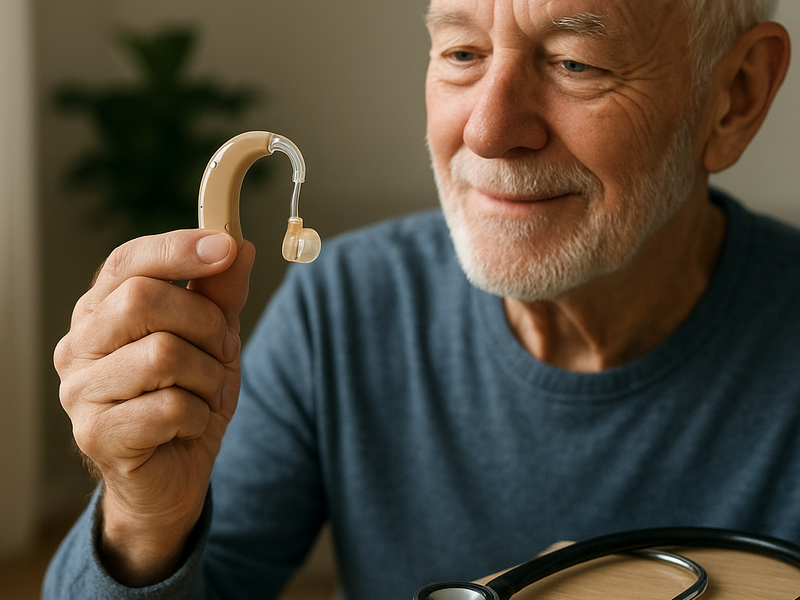
As people age, hearing loss often accompanies other changes in health and daily life. Even a mild impairment can make conversations at meals, family gatherings, and doctor visits exhausting. Modern hearing aids are designed to be discreet, comfortable, and responsive to the kinds of listening challenges seniors face, from quiet rooms to busy streets. But with many models and retailers offering different terms, choosing the right device can feel overwhelming. The good news is that the best hearing aid for a senior is the one that fits their lifestyle, supports safety and independence, and is backed by reliable service.
Understanding the options begins with basic device types. Behind the ear BTE and Receiver in Canal RIC models tend to be the easiest to handle and adjust, which matters for seniors who prefer larger controls or less maintenance. In the ear ITE models can be compact but may require more careful handling. Rechargeable batteries have become standard, eliminating the need to swap small batteries daily. When it comes to sound processing, look for programs that adapt to different environments, good noise reduction, feedback cancellation, and wind suppression. Telecoil compatibility can help in venues with loop systems, and Bluetooth connectivity supports streaming calls, music, and TV sound to the devices. For many seniors, a streamlined app that allows quick volume adjustments or program changes can be a major convenience, though a professional fitting remains essential because self programming is rarely adequate for real world needs.