
Best LED Strip Lights for Bedrooms & Desks (Not Trash Quality)
Article
2026-01-22 • 6 min read

Best LED Strip Lights for Bedrooms & Desks (Not Trash Quality)

LED strip lights have become a simple, effective way to transform bedrooms and workstations. They offer ambient mood lighting, practical task illumination, and a surprising degree of customization without taking up precious desk space. For most people, the ...

LED strip lights have become a simple, effective way to transform bedrooms and workstations. They offer ambient mood lighting, practical task illumination, and a surprising degree of customization without taking up precious desk space. For most people, the goal is not just bright light but the right quality of light — something that feels inviting during evenings, helps you focus during work, and can set a calm mood for winding down. When you choose carefully, you can avoid gimmicky lighting and instead get a system that’s reliable, energy efficient, and easy to use every day.

What to look for when shopping for LED strips for bedrooms and desks

Length and layout flexibility: Most strips come in predefined lengths that you cut to fit. Look for kits that include the power supply and a controller with easy-to-use mounting options. If you need to cover a long run or wrap around corners, check for adjustable connectors and compatible corner pieces. Some brands offer stretchable or interlocking segments that help you tailor the setup without splicing.

Brightness and color quality: Brightness is measured in lumens. For a bedroom, a lower brightness in the range of a few hundred lumens per meter can feel cozy, while a desk setup might benefit from higher brightness for tasks. Color temperature matters too: warmer temperatures around 2700K to 3500K feel relaxing, while cooler temperatures in the 4000K to 6500K range help with concentration. For more dynamic effects, look for RGB or RGBIC options that allow multiple colors or color zones along the strip.

Color options and control protocols: RGB strips produce a wide color range, but RGBIC or individually addressable LED strips let you create multiple colors along the same strip. Check compatibility with your preferred smart home ecosystem—Amazon Alexa, Google Home, Apple HomeKit—and whether a dedicated hub or bridge is required for full control.

Durability and installation: Adhesive strength matters, especially if your room tends to get humid or warm. Some strips also come with channel covers or diffusers that soften the light and protect the LEDs. If you’re mounting under shelves or behind a monitor, consider how discreet you want the setup to be and whether you need clips, mounting brackets, or a slim aluminum channel.

Smart features and ecosystem: Many top brands offer app control, scheduling, and scenes. Some integrate deeply with smart hubs to automate lighting based on time of day, occupancy, or other smart devices. If you already own a smart speaker or display, verify compatibility to avoid buying extra hardware.

Top brands and how they compare

Philips Hue Lightstrip Plus is widely regarded for build quality and seamless integration with the Hue ecosystem. When paired with a Hue Bridge, it unlocks rich automation, voice control, and a broad catalog of lighting scenes. Pros include strong color fidelity, reliable performance, and excellent app features. Cons can be price and the requirement for the bridge for full capabilities, which adds to initial costs.

Govee dominates the budget and midrange market with features like RGBIC and robust手机 app control. It’s a popular choice for beginners and enthusiasts who want colorful effects without a high price. Pros include affordability, easy setup, and frequent feature updates. The trade-off is that some users report variability in color accuracy and occasional reliability issues with updates, though many find it acceptable for everyday use.
Best LED Strip Lights for Bedrooms & Desks (Not Trash Quality)

LIFX Zebra and LIFX Z strips offer vivid color and excellent brightness without requiring a separate hub in many cases, since they connect directly to Wi-Fi. They’re known for excellent color rendering and simple setup. Pros include bright output and strong app control. Cons include higher cost and sometimes less extensive ecosystem integration than Hue for multi-room lighting.

TP-Link Kasa Smart Light Strip provides a straightforward, hubless option with reliable integration into the Kasa app and voice assistants. It’s a sensible choice if you already use Kasa smart plugs, cameras, or other lighting. Pros are ease of use and reasonable pricing; cons are fewer advanced color effects and fewer third-party integrations than some premium brands.

Sylvania Smart+ and other traditional lighting brands offer dependable performance with broad retail availability. They’re a solid middle-ground option, often compatible with multiple ecosystems through bridges or adapters. Pros include solid reliability and good compatibility. Cons can include slower feature updates compared to newer, app-first brands.

Corsair iCUE Light Strip Pro is highly regarded in gaming and PC-centric setups. If you want synchronized lighting with a PC, dedicated software, and high brightness, this is a strong option. Pros include superb customization for a desk or gaming rig; cons are that it’s most valuable for those who want deep PC integration and may be overkill for casual use.

How to install LED strip lights on a bedroom or desk

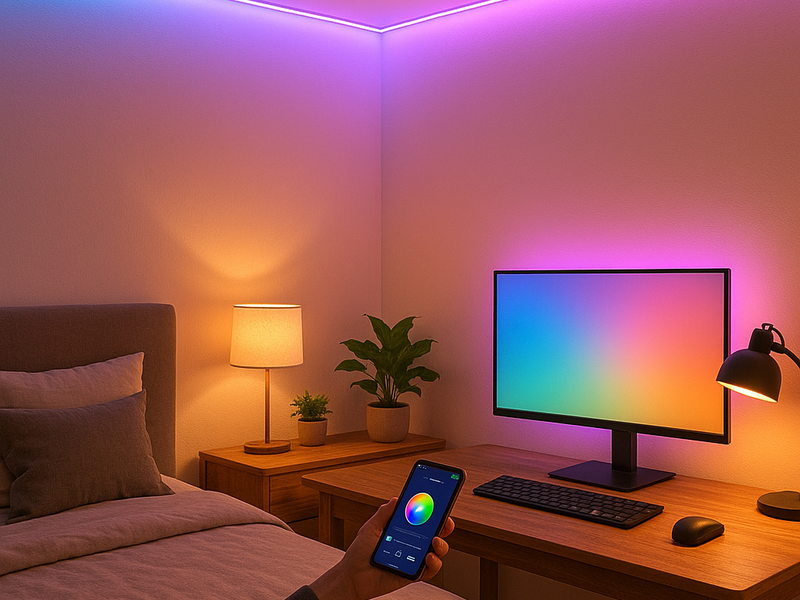
- Plan your route: Decide where the strips will run for the most impact. Under-bed frames, behind monitors, along shelves, or around the perimeter of the ceiling glow can be very effective. - Prepare the surface: Clean the mounting surface with a mild cleaner to ensure the adhesive sticks well. - Measure and cut correctly: If the strip is longer than needed, cut only at designated cut points. Use end caps or corner pieces to keep the light even at joints. - Attach and connect: Press the strips firmly onto the surface. Attach any required power supply and controllers, then connect to power. If you’re using a hub or bridge, set up the ecosystem first. - Configure the app: Install the brand’s app, pair the strip, and set up basic scenes. Create a relaxing evening scene with warmer lights and a desk-focused bright option for work periods. - Create routines and automation: Use schedules to switch from day mode to evening mode, and tasks like “focus” or “movie night.” Many apps offer presets and automation routines that can be customized to your routine. - Safety and care: Check for heat buildup and avoid placing strips where moisture or direct heat could affect durability. Do not bend too sharply at corners; use appropriate channels or bending tools as recommended by the manufacturer.

Practical tips to get the most from your setup

- Layer light: Use a mix of ambient strips and task lighting. A desk lamp or a warm bedside light can balance the color temperature and reduce eye strain. - Diffuse where needed: A diffuser over the strip softens the light and reduces reflections on screens. - Sync with content: If you enjoy film or gaming, select a controller or app that supports screen-sync or scene-based color changes to enhance immersion. - Consider power planning: If you’re using multiple strips in a large room, a dedicated power supply or a smart hub can ensure stable performance and easier management.

Where to buy and what to expect

Official brand stores, major retailers like Amazon, Best Buy, and Home Depot carry these products. Look for starter kits that include a controller and power supply, and review warranties and return policies. If you’re new to smart lighting, starting with a single color-spectrum kit and then switching to richer RGB or RGBIC later is often the most cost-effective path. Always verify compatibility with your preferred smart speaker or hub, and read user reviews to gauge real-world reliability and customer support.

In sum, good LED strip lights for bedrooms and desks can elevate mood, improve focus, and enhance aesthetics with minimal setup. By prioritizing length, brightness, color quality, and ecosystem compatibility, you can create a flexible, durable lighting system that adapts to your daily rhythm and long-term needs.

← Back to all articles