
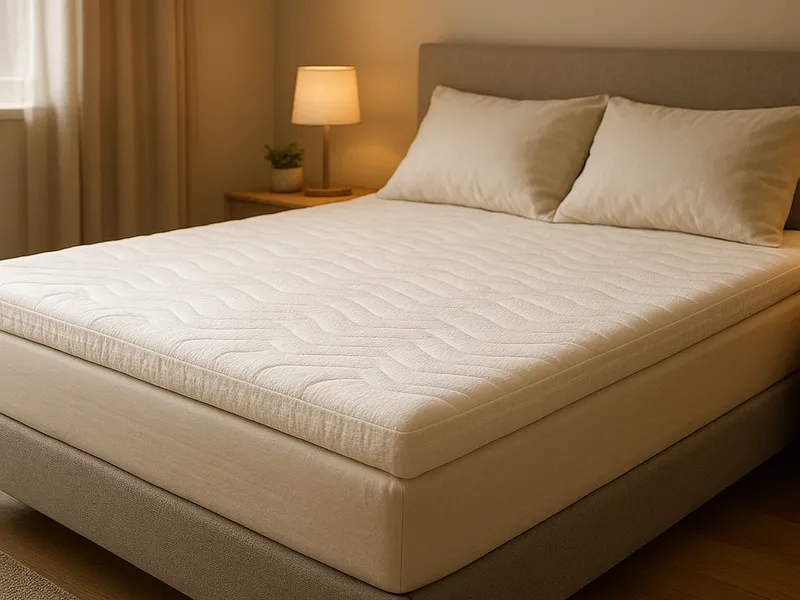
If you want one topper that settles the back-pain-versus-comfort debate, our pick is the Saatva Graphite Memory Foam Topper: graphite-infused foam that contours for pressure relief without letting your hips sink out of spinal alignment. If your priority is firm lumbar support on a too-soft bed, we would choose a latex topper (such as ViscoSoft's latex line); if you mainly want a plush, cloud-like upgrade, the Helix Premium Topper with GlacioTex is the cozier call.
The core tension is real: the deep, body-hugging feel that makes a bed feel luxurious can also let your pelvis dip and twist your lower back. Below we split our picks so you can buy for the outcome you actually want.
Our picks at a glance
- Saatva Graphite Memory Foam Topper — balanced contouring with cooling graphite foam — best for back pain sufferers who still want a soft surface.
- ViscoSoft Latex Topper — resilient, responsive support that resists sinkage — best for stomach and back sleepers needing firm lumbar support.
- Helix Premium Topper with GlacioTex — thick, plush hybrid feel with microcoils — best for people chasing maximum soft comfort.
- ViscoSoft Select 3" Memory Foam — high-value deep contouring — best for side sleepers and budget-minded shoppers.
- Nolah Mattress Topper (Plush) — AirFoam cushioning without heavy heat retention — best for hot sleepers who want a softer surface.
How to choose
- Firmness and support, not just softness. For back pain, the topper has to keep your spine neutral. Firmer foam or latex prevents the hip-sinking that twists the lower back; very plush toppers do the opposite. Match the feel to your problem, not just your preference.
- Material behavior. Memory foam contours and absorbs motion but hugs and can trap heat. Latex is bouncier, more responsive, and resists sinking, so it suits people who need support without that "stuck" feeling. Hybrid (foam plus microcoils) splits the difference with plush comfort and some lift.
- Thickness. Toppers typically run from 2 to nearly 4 inches. Thicker means more cushioning and a bigger feel change; thinner gives a subtler tweak. Plush seekers want thicker, support seekers often want a denser, firmer profile over a deep one.
- Sleep position and body weight. Side sleepers usually want more give at the shoulders and hips; back and stomach sleepers need firmer support to stay level. Heavier sleepers sink further, so they generally benefit from firmer, higher-density options.
- Cooling, trial, and attachment. Look for gel or graphite infusions if you sleep hot, a generous sleep trial since topper feel is personal, and elastic corner straps to keep it from shifting.
Saatva Graphite Memory Foam Topper
A 3-inch graphite-gel-infused memory foam topper under an organic cotton cover. The graphite is designed to pull heat away, addressing the usual memory foam complaint, and the foam contours closely while keeping you lifted enough to hold spinal alignment.
Pros:
- Contours for pressure relief without the deep, sinking hug of cheaper foams.
- Cooler-sleeping than typical memory foam thanks to graphite infusion.
- Sold across many sizes with a long sleep trial and warranty.
Cons:
- Premium price tier ($$$) and rarely discounted.
- Still memory foam, so it won't feel as bouncy or responsive as latex.
Best for: back pain sufferers who want pressure relief but a relatively neutral, supportive surface. Skip it if: you want a firm, springy feel or a strictly budget buy.
ViscoSoft Latex Topper
Latex gives a firmer, more resilient and responsive feel than memory foam, resisting sinkage so your hips stay supported and your spine stays aligned. That makes it a strong corrective layer when your mattress itself is too soft.
Pros:
- Firm, supportive lift that helps keep the spine neutral.
- Bouncy and breathable; no "stuck in the foam" sensation.
- Durable, naturally cooler-sleeping material.
Cons:
- Firmer feel is less plush; not for those chasing softness.
- Latex toppers sit in the mid-to-premium tier ($$-$$$).
Best for: back and stomach sleepers who need firmness to prevent lower-back soreness. Skip it if: you specifically want a soft, cradling cloud feel.
Helix Premium Topper with GlacioTex
A thick (around 3.75 inches) plush hybrid combining dense foam layers with innerspring microcoils, topped with a cooling cover. It is one of the cozier, most luxurious-feeling toppers available, with microcoils adding a touch of lift under the plushness.
Pros:
- Genuinely plush, cozy surface for a major comfort upgrade.
- Microcoils add support and airflow versus solid foam.
- Cooling cover helps offset the warmth of a deep, soft layer.
Cons:
- Soft, deep feel is not ideal if you have alignment-driven back pain.
- Premium price tier ($$$) and very thick, so it changes the bed's feel a lot.
