
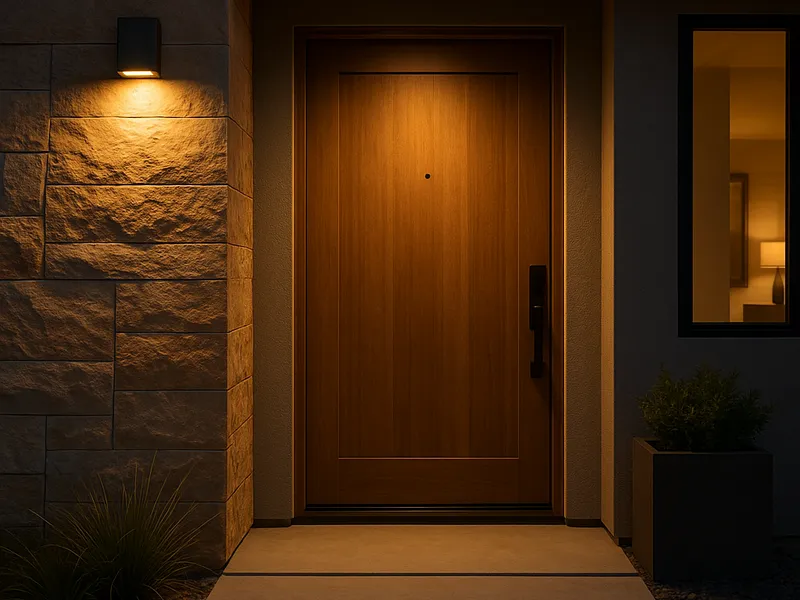
When you arrive home after dark, the entryway is the first impression your house gives. A well lit doorway improves safety, guides visitors, and adds curb appeal. Motion sensor lights offer both convenience and energy efficiency, reacting when someone approaches and dimming or turning off when the space is unattended. The best options blend reliable sensors with sturdy construction and smart to do lists that fit in with your home.
Choosing the right motion sensor lights for an entryway means balancing several factors. Start with sensor type and coverage. Most outdoor entry lights rely on passive infrared sensors, which detect heat from bodies moving across a field of view. Some models combine PIR with microwave sensing for fewer false triggers, but those can be more expensive. Consider the detection angle and range to cover the approach path without triggering reflections from nearby windows or moving foliage. Next look at brightness and color temperature. For a front porch, aim for a warm glow in the range of three thousand kelvin to four thousand kelvin. Too bright a light can be harsh and hard on the eyes at close range, while too dim a light may not illuminate stairs and handrails safely. Brightness is usually measured in lumens; you’ll commonly see lights in the range of six hundred to two thousand lumens for entryways, depending on the size of the doorway and surrounding steps.
Durability and weather resistance matter more outdoors. An IP rating of at least IP sixty five indicates good protection against dust and water jets, but look for an enclosure that is sealed against rain and snow and a housing rated to withstand temperature swings. Wiring type matters too. Solar powered units offer easy installation with no wiring, but may underperform in overcast climates or long winters. Battery powered models are convenient and quiet but require periodic fresh batteries. Hardwired lights—whether connected to a porch outlet or the home’s electrical circuit—tend to be the most reliable for constant performance and more precise control over timing and dimming.
Smart home compatibility can be a big plus. If you already use a voice assistant or a home automation hub, choose lights that can integrate with your system. Some brands offer direct app control, scheduling, and geofencing, while others rely on a separate smart home hub or bridge. When shopping, check compatibility with ecosystems you use, such as Alexa, Google Assistant, Apple HomeKit, or Z-Wave and Zigbee platforms. Also consider how easy it is to adjust sensitivity, timeouts, and lighting scenes from the app rather than requiring physical access to the fixture.
