
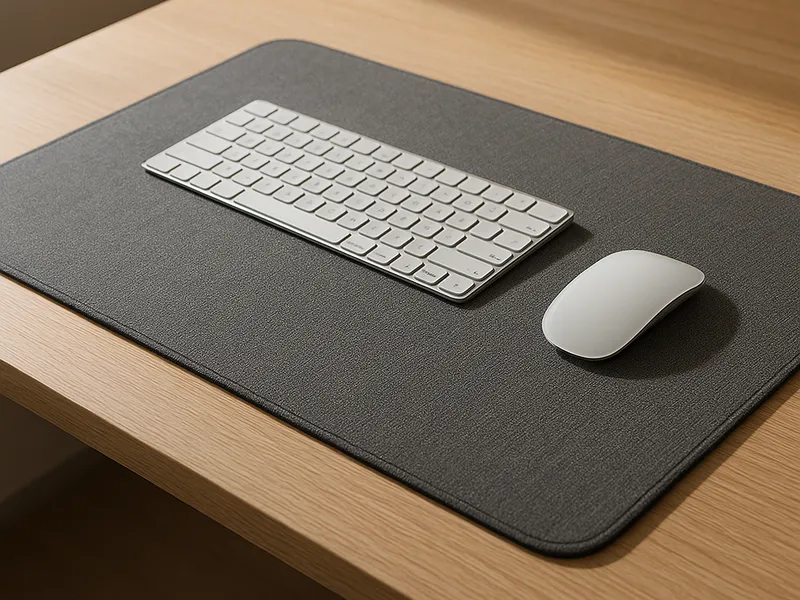
For most people, the mouse pad that makes the biggest difference is a large cloth one: our top pick is the SteelSeries QcK Heavy XXL, which gives smooth, predictable tracking, reliable stopping power, and enough room for both your mouse and keyboard. If you care more about how your desk looks and feels than about competitive gaming, we would choose the Grovemade Matte Desk Pad. And if you want a faster, tracking-focused surface for aim-heavy games, the Artisan FX Hayate Otsu V2 is the one we would spend extra on.
Our picks at a glance
- SteelSeries QcK Heavy XXL — smooth control-oriented cloth surface with a thick cushioned base — best for most gamers and mixed work-and-play desks.
- Grovemade Matte Desk Pad — premium linoleum-over-cork desk mat that ages well and writes beautifully — best for tidy, design-led home offices.
- Artisan FX Hayate Otsu V2 — fast, textured Japanese cloth surface with balanced control — best for tracking-heavy and competitive FPS players.
- Logitech G440 — rigid hard surface for fast, consistent low-friction glide — best for speed-first gamers who dislike cloth drag.
- Razer Firefly V2 Pro — hard pad with fully illuminated edge-to-edge RGB — best for showcase RGB battlestations.
- Oakywood Felt & Cork Desk Pad — warm merino-wool felt with sustainable, certified materials — best for natural-material setups.
- BUBM Desk Mat — large waterproof PU-leather mat with stitched edges — best for budget full-desk coverage.
How to choose
- Surface type: cloth vs. hard. Cloth pads feel softer, are quieter, and give more "stopping power" for controlled aiming. Hard pads (plastic or glass) glide faster and are easier to wipe clean, but can feel harsh and noisy. Most people are happiest on cloth; speed-focused gamers gravitate to hard.
- Speed vs. control. This is the real decision for gamers. Control surfaces (like the QcK) slow the mouse down for deliberate, precise aim, ideal for Valorant or CS. Faster surfaces (like the Hayate Otsu) suit tracking-heavy games and flick-aim play.
- Size. Extended and XXL mats fit your keyboard and mouse together and look cleaner; smaller pads save space. Low-sensitivity gamers should size up so big swipes never run off the edge.
- Base and edges. A dense rubber base keeps the pad planted; stitched edges stop fraying on cloth pads. These two details separate pads that last years from ones that curl in months.
- Material and maintenance (desk mats). If the mat is part of your decor, think about how it ages: linoleum and leather develop character, felt feels warm but shows wear, and PU leather wipes clean cheaply.
SteelSeries QcK Heavy XXL
A thick (extra-cushioned) cloth gaming pad in a desk-spanning XXL size. The QcK line has been the industry standard for over a decade, and this version pairs that proven surface with a plush base.
Pros
- Smooth, predictable tracking with strong stopping power for precise aim.
- Cushioned feel that is comfortable for long sessions and wrists.
- Big enough to cover keyboard plus mouse; durable stitched build.
Cons
- The slower control surface is not ideal for fast tracking games.
- Plain look; the thickness takes some getting used to.
Best for: most gamers, and anyone wanting one pad for both work and play. Skip it if: you want a fast, low-friction surface or a decorative desk mat.
Grovemade Matte Desk Pad
A premium desk mat with a natural linoleum surface (made from linseed oil, pine rosin, wood flour and calcium carbonate) over a cork backing. It is built as a desk accessory first, mouse pad second.
Pros
- Smooth writing surface with a subtle paper-like tooth.
- High-quality materials that age gracefully over years.
- Clean, understated look that elevates a desk setup.
Cons
- Premium price for what is, functionally, a desk mat.
- Not optimized for competitive mouse tracking.
Best for: design-conscious home offices that mix writing, mousing and aesthetics. Skip it if: you are on a budget or need a dedicated gaming surface.
Artisan FX Hayate Otsu V2
A high-end Japanese cloth pad using a jacquard weave designed to minimize the friction difference between X and Y axes. It runs a balanced-fast speed profile with plenty of texture.
Pros
- Fast glide with a strong sense of control thanks to the textured weave.
- Excellent for tracking and flick-aim while still usable for tactical FPS.
- Comes in multiple firmness options (Soft, Mid, Xsoft) and sizes.
Cons
- Premium price and can be harder to find in stock.
- Faster surface may feel slippery if you prefer deliberate, slow aim.
Best for: competitive and tracking-heavy gamers who want a precise, fast surface. Skip it if: you want maximum stopping power or a budget pad.
