
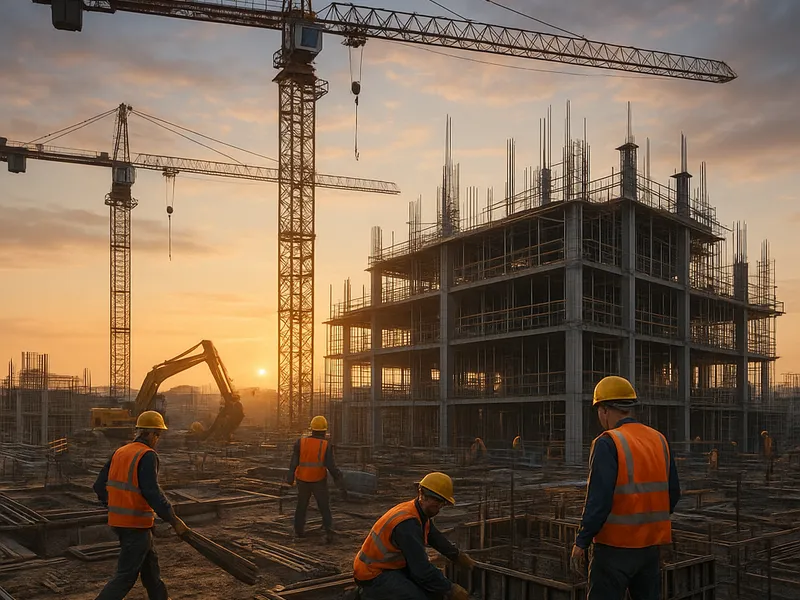
Construction companies form the backbone of modern development, turning blueprints into bridges, offices into occupied spaces, and schools into safe environments for learning. They navigate a landscape of regulations, budgets, and timelines while balancing risk, quality, and safety. For clients ranging from governments and developers to small business owners, choosing the right partner can mean the difference between a project that delivers on its promises and one that spirals into delays and cost overruns. This article surveys what construction firms do, how to compare the top players, and practical steps to engage effectively with them.
Construction firms operate across a spectrum of delivery models and specialties. Some focus on general contracting where they manage the entire build, coordinate subcontractors, and align with the project schedule. Others pursue design build, integrating design and construction under one contract to streamline decisions and reduce interfaces. Then there are engineering procurement and construction firms that take a hand in the project from feasibility through commissioning, often in energy, infrastructure, or industrial sectors. The most ambitious players map global reach with complex logistical capabilities, enabling multi site deployments, supply chain robustness, and large workforce management. Beyond technical prowess, successful firms invest in preconstruction planning, risk management, and collaboration with clients to guarantee safety, quality, and sustainability.
When you compare leading construction companies, several names consistently appear due to scale, track record, and global footprint. Bechtel of the United States has long been a benchmark for complex EPC projects in energy, infrastructure, and government sectors. Their portfolio includes some of the world’s most intricate engineering feats, and their private status allows long term commitments to large initiatives. Vinci Construction, part of the French Vinci Group, exemplifies breadth with civil engineering, building, and civil works spanning continents. Their strength lies in integrated services, from design to operation, enabling coordinated delivery across diverse markets. ACS Group, headquartered in Spain, operates through well known subsidiaries such as Dragados and Hochtief and has a robust presence in Europe and the Americas, balancing large public infrastructure with commercial and industrial buildings. Skanska from Sweden stands out for its emphasis on safety and sustainability, often pushing green building and modern workforce practices while maintaining a broad North American and European portfolio. Kiewit, privately held in the United States, specializes in heavy construction, mining, and large complex projects with a strong culture of collaboration and on site problem solving. On the other side of the ocean, China State Construction Engineering Corp or CSCEC dominates in scale, with a vast pipeline of public works and housing across Asia and beyond. Larsen & Toubro in India blends engineering prowess with construction strength and has become a linchpin for infrastructure growth in South Asia. Bouygues Construction in France emphasizes urban development and sustainable building practices with a balance of domestic and international projects. Each of these players brings distinct strengths—distance from client management processes, access to advanced building technologies like BIM and digital twin practices, and proven risk management under challenging regulatory environments.
Beyond the big names, clients can also look to specialized firms for particular needs. For example, design-build specialists focus on fast tracking with integrated teams, while EPC contractors excel in projects where equipment procurement and large-scale commissioning are central. For public sector projects, the ability to navigate procurement rules, environmental approvals, and long term warranties often becomes a deciding factor. In many markets, regional leaders deliver superior local knowledge and faster issue resolution, while global firms bring scale, standardized processes, and cross border experience. The right mix depends on project type, risk tolerance, and desired delivery timeline.
