
Dental Implants Cost
Article
2025-12-11 • 6 min read

Dental Implants Cost

Dental implants have become a trusted option for replacing missing teeth, offering a durable solution that mimics natural dentition. Yet behind the promise of improved function and aesthetics lies a wide spectrum of price points that can leave potential pat...

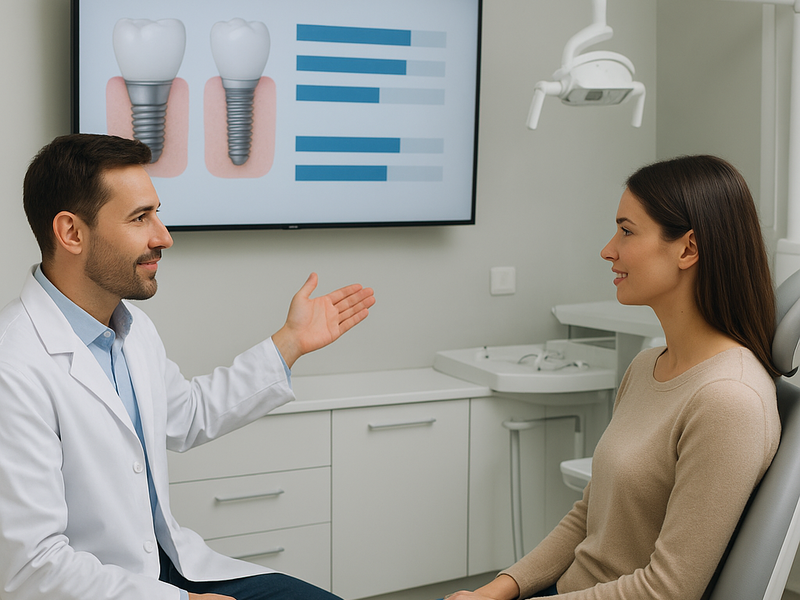
Dental implants have become a trusted option for replacing missing teeth, offering a durable solution that mimics natural dentition. Yet behind the promise of improved function and aesthetics lies a wide spectrum of price points that can leave potential patients unsure which number is realistic for their situation. This article outlines why costs vary, what you should expect to pay, and how to approach budgeting without compromising quality.

First, it helps to understand what drives the overall price. The implant itself is only part of the total. A typical cost bundle includes the surgical placement of the implant into the jawbone, the abutment that connects the implant to the crown, the final restoration such as a porcelain crown or bridge, and the necessary diagnostic work. Add-ons can raise the bill quickly: bone grafts or sinus lifts to rebuild bone before or during the implant procedure, extractions, anesthesia charges, CBCT scans or three dimensional planning, laboratory work for custom abutments or crowns, and temporary teeth that are used during osseointegration. Geographic location, surgeon experience, and the chosen implant system also shape the price. In short, two patients with seemingly similar needs can see very different numbers if one requires bone augmentation while the other does not, or if one clinic uses a premium system with extensive restoration options while another uses a more economical package.

Regional perspectives vary. In the United States, the installed implant cost per tooth can range broadly, influenced by the implant system, laboratory fees, the number of implants, and whether bone grafting is needed. Typical sessions might range from a few thousand dollars to well over that amount, with crowns and abutments adding to the total. In Western Europe, similar implants and restorations carry price bands influenced by local healthcare practices and labor costs, often with slightly different inclusions in the quoted package. Some patients in Asia, Latin America, or Eastern Europe report lower price points, driven in part by lower clinic operating costs and favorable exchange rates. While lower costs can be appealing, it is important to consider the provider’s experience, the availability of post-operative care, guarantees on work, and the clinic’s infection-control standards. A transparent comparison of what is included in the price is the best guide to value.

Top manufacturers and the clinics that commonly work with them shape the market. Leading implant systems come from well-known global companies that also provide extensive training, guided-surgery platforms, and a broad ecosystem of compatible restorations. Straumann and Dentsply Sirona Implants (the latter carrying the legacy Nobel Biocare line) are among the most widely used in high volume practices worldwide. Osstem, BioHorizons, and Zimmer Biomet offer strong regional footprints and competitive pricing structures, with differences in thread design, surface treatment, and compatibility with guided-surgery workflows. It is common for a clinic to choose one system based on bone compatibility, lab support, and the availability of a trusted restorative team. When you see a quoted price, it often reflects not just the implant itself but the clinic’s preferred system and the restoration pathway chosen for you.
Dental Implants Cost

For patients, comparing options goes beyond price. Consider the following dimensions that influence outcomes and long-term satisfaction: - System compatibility: Some clinics are deeply integrated with a single company and offer streamlined planning, guided surgery, and digital workflows; others provide more options but with varying levels of standardization. - Clinical requirements: If your bone density requires grafting, or if you’re replacing multiple teeth with a fixed solution, costs multiply but may reduce per-tooth losses in a broader treatment plan. - Restoration options: The crown material, shade matching, and whether you receive a temporary crown during healing can affect both aesthetics and cost. - Warranty and post-operative care: Look for guarantees on implants and restorations, and understand what is covered if a complication arises. - Financing and insurance: Some plans and clinics offer financing arrangements, discount programs, or in-house membership plans that reduce out-of-pocket costs and spread payments over time.

How to approach budgeting and decision making - Gather multiple, itemized quotes from reputable clinicians. Ask for a breakdown that separates the implant, abutment, crown, grafts, imaging, anesthesia, and lab fees. - Inquire about included care. Some quotes include post-operative checkups and minor adjustments; others bill for every visit. - Assess your medical status with the clinician. Conditions such as diabetes or smoking history can impact healing and may influence both the recommended approach and cost. - Explore bone augmentation options. If a graft or sinus lift is indicated, compare the additional cost and the expected improvement in success rates. - Review financing and discounts. Some practices offer fixed-price packages for certain scenarios, while others provide phased payment plans or third-party financing. - Consider long-term value. A lower upfront price might entail higher maintenance costs or more frequent replacements over time. Conversely, higher upfront investment in robust systems and precise restorations may yield greater durability.

Comparisons of top providers and their ecosystems - Straumann: A global leader with a broad implant portfolio, powerful digital planning tools, and extensive educational support for clinicians. Their systems emphasize predictability and long-term stability, with a range of restoration options that suit various patient needs. - Dentsply Sirona Implants: Known for strong integration with imaging, CAD/CAM workflows, and a wide restoration ecosystem. Clinics using this line often highlight streamlined planning, efficient workflows, and widespread availability of compatible components. - Osstem: A rapidly growing manufacturer with a strong presence in Asia and expanding global reach. Osstem is frequently noted for value-driven options, a wide selection of implants, and good support for efficient, cost-conscious practices. - BioHorizons: Recognized for certain surface technologies and the Laser-Lok microgap concept, which some clinicians believe supports tissue integration. They provide a well-regarded portfolio that appeals to practices prioritizing advanced restorative outcomes. - Zimmer Biomet: A long-standing medical device company with a solid implant lineup and an emphasis on reliable engineering and service support, particularly in markets with high clinical demand for durable solutions.

Web presence matters. Manufacturers typically do not sell directly to patients; instead, they supply clinics. When you research online, you will encounter: - Manufacturer sites that describe implant systems, range of restorations, and compatibility with guided surgery software; these sites help clinicians compare options and understand the technology behind different implants. - Clinic and network websites that publish general pricing ranges, bundled packages, or cost estimators for common treatment plans such as single implants, bridges, or All-on-Four styles. - Independent patient-review and cost-comparison platforms that summarize regional pricing trends and share patient experiences with different clinics.

A practical takeaway: use cost information as but one factor in your decision. The lowest price should not determine care if it risks quality or follow-up support. The best value emerges when a clinic provides transparent pricing, a clear treatment plan, and confidence in the chosen implant system, paired with solid post-treatment care and patient education.

← Back to all articles