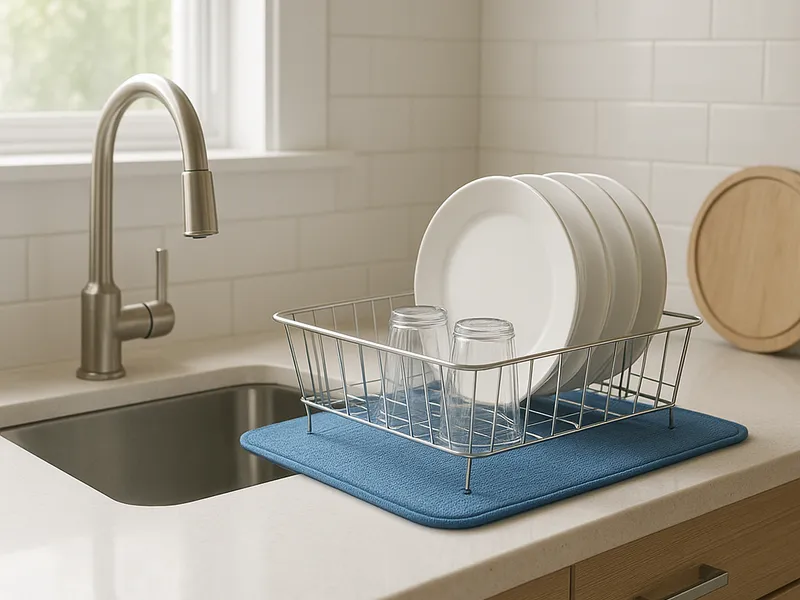
Absorbency and speed: Microfiber mats excel at quick moisture transfer and drying, especially for plates, glassware, and utensils that still have tiny droplets. Cotton towels can be highly absorbent but may take longer to release moisture into the air, especially if they’re heavily used or dampened by multiple loading cycles.
Hygiene and odor control: A mat that is machine washable and allows air to circulate tends to stay dryer between uses, reducing mold and mildew risk. Towels, particularly if left damp, can develop musty odors and bacteria more quickly if not laundered promptly. The key is to wash and dry the mat or towel according to care instructions and replace worn-out fabrics that lose absorbency.
Maintenance and care: Mats are typically machine washable and laid flat to air-dry. Towels require laundering in the washing machine and a proper drying cycle. In a busy kitchen, a dedicated mat that’s easy to wash and quick to dry can simplify maintenance and help keep surfaces hygienic.
Space and setup: Mats require a stable surface—usually under a dish rack or near the sink—and some homeowners prefer a single mat for the main drying area. Towels can be draped over a towel bar or stacked in a drawer, offering different storage options but less uniform drying efficiency if not arranged thoughtfully.
Durability and cost: A quality drying mat made from microfiber or silicone-backed fabric tends to last longer with repeated laundering. Towels vary in durability, with higher-end cotton options offering long life but potentially higher ongoing replacement costs if frequently damp.
If you’re considering a switch or a first-time setup, here are actionable steps to make the transition smoother:
Assess your space: Measure the counter area near the sink and decide whether a single large mat or a couple of smaller mats would better fit your workflow. If you have limited counter space, a compact microfiber mat placed under the dish rack can be surprisingly effective.
Choose a material that suits your routine: Microfiber mats tend to be quick-drying and easy to machine wash. Silicone-backed mats offer moisture resistance and are easy to wipe down, though they may be less plush under certain dishware. Cotton towels remain ideal for quick spot-drying and multi-use tasks beyond drying dishes.
Plan care routines: For mats, plan regular washing cycles—ideally after a full day of use or when the mat shows visible dampness or odors. Towels should be laundered frequently enough to stay fresh; consider rotating sets so at least one dry towel is always available.
Combine if you wish: Some cooks use a drying mat under the dish rack and reserve towels for hand-drying delicate items or polishing glassware. A hybrid approach lets you leverage the strengths of both methods and keep your workspace flexible.
Look for easy-to-clean options: Machine-washable mats with quick-dry fabrics and silicone- or mesh-based backs are easier to maintain. Avoid mats with dense seams or textures that trap moisture or debris, which can hinder drying and promote odors.
Where to shop and who to consider when buying drying mats or towels for your kitchen. Large e-commerce platforms offer broad options, including microfiber practice mats and cotton towels. Cupboard-savvy retailers like Wayfair, Home Depot, and Target present affordable, washable options with customer reviews that help gauge absorbency and ease of care. Specialty kitchen stores and higher-end retailers such as Williams Sonoma and Crate & Barrel often carry premium mats with design-forward options in a variety of colors. If you prefer brands with dedicated kitchen accessories lines, Oxo and Joseph Joseph frequently release drying mats with thoughtful features, including roll-up designs, integrated drainage, or antimicrobial finishes. For online shoppers seeking competitive pricing or fast delivery, Amazon provides a broad assortment and user feedback that can guide selection.
In short, the decision between dish drying mats and towels isn’t simply about preference. It’s about how you want your kitchen to feel at the end of a busy day: organized, clean, and efficient. A drying mat can offer faster drying, improved airflow, and a simple care routine that keeps your workspace hygienic and inviting. Towels remain a flexible, familiar option with broad availability and versatility for tasks beyond drying dishes. If you lean toward a streamlined, low-hassle counter, a drying mat plus a small set of towels for occasional touch-ups could strike the right balance. If you’re upgrading, start small. Try a single microfiber mat in your main drying area, monitor how quickly items dry, and gauge the counter’s moisture levels over several days. Depending on your results, you can expand to additional mats or blend in towels for touch-drying. The key is to align the system with your cooking cadence, your space, and your cleaning habits, so your dishes dry clean and your counter stays bright and ready for the next meal.