
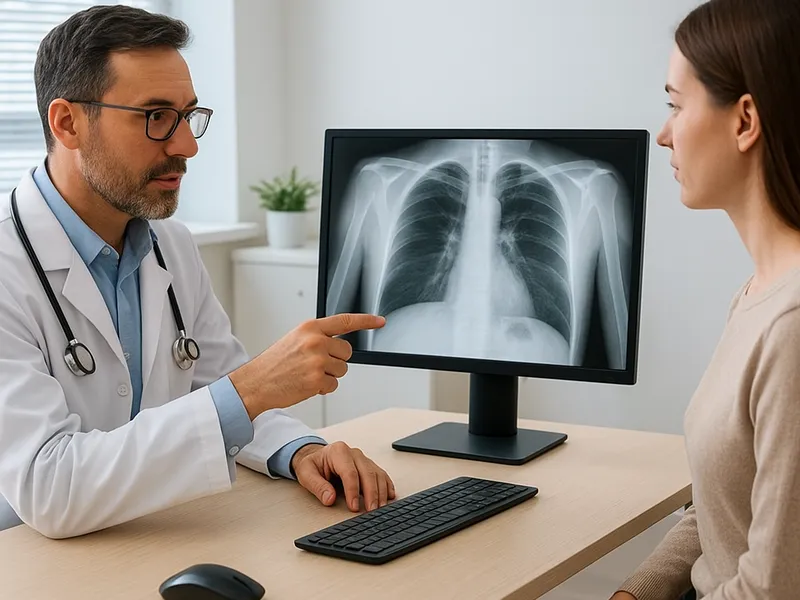
Non small cell lung cancer NSCLC is the most common type of lung cancer and its course can be highly variable. In many people the disease does not cause obvious symptoms at first, which means that signs may be subtle or nonspecific. Yet recognizing early signs and seeking timely evaluation can significantly influence treatment options, including the possibility of curative surgery for early lesions. This article compares typical early signs, diagnostic paths, and how management differs across stages, with practical guidance for patients, families, and clinicians.
Understanding what to watch for
Early signs are often non distinctive and overlap with common respiratory or infectious illnesses. The most frequent clues include a cough that persists or changes over weeks, shortness of breath with exertion, chest discomfort, wheezing, or hoarseness. Some patients may notice coughing up small amounts of blood or coughing that is more noticeable at night. Unexplained weight loss, fatigue, and recurrent respiratory infections can accompany lung cancer, but they are not specific. The absence of classic symptoms does not rule out NSCLC, so risk factors and imaging findings guide the next steps in evaluation.
Risk factors and screening context
The probability of NSCLC increases with age and a history of smoking, exposure to secondhand smoke, occupational carcinogens, or a personal or family history of lung disease. Screening with low dose computed tomography is recommended for certain high-risk individuals in many healthcare systems, because early cancers may be detected before symptoms arise. Smoking cessation remains the single most impactful measure to reduce risk and improve overall health outcomes, regardless of current cancer status.
Diagnostic path: from symptom to tissue
A careful history and physical exam are followed by imaging and, if suspicion remains high, tissue confirmation. Chest imaging is the initial step, with a CT scan providing precise information about the size, location, and spread of nodules. A PET-CT scan may also be used to assess metabolic activity and identify regional or distant involvement. The definitive diagnosis rests on a biopsy that confirms NSCLC and specifies the histologic type, such as adenocarcinoma or squamous cell carcinoma. Molecular testing on biopsy tissue is increasingly standard, because many tumors carry targetable mutations or expression profiles that guide personalized therapy.
Table 1. Common early signs of NSCLC
Symptom — Why it matters
Persistent cough — Most frequent early sign requiring assessment
Shortness of breath — Indicates airway obstruction or lung impairment
Chest pain or discomfort — May reflect tumor growth or pleural involvement
Wheezing or hoarseness — Suggests airway or nerve involvement
Coughing up blood — Urgent symptom warranting prompt evaluation
Unexplained weight loss — Red flag for systemic disease
Fatigue — Nonspecific but common in cancer
Recurrent lung infections — May signal localized obstruction
Table 2. Diagnostic steps in suspected NSCLC
Test — Purpose
