
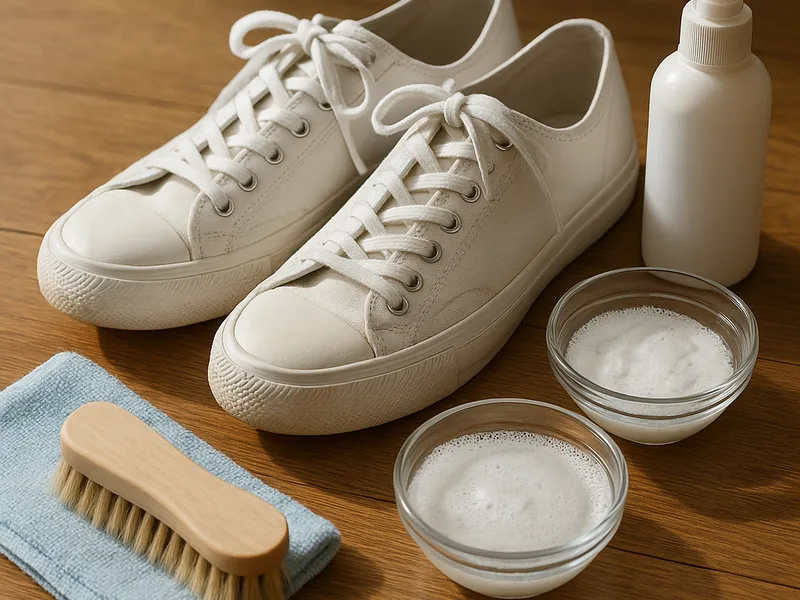
White sneakers have earned a timeless place in street style and everyday wear, but keeping them bright demands a practical routine rather than a one size fits all approach. The best approach starts with knowing your material and choosing products that lift dirt without harming the fabric or leather. A successful clean is less about aggressive scrubbing and more about a gentle, repeatable process that removes grime while preserving the original color and texture. Whether your go to pair is canvas, leather, or suede, there is a method that will restore its look while extending its life.
First, prep and safety should come before any cleaning. Remove laces and insole if possible, as these can snag or harbor stains. Knock off loose dirt with a dry brush or a soft cloth. This prevents mud from smearing and creates a cleaner canvas for the actual wash. Always test a small, inconspicuous area before applying any cleaner to the entire shoe, especially if the material is delicate or has a color that may bleed. If you are using a new product or home solution, stick to mild remedies and avoid anything acidic or bleach based on colored fabrics.
Canvas and mesh sneakers respond well to a gentle cleaning solution. Mix a small amount of mild liquid soap or a dedicated sneaker cleaner with warm water. Dip a soft brush or cloth into the solution and work in circular motions, focusing on stubborn stains without saturating the material. After a careful scrub, wipe away the soap with a clean damp cloth and let the shoes air dry away from direct heat or sunlight. For white canvas with stubborn yellowing, a thin paste made from baking soda and water can be applied to the stain, left to sit briefly, and then rinsed away. Hydrogen peroxide can be effective for whiteness but should be used with caution, particularly on colored accents or delicate fabrics; always dilute and test first. A second light pass may be needed for embedded dirt, followed by thorough drying and a protective spray to guard against future stains.
Leather sneakers require a gentler touch. Use a mild soap or a dedicated leather cleaner, applying it to a microfiber cloth rather than directly on the shoe. Gently wipe the surface to lift oils and dirt, avoiding excessive moisture that could warp or dry out the material. After cleaning, dry with a fresh cloth and apply a leather conditioner to preserve suppleness and prevent cracking. Leather surfaces benefit from a routine that includes conditioning after each clean, as exposed leather dries out in the presence of cleaning agents and air. If your leather has a painted or coated finish, err on the side of lighter cleaning to avoid removing the color or gloss. Suede, meanwhile, requires a different mindset: water is often more harmful than helpful. Use a suede brush to lift nap and remove dry dirt, followed by a specialized suede cleaner if needed. For stubborn stains, a white rubber eraser or suede cleaning block can be gently worked into the surface. After drying, apply a protective spray designed for suede to help repel moisture and stains, but use only on compatible textures to prevent staining or darkening.
