
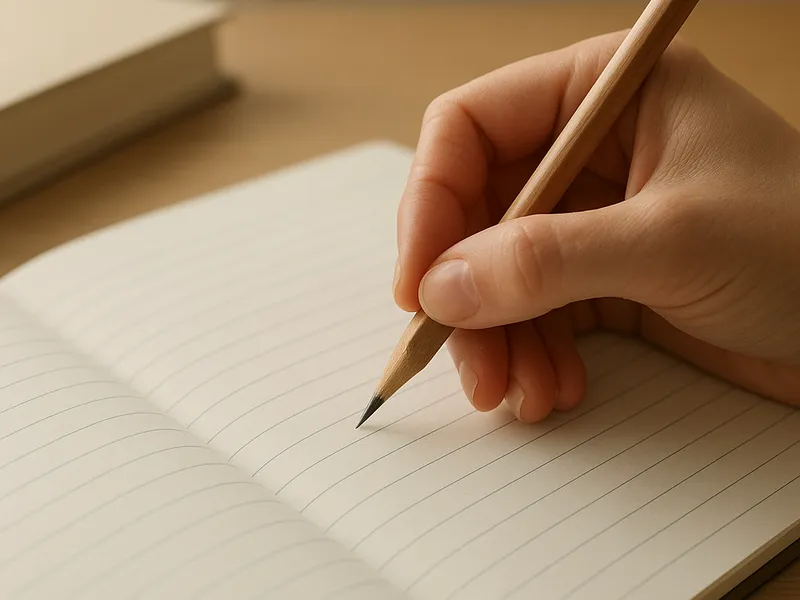
Improving handwriting is less about chasing a perfect script and more about building a dependable, repeatable process that makes your writing legible, expressive, and efficient. Whether you are a student who wants better notes, a professional who drafts quick memos, or an adult returning to handwriting after years of typing, simple adjustments in posture, grip, and practice can yield noticeable results. The goal is not to imitate a fancy font but to cultivate a steady, comfortable flow that suits your hand, your tools, and your tasks.
Good handwriting starts with the basics. Before you even pick up a pen, set up a small writing station that reduces friction and strain. Sit upright with shoulders relaxed, feet flat on the floor, and the writing surface at a height where your forearm rests comfortably and your wrist does not bend unnaturally. The page should tilt slightly toward you, and you should be able to see the line you are writing on without lifting your head. Lighting matters, too. A well-lit desk minimizes eye strain and helps you keep your ink within the lines.
Choosing the right tool matters as much as technique. Beginners often benefit from a pencil that glides smoothly and a lead that is easy to erase. As you gain confidence, you may switch to a ballpoint or gel pen with a comfortable grip. Ergonomic grips, soft-tiber tips, and pens with a controlled ink flow can prevent you from gripping too tightly, which is a common source of fatigue. Paper with clear, evenly spaced lines gives your letters a consistent baseline and cap height. If you are practicing cursive, a notebook with lined pages that include both baseline and midline guides makes it easier to track proportion.
Grip and wrist relaxation are essential. A common mistake is white-knuckled pressure on the pen. Instead, hold the pen with a relaxed tripod grip, letting the pen rest lightly on the pad of the middle finger while the thumb and index finger guide it. The wrist should move the pen in a smooth arc rather than the fingers pinching and twisting. Practice simple strokes to train muscle memory: short vertical lines, curves, and circles that repeat along a baseline. Do not rush. Speed comes after accuracy and fluency.
Letter formation is the core of readability. Start with simple shapes and build toward letters. For uppercase and lowercase letters, focus on consistent stroke order and size. A practical method is to learn one or two letter families at a time. For example, practice straight lines and rounded shapes in the same rhythm, then apply these to letters that share similar strokes, such as l, t, h, and d in one session. When forming letters, keep consistent height and spacing: the baseline, midline, and the space between words should feel predictable to your eye. The more consistent your letters, the more legible your writing becomes, even before you work on speed.
Developing spacing and alignment is often overlooked but transformative. Uniform word spacing makes your writing look clean, as does a steady margin along the left edge. You can train this by writing short practice lines—like a sentence or two—while paying attention to the space between words and the consistency of letter width. If your lines drift, place a light guide with your non-writing hand beneath the page to keep your baseline steady. Over time, your hand will learn to glide along the paper with less conscious effort.
Practice routines that build endurance without causing fatigue are critical. Short, frequent sessions beat long, infrequent ones. A practical plan is to practice daily for fifteen to twenty minutes, four weeks in a row. Start each session with warm-up drills: tracing lines, making repeated loops, and copying a few sentences at a comfortable pace. Then progress to self-made practice sheets that mimic real writing tasks such as note-taking, journaling, or composing short messages. End each session by reviewing a small sample of your writing, noting improvements and any persistent trouble spots.
When you want guided help, several reputable programs and resources can support your journey. Here is a quick comparison of top providers that sell or provide handwriting improvement materials or services:
