
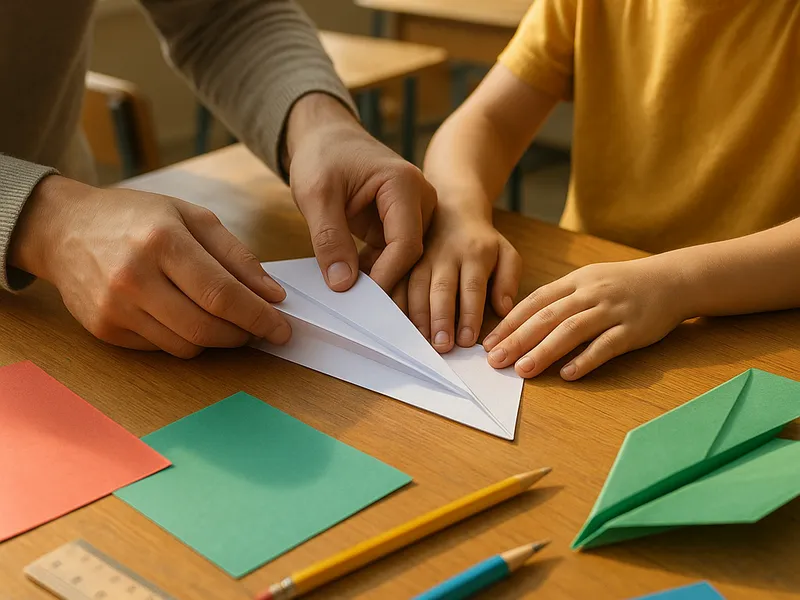
Making a paper airplane is one of the simplest, most enduring craft activities there is, and it doubles as a tiny lesson in physics. The beauty of a basic paper airplane lies in how cheaply and quickly it can be created, tested, and improved. It is a pastime that crosses age and skill boundaries, offering endless room for experimentation while keeping the process approachable and fun. Below is a practical, well rounded guide that covers the basics, a few design variations, and where to find more materials and inspiration.
First, a quick look at why some planes fly farther than others. The key ingredients are balance, aerodynamics, and a clean fold. Stability comes from the distribution of weight along the fuselage, and the shape of the wings determines lift and drag. Small adjustments to the nose weight, wing angle, or trailing edges can dramatically change how a plane behaves when you throw it. The great thing about paper airplanes is that these adjustments can be tested in real time with no risk or cost beyond a sheet of paper.
Starting with the classic dart design, which is a reliable everyday option:
Start with a square sheet of paper, ideally a standard printer paper for consistency.
Fold the paper in half lengthwise and create a sharp central crease. Unfold to reveal the crease line.
Fold the top two corners toward the center so they meet at the crease, forming a triangle at the top.
Fold the point of the triangle down so its tip aligns with the bottom edge of the paper, creating a small rectangle at the bottom.
Lift the newly formed top corners and fold them toward the center again, setting up the wings.
Fold the wings down on either side so their trailing edges align with the bottom edge of the body. A small crease along each wing helps define the shape.
Optional tweaks include giving the wings a slight upward bend (dihedral) and adding tiny “winglets” by folding a small edge upward at the tips. These changes can improve stability and distance.
If you want a plane that glides more slowly and smoothly rather than diving quickly, try a slightly different approach, often called a glider or cruiser:
Begin with a similar square sheet and a strong center crease.
Instead of pinching the corners inward, give the wings a longer, broader sweep by extending the folds along the body so the wings cover more surface area.
Keep the nose heavier, but distribute the weight with a small, deliberate fold toward the front or a folded paper clip inside can help - though the latter may not suit all classrooms or settings.
The goal is more lift, less abrupt nose-down motion, and a longer, more graceful flight arc.
When testing your plane, consider launch technique as part of the design. A quick, level throw with a slight upward angle tends to produce longer flights for darts, while smoother, more gentle throws suit gliders. If your plane loops or dives immediately, inspect for a few common culprits: a nose that’s overly heavy, wings that are unequal in size or angle, or folds that aren’t perfectly crisp. A clean crease makes a big difference, so take a moment to sharpen each fold with a ruler or the edge of a finger.
What to fold with and where to learn more
