
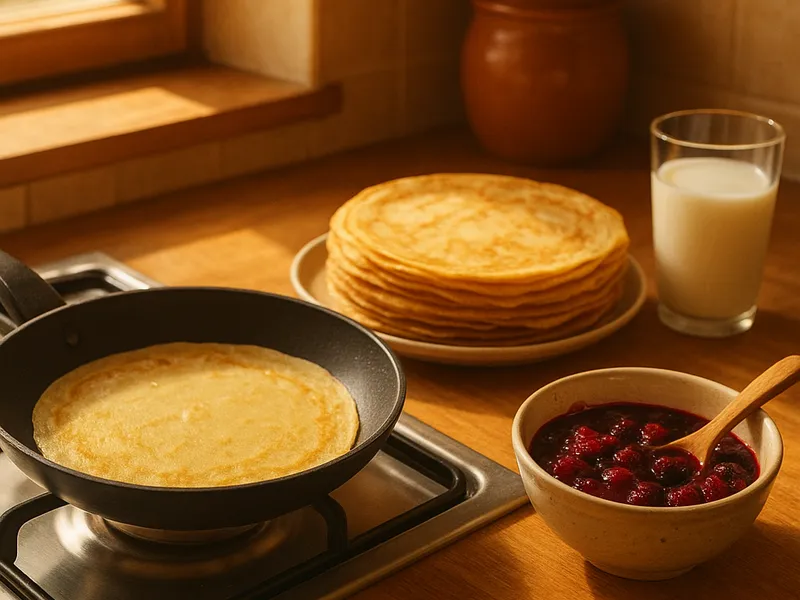
Crepes are a culinary canvas that can adapt to mornings, afternoons, and evenings, turning simple ingredients into a dish that feels both comforting and adventurous. In their simplest form they are ultra thin pancakes that cook in minutes, yet mastering them reveals a balance of technique, timing, and dependable equipment. The goal is a lacy edge, a tender center, and batter that behaves consistently whether you are in a small apartment kitchen or a bustling home bakery. The best crepe begins with the batter, evolves through the pan, and ends on a plate with a satisfying fold or a delicate roll. While the word crepe might summon memories of a bustling Parisian street cart, the reality is friendlier: with the right approach you can produce reliably glossy crepes at home any day of the week.
First consider equipment because it sets the stage for texture and ease. You have two broad paths: a traditional stove top skillet or a dedicated electric crepe maker. A wide, shallow nonstick skillet of about ten to twelve inches is forgiving for beginners. It heats quickly, develops a smooth surface, and makes it easy to swirl batter into a near translucent circle. If you prefer a more uniform result or enjoy experimenting with professional tools, many brands offer dedicated crepe makers that resemble griddles. These devices range from compact home models to larger premium units. On the high end you find brands that emphasize consistent temperature control and even heat distribution, suitable for daily practice or small home businesses. On the mid to lower end you’ll find compact electric options with adjustable heat and nonstick surfaces that still perform surprisingly well. When comparing options you should weigh price against pan size, ease of cleaning, controls, and warranty. Popular brands you’ll encounter in major stores and online include Krampouz and Breville for premium electric models, Tefal and CucinaPro for more accessible choices, and Cuisinart or Nordic Ware for dependable nonstick pans and griddles. Shopping sites such as Amazon, Williams Sonoma, Sur La Table, Wayfair, and Target carry a wide range of these tools, often with user reviews that help you discern what works best in real kitchens. If your space is limited or you simply want to test the craft, starting with a quality nonstick skillet may be the most economical and flexible path. If you anticipate frequent crepe nights or a larger family, a dedicated crepe maker can shave minutes off your process and create a more consistent finish.
Next comes the batter. Classic crepe batter is essentially a thin pancake batter with less flour and a touch more liquid. A reliable starter ratio is one cup of all purpose flour to two eggs, plus about one and a half to two cups of milk, a pinch of salt, and a couple of tablespoons of melted butter or neutral oil. Some cooks add a kiss of sugar for dessert crepes or a splash of vanilla, but many prefer a clean, neutral flavor that lets the filling shine. Whisk until smooth; lumps are your enemy here. A rest period of thirty minutes to an hour helps the gluten relax and the starch to hydrate, resulting in a more pliable batter that pours and spreads evenly. If you are in a hurry, you can skip the rest but expect slightly tougher edges and a shorter window of work before the first crepe loses its delicate sheen.
The heating and pouring technique is where the art meets the science. Heat level should be medium to medium high, depending on your pan. A drop of batter should sizzle gently on contact, and you should be able to swirl the pan to form a uniform circle about the diameter of a dinner plate. The ideal crepe spends about a minute to a minute and a half on the first side; you want the edge to peel away from the pan and develop a light golden color. A quick flip with a smooth wrist is all that’s needed to cook the second side, typically another thirty to forty seconds. If your batter tends to sit in the pan and pool rather than spreading, adjust by adding a splash more milk or lowering the heat a touch. Conversely, if the center is pale or the edges burn quickly, your pan may be too hot or you may be pouring too much batter at once. A well seasoned pan or a nonstick surface will help the crepe release without tearing.
