
Distilled water is water that has been purified through the process of distillation, a method that uses heat to convert liquid water into vapor and then condenses that vapor back into a liquid. In practical terms this means minerals, salts, and many impurities are left behind, resulting in a very pure form of water. This level of purity makes distilled water a preferred option for certain appliances and applications where minerals can cause scaling, corrosion, or interference with chemical reactions. People often turn to distilled water for laboratory experiments, car cooling systems, steam irons, and some medical or dental practices, where consistent, mineral free water can be important. It is not inherently better for hydration than plain tap water for everyday drinking, but its predictable composition can be crucial in environments where mineral scaling or impurities might affect performance or outcomes.
Understanding the distillation process helps you decide whether to buy distilled water or to make it at home. The core idea is straightforward: heat water to its boiling point so it becomes steam, then collect and cool that steam so it condenses back into liquid. When water boils, most impurities do not boil at the same temperature, so they remain behind in the boiling vessel. The steam rises, travels through a cooling pathway, and recondenses as liquid water in a separate container. Modern home setups automate this process with dedicated distillers, but you can also improvise a simple still with common kitchen equipment if you are curious or on a tight budget. The key is to ensure safety, particularly around heat sources, open flames, and the materials used to handle hot liquids.
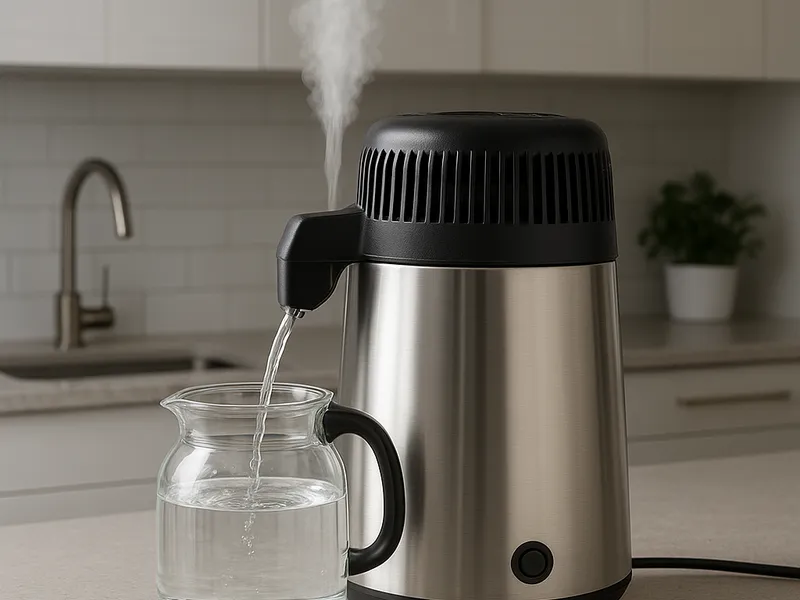
For most households, a countertop water distiller is the easiest and safest route. A typical distiller consists of a reservoir, a heating element, a condensation chamber, and a glass carafe to collect the distilled water. You fill the reservoir with tap water or filtered water, switch the unit on, and wait as the water heats and turns to steam. The steam rises and moves through a cooling coil or chamber where it condenses back into liquid. The distilled water then drips into the carafe as the impurities stay behind. These machines vary in capacity, with common models offering a few liters per cycle and a cycle duration of several hours depending on the design. When using a distiller, it is advisable to place the unit on a stable, heat resistant surface away from direct sunlight and ensure good ventilation around the exhaust.
If you enjoy hands on tinkering or want a no power option, you can attempt a basic improvised still. One approach uses a large pot with a tight lid, a heat source, and a heat resistant glass or metal bowl to collect condensed water. In this setup you place water in the pot, invert the lid so that the lid’s knob points downward and acts as a funnel for the condensed droplets, and position a bowl at the lowest point to collect the distilled water as steam condenses on the cooler lid. Ice or cold packs along the lid edge can speed condensation. This DIY method can be slower and less consistent than a purpose built distiller, and it requires careful handling to avoid burns, spills, or pressure buildup. If you choose to experiment with a home made setup, proceed with caution and never leave the device unattended during operation.
