
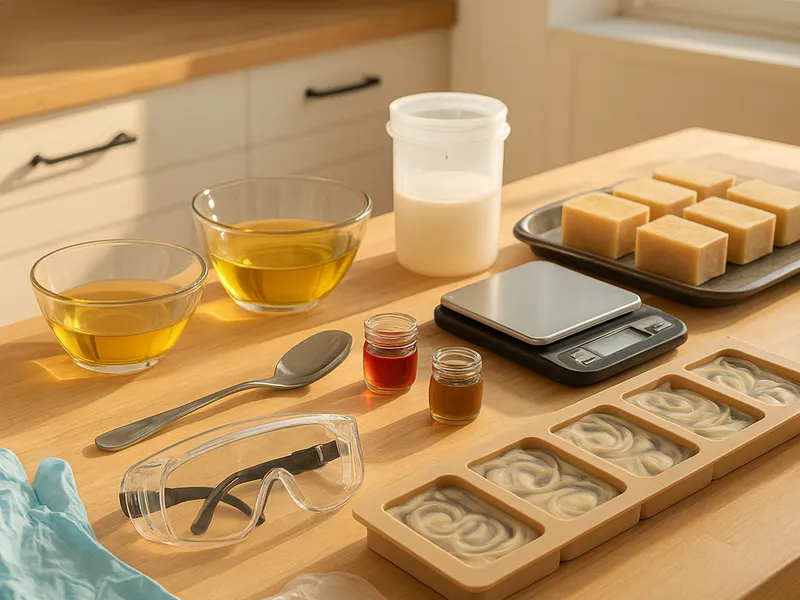
Soap making blends science and craft into a sensory routine of measuring, heating, and patiently waiting for bars that feel like you. The tradition dates back centuries, but the modern home workshop offers safe, approachable paths to hand crafted soap, from simple melt and pour blocks to the more involved cold process bars. Whether you crave a creamy olive oil loaf or a bright citrus swirl, you can start with a modest kit and grow into more complex formulas.
Safety and planning are the first pillars. Lye, a strong alkali used to convert oils into soap, can be hazardous if mishandled. Always wear protective gloves and goggles, work in a well ventilated space, and keep pets and children away from the workstation. Never add water to lye; always add lye to water in a chilled container, stirring slowly and keeping the solution away from your skin. Clean up promptly and store lye in a clearly labeled, sealed container. With safety in mind, gather ingredients in measured quantities and set up a dedicated space with a non porous work surface and heat resistant containers.
Option one is melt and pour, which uses a pre made soap base that you melt, color, and scent. This route avoids raw lye entirely, making it ideal for beginners, schools, or when you want to prototype a design quickly. You simply cut blocks of base, melt them in a double boiler or microwave at low heat, stir in colorants and fragrance oils, and pour into molds. After cooling, unmold and cure is not long, since the base has already completed the saponification process. The variety here comes from base types—transparent, opaque, goat milk, glycerin—and the endless possibilities for style and texture.
The cold process method is where craft meets chemistry. It requires careful weighing, a lye solution, and a blend of oils such as olive, coconut, palm or sustainable alternatives. The typical workflow involves four interlocking steps: prepare your workstation and safety gear; create and cool your lye solution; heat and blend your oils to a suitable temperature; and combine the lye solution with the oils until trace is reached, where the mixture thickens enough to curtain the top of the bowl. Then add fragrances and colorants if desired, pour into molds, insulate briefly, and let the soap cure for several weeks. The curing period is essential as it allows excess water to escape and the soap to harden for a longer lasting bar.
