
How To Play Piano
Article
2025-12-10 • 5 min read

How To Play Piano

Learning to play the piano is a journey that blends technique, listening, and daily habit. It starts with simple questions: what instrument will you practice on, how will you structure your sessions, and what resources will keep you motivated over weeks and...

Learning to play the piano is a journey that blends technique, listening, and daily habit. It starts with simple questions: what instrument will you practice on, how will you structure your sessions, and what resources will keep you motivated over weeks and months? Whether you’re a complete beginner or returning after years away from the keys, the path to proficiency can be clear, enjoyable, and surprisingly quick to map out with the right approach and the right tools.

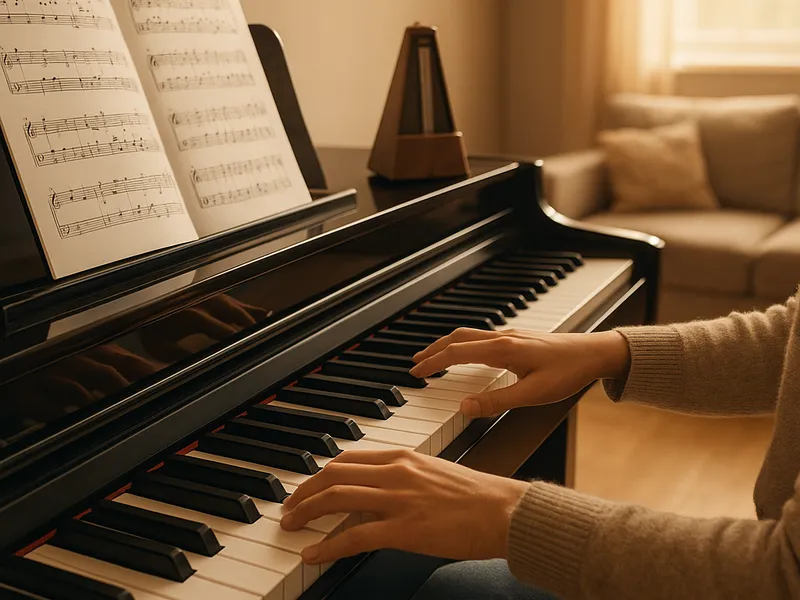
First, set up a practical practice space and a sensible instrument. A full acoustic piano offers a richer touch and tone, but a well-rated keyboard or digital piano with touch-sensitive keys can be equally effective for beginners and much more affordable. Position yourself at a comfortable height with relaxed shoulders, bent elbows, and curved fingers. Start by learning the layout of the keyboard: white keys, black keys grouped in two and three, and the concept of middle C as a reference point. Learn a few fundamental fingerings and the concept of hand position—keep your wrists level, avoid collapsing your knuckles, and use a light, even touch.

Reading music becomes your compass once you begin. Begin with the treble and bass clefs, notes, and simple rhythms. A basic understanding of rhythm, tempo, and counting is essential. Use a metronome from day one; even a slow, steady tempo helps you avoid developing bad habits. Soon you’ll move from just playing scales to shaping melodies, then to coordinated hands, which is where the real challenge—and the real pleasure—begins.

A practical practice plan makes the difference. Short, focused sessions of twenty to thirty minutes several days a week will outperform long, irregular stints. Alternate between technique work—scales, arpeggios, and simple finger exercises—and repertoire that you enjoy. For beginners, simple melodies in easy keys offer quick wins and build confidence. As you progress, slowly introduce a bit of music theory: key signatures, chord progressions, and how scales relate to pieces you’re playing. This theory enriches your ear and helps you anticipate what comes next, rather than merely following instructions.

Technology has transformed how people learn piano, offering guided courses, interactive feedback, and wide song libraries. Several leading platforms provide structured pathways, feedback mechanisms, and flexible access across devices. Comparing a few popular options helps you choose what aligns with your goals, schedule, and budget.

How To Play Piano

Pianote emphasizes teacher-led structure and progressive teaching that mimics a private lesson with clear milestones. It works well for learners who prefer a defined curriculum, weekly practice plans, and regular feedback from instructors. Flowkey shines with a vast library of songs and an emphasis on playing along in real time. It’s strong for those who want immediate audio-visual cues and a flexible, library-driven approach. Simply Piano from JoyTunes focuses on intuitive progression and handy real-time recognition of what you play, making it excellent for beginners who want a gentle, guided start. Playground Sessions blends video lessons with interactive MIDI feedback and an approach co-created with a well-known producer, which can feel like a friendly, game-like studio class. Yousician runs across multiple instruments with a broad lesson catalog and a robust feedback system, ideal for learners who want a broad, gamified experience. Skoove offers progressive lessons with a focus on improvised practice and ear training; it’s particularly suitable for players who want to develop practical playing fluency. Udemy hosts a wide range of piano courses from many instructors, providing lifetime access to content but requiring you to pick a course that fits your learning style.

Prices vary, but the pattern is familiar: subscription models for ongoing access, with some platforms offering free trials or limited free tiers. If you’re evaluating options, consider these angles: How structured is the path? How responsive is the feedback system? Do you prefer learning by following a teacher-led sequence or exploring a large catalog at your own pace? How compatible is the platform with your devices and your keyboard or piano? If you have a specific repertoire in mind, a platform with a strong song library aligned to your tastes can be a strong motivator. If you value a tailored progression, a teacher-led program may offer more consistent guidance. If you crave variety and versatility, a large library with play-along features could be your best bet.

As you begin, here is a practical plan you can apply today. Step one, set up your instrument and a reliable metronome; step two, learn the home position for both hands and play five-note scales in a comfortable key to build finger independence; step three, pick a simple, familiar song to practice weekly, gradually adding difficulty; step four, incorporate short, targeted drills for rhythm and articulation; step five, record a short performance once a week to observe progress and refine your technique. For solo practice, choose a repertoire you enjoy; for steady improvement, mix in method-based tasks like scales and arpeggios. If you are open to formal instruction, sign up for a trial of a platform that matches your preferred learning style and budget; if you prefer self-guided exploration, start with a broad library and a few structured lessons to anchor your routine.

Beyond platforms, make room for feedback. Engage with peers or online communities, share recordings, and invite critique. The act of hearing others play can illuminate your own blind spots—hand position, tone quality, even your mental approach to difficult passages. Integration with apps or online lessons is not about replacing human teachers but about augmenting your practice with consistent feedback and a clear progression that you can rely on when life gets busy.

Finally, maintain a wellness-oriented approach to practice. The body pays attention to posture and repetition; a rigid approach can lead to tension or injury. Stay mindful of breathing, take breaks, and keep sessions enjoyable. Even the best plan falters without consistency, so design a routine that you can sustain for weeks and months. Celebrate small victories—your first simple song, smoother transitions between chords, or a clean repetition that finally lands perfectly.

In the end, learning to play piano is less about speed and more about refined listening, deliberate practice, and steady curiosity. The best learning path blends hands-on technique, musical curiosity, and the right blend of guided instruction and independent exploration. Whether you gravitate toward a structured course or prefer the freedom of an extensive song library, the piano welcomes you with a spectrum of paths. The keys await your touch, and with a practical plan, you’ll find yourself not just producing notes but telling stories with them.

← Back to all articles