
Invisible Dental Aligners Dentist In My Area
Article
2025-12-11 • 6 min read

Invisible Dental Aligners Dentist In My Area

If you are considering invisible dental aligners in your area, you are tapping into a market that blends modern imaging, at home convenience, and dentist guided oversight. The rise of clear aligners has made orthodontic-looking results accessible to many ad...

If you are considering invisible dental aligners in your area, you are tapping into a market that blends modern imaging, at home convenience, and dentist guided oversight. The rise of clear aligners has made orthodontic-looking results accessible to many adults and teens who want a discreet path to a better bite and a brighter smile. The key now is to find a trusted local provider, understand the options, and choose a plan that matches your goals, lifestyle, and budget. This article dives into how to locate a dentist or orthodontist nearby, compares major aligner brands that you might encounter online or in clinics, and lays out practical steps to get started.

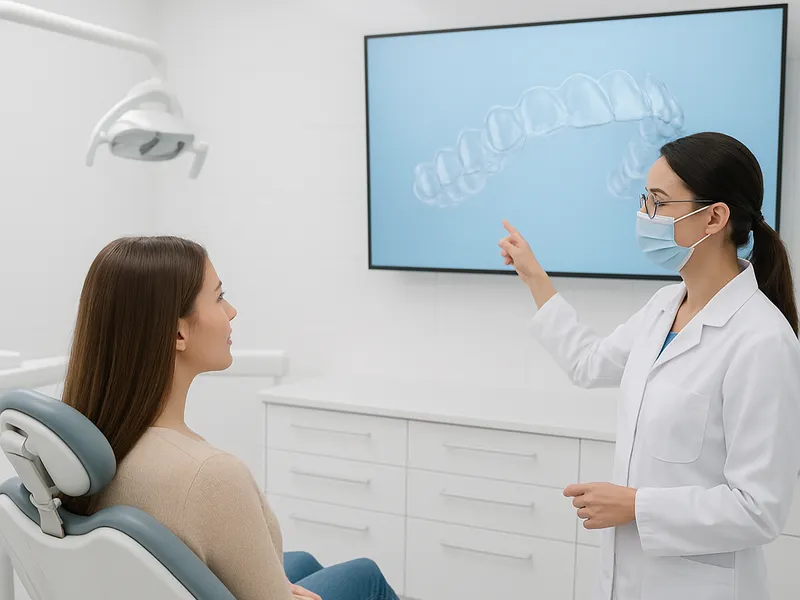
How invisible aligners work in a local setting The typical journey starts with a consultation at a dental office. A clinician will determine whether clear aligners are suitable for your bite and cosmetic goals. If you proceed, a digital scan or physical impression is taken to create a precise 3D model of your teeth. The model is used to design a treatment plan that maps how your teeth should move over time. You’ll receive a series of custom-made aligners that you wear for most of the day, changing to the next aligner as prescribed—often every one to two weeks. Regular check-ins, either in person or via remote monitoring through an app, keep the plan on track and allow your dentist to adjust as needed.

Top brands and how they differ Invisalign remains the most widely used system, available through many certified dentists and orthodontists. It is typically paired with a personalized treatment plan created by a clinician who is trained and accredited to work with Invisalign’s software. The result is a high level of guidance for complex cases, with predictable results but often at a higher price. If you value a well-established provider network and broad case coverage, Invisalign offers strong compatibility with most practice settings.

SmileDirectClub represents a different route that emphasizes accessibility and cost savings. It began with at‑home impression kits and remote clinician oversight, paired with in-person options in some storefront locations. For milder alignment needs, many patients report noticeable improvements at a lower upfront cost. However, not all dental practices accept SmileDirectClub plans, and some complex bite issues may be discouraged by the company’s guidelines. When considering SmileDirectClub, weigh the convenience and cost against the importance of in-person evaluation by a clinician who can manage nuanced bite problems.

Byte is another direct‑to‑consumer option that emphasizes speed. Byte markets its system as fast and convenient, often appealing to patients who want shorter treatment times and remote support. Byte uses a compatible at‑home workflow with supervision from licensed dentists, and it promotes a technology that can shorten the treatment window for suitable cases. If time is a priority and your case is straightforward, Byte might be worth exploring alongside traditional options.

Invisible Dental Aligners Dentist In My Area

Candid pairs remote monitoring with a clinical oversight model. The process usually begins with an in‑person or virtual intake, followed by a digital scan and a tailored plan reviewed by a licensed orthodontist or dentist. Candid’s emphasis on professional involvement throughout treatment aims to balance affordability with clinical accountability. It can be a good middle ground for those who want a lower price point than Invisalign but still want professional supervision.

ClearCorrect is another widely used system in dental practices. Like Invisalign, it requires a clinician to create and supervise your treatment plan. ClearCorrect is often positioned as a cost-conscious alternative within the same orthodontic framework, and many offices offer it as part of their standard aligner options. If your area has multiple practices offering ClearCorrect, you may find competitive pricing or flexible scheduling.

How to do it: practical steps to start near you - Start with a local search for “invisible aligners near me” and “orthodontist near me.” Look for offices that advertise Invisalign, ClearCorrect, or other aligner brands, and check patient reviews focusing on comfort, results, and follow-through. - Book consultations with at least two or three providers to compare plans, imaging methods, and aftercare options. Ask about whether they use digital scans, in-person impressions, or a combination, and how they monitor progress. - Request to see before-and-after photos of patients with similar cases. Inquire about the expected duration of treatment and the number of aligners required for your bite. - Clarify cost and financing. Costs vary significantly by brand, region, and the complexity of your case. Ask for a written treatment plan with a clear breakdown of aligner costs, scans, retainers, and any visits. Inquire about insurance coverage and financing options such as payment plans. - Evaluate the level of professional oversight. If you prefer a fully clinician-guided path, prioritize practices that emphasize in-person check-ins or robust remote monitoring by licensed professionals. - Prepare for a realistic commitment. Clear aligners require discipline—wear time, cleaning routines, and timely changes. Ensure you’re ready to follow the recommended regimen and attend follow-up appointments. - Consider future smile maintenance. Discuss retention after the active phase, because a good retainer plan helps preserve your results.

What to expect in terms of cost, duration, and complexity Treatment length depends on the alignment challenges you face. Mild cases may require a few months, while moderate to complex corrections can stretch longer. Broadly, direct-to-consumer options tend to be less expensive than traditional clinic-based programs, but they may not be suitable for every bite issue. Your dental team can help you gauge whether your case would benefit from a more comprehensive orthodontic approach or if aligners will meet your cosmetic goals while preserving function. Ensure you understand what happens if adjustments are needed or if your bite requires additional work later on.

Tips and suggestions - Prioritize a trustworthy provider with a clear plan for dispute resolution and aftercare. - Ask about retention options: most systems require some form of nighttime retainer after the aligners finish to maintain results. - Inquire about stain prevention and hygiene guidance to protect your enamel and gums during treatment. - If you have aligners in place and experience discomfort, persistent pain, or tooth movement beyond what you were told, contact your provider promptly. - For complex bite issues or skeletal discrepancies, traditional orthodontic approaches or surgical planning may be more appropriate. Don’t rush to a solution that doesn’t fit your clinical needs.

In summary, the local availability of invisible aligners gives you a spectrum of choices that can fit different budgets and comfort levels. Whether you lean toward a clinician-guided Invisalign plan, a more affordable direct-to-consumer option, or a hybrid approach that blends remote monitoring with in-person visits, the right path starts with a careful evaluation and a clear understanding of goals. With diligent planning and professional oversight, you can achieve a discreet transformation that supports long-term oral health and a confident smile.

← Back to all articles