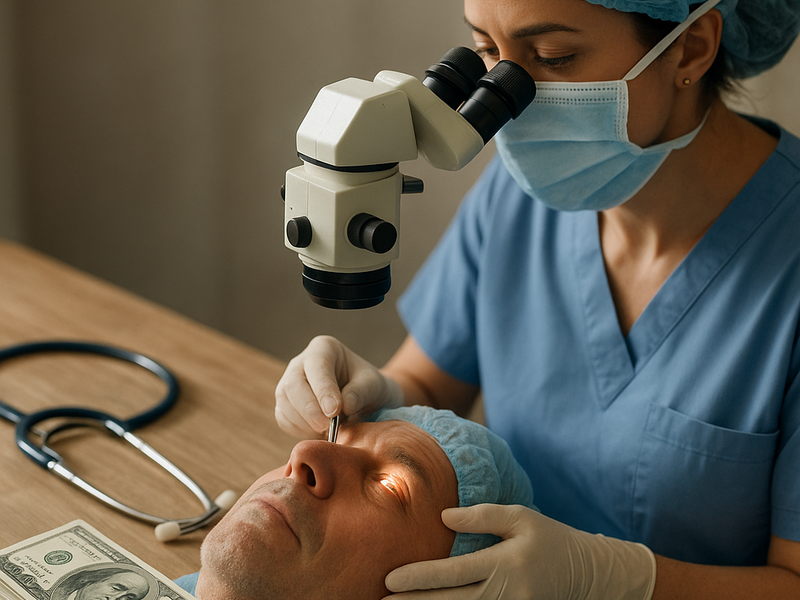

If you wear glasses or contact lenses, the idea of eliminating or reducing dependence on them can be appealing. In the United Kingdom, laser eye surgery commonly known as LASIK has become a mainstream option offered by private clinics and eye care groups. Patients weigh the potential benefits against the price tag, which can vary significantly based on technology, the surgeon’s experience, and the level of aftercare included in the package. This article looks at what drives LASIK cost in the UK, what you can expect from top providers, and practical steps to take if you are considering pursuing this procedure.
LASIK is a refractive surgery that uses a laser to reshape the cornea to correct common vision errors, such as myopia, hyperopia, and astigmatism. The goal is to reduce or eliminate the need for glasses or contact lenses. The procedure itself is typically performed on an outpatient basis, with several steps including an initial assessment, corneal mapping, the surgical pass itself, and a period of aftercare and monitoring. While the concept is straightforward, the price you pay is influenced by several factors that go well beyond a single treatment in the chair.
What determines the price in the UK Costs for LASIK in the UK are commonly quoted per eye, with many clinics offering a two-eye package. Prices vary widely because of the following variables: Technology used: blade-free femtosecond laser options for flap creation and wavefront-guided correction tend to be priced higher than traditional methods. Refractive error and corneal thickness: more complex prescriptions or thinner corneas may require tailored treatment plans. Choice of platform: different clinics use different laser platforms and software, which affects both safety profiles and cost. Preoperative testing and assessments: a thorough evaluation, including corneal topography, pachymetry, tear film analysis, and possibly dry eye testing, is usually included or billed separately. Aftercare and guarantee: longer follow-up, retreatment options, and guarantees can add to the overall package price. Financing and promotions: some clinics offer payment plans or promotional pricing that makes the upfront cost more manageable.
In general, you can expect pricing to span a broad range. Common ranges reported across the private sector in the UK are roughly from the mid to high hundreds per eye for basic offerings up to around two thousand pounds or more per eye for advanced blade-free correction using premium technology. For a two-eye treatment, many patients see total prices that fall somewhere in the lower to mid four figures before any financing. Always check exactly what’s included in the quoted price: preoperative tests, the procedure, postoperative care, and any retreatment options.
Top providers and how they compare Two well-known players in the UK market are Optical Express and Optegra. Both operate multiple clinics nationwide and publish online information about their technologies, price bands, and aftercare.