
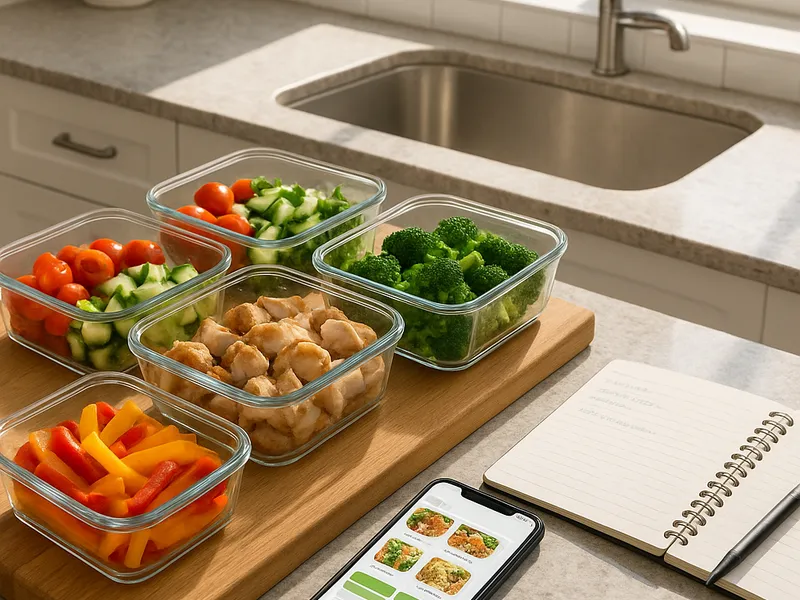
For most people with a packed weekday schedule, meal prep is easier to stick to, because it moves dozens of small food decisions into one planned session and leaves nothing to negotiate at 6 p.m. Cooking daily is the better fit if your schedule is flexible, you genuinely enjoy the process, or reheated food kills your appetite. Behavioral research consistently favors reducing in-the-moment decisions: a large French study of over 40,000 adults found meal planners had higher diet quality and more food variety than non-planners. The honest answer, though, is that the "easier" method is whichever one removes friction from *your* particular week.
Verdict at a glance
- Busy professionals with predictable weeks: Meal prep. One weekend session beats five weeknight scrambles.
- Parents cooking for picky or varied eaters: Daily cooking, or a light hybrid. Flexibility matters more than efficiency when the audience changes nightly.
- Unpredictable schedules (shift work, frequent travel): Daily cooking with a stocked pantry, plus a few freezer backups. Prepped food expires; pantry staples wait.
- People who dislike cooking: Meal prep. Two hours of a chore you tolerate beats seven encounters with a chore you hate.
- People who love cooking: Daily cooking. Enjoyment is an adherence advantage no system can replace.
- Budget-focused households: Meal prep, narrowly. Bulk buying and planned portions cut both cost and waste.
Head-to-head
| Dimension | Meal prep | Cooking daily |
|---|---|---|
| Time | 2–4 hours in one block; ~10 min/day after | 30–60 min every day, plus more frequent shopping |
| Cost | Lower per serving via bulk buying and planned lists | Moderate; small-quantity purchases and impulse buys add up |
| Variety | Limited; you eat what you prepped | High; menu can change with mood and pantry |
| Adherence | Strong when weeks are predictable; brittle if plans change | Strong for cooking enthusiasts; vulnerable to decision fatigue |
| Food waste | Low when portions are planned; risk of tossing uneaten batches | Moderate; unused fresh ingredients are the usual casualty |
Time
Meal prep front-loads the work: a typical batch session runs two to four hours and covers most of a week's lunches or dinners, after which mealtime is a ten-minute reheat. Cooking daily spreads the same labor into thirty to sixty minutes each evening, plus more frequent grocery runs. Which feels lighter depends on where your energy lives. If your weekends are calm and your weeknights are chaos, prep wins decisively. If a free Sunday afternoon is your scarcest resource, a nightly half hour may be the cheaper currency.
Cost
Meal prep usually comes out ahead on cost per serving. Batch cooking rewards bulk purchases, whole proteins, and dried grains and legumes, and a fixed plan keeps impulse buys off the list. Daily cooking isn't inherently expensive, but shopping in smaller quantities more often tends to cost more per unit, and the "nothing planned, let's order out" fallback is the real budget leak. The exception: if prepped meals bore you into abandoning them by Thursday, whatever you tossed erases the savings.
Variety
This is daily cooking's clearest win. You can chase cravings, use whatever looks good at the market, and adjust when guests appear or plans shift. Meal prep, by design, means eating variations of the same few dishes for days, and flavor and texture fatigue is the most common reason preppers quit. You can soften this by prepping components (a protein, a grain, roasted vegetables, two sauces) rather than finished plates, so the same building blocks become a bowl, a wrap, or a stir-fry, but you'll never match the range of a fresh nightly menu.
Adherence
Here the behavioral evidence tilts toward structure. A narrative review of decision-fatigue research found that depleted decision-makers shift toward impulsive, energy-dense food choices, and that the effect is strongest for people under chronic stress or heavy daily decision loads, exactly the state most of us are in at dinnertime. Meal prep works because it makes the healthy choice the default: the food already exists, portioned, in the fridge. The NutriNet-Santé study of 40,000+ adults similarly linked meal planning with better diet quality and lower odds of overweight. Daily cooking can absolutely be sticky too, but usually because the person enjoys cooking; the ritual itself is the reward. If you rely on willpower each evening instead, structure will beat spontaneity most weeks.
