
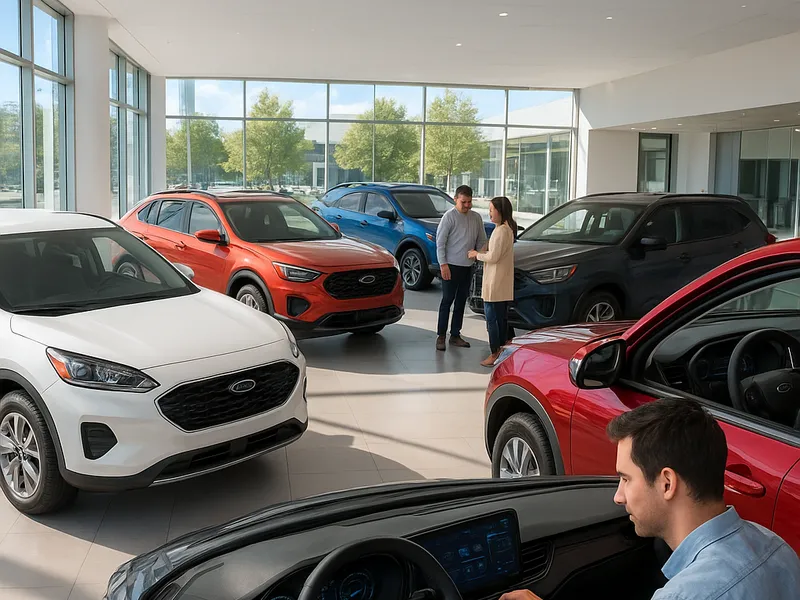
New SUV Cars in 2026 presents a crowded but unmistakable trajectory: more powertrains, smarter cabins, and a broader blend of utility and efficiency than ever before. Buyers entering this market now juggle the expectations of spacious family practicality with the realities of evolving technology and ever-changing incentives. The core question isn’t just which SUV is the fastest or the most luxurious, but which one delivers its promises consistently over time—fuel economy, reliability, safety, resale value, and the kind of driving experience that fits real life. In 2026, the best choices aren’t merely about sticker price; they’re about total ownership and daily usefulness.
What to value in the current SUV landscape
Electrification and efficiency have become mainstream in many segments. You’ll see more all electric and hybrid options across compact crossovers, mid size family SUVs, and three-row performers. The electric and plug-in models bring compelling benefits: quick acceleration from an electric motor, near-silent cabins, and the ability to charge at home or on a road trip with an expanding network of public chargers. But range anxiety remains a practical consideration, especially for families or commuters who log long trips. Look beyond the EPA range figure and gauge how realistic it is for your routine, including charging time, charging availability along your usual routes, and the charging cost exposure in your region.
Safety and driver assistance continue to rise in importance. Look for comprehensive suites that include automatic emergency braking, lane-keeping features, adaptive cruise control, blind-spot monitoring, and rear cross-traffic alerts as standard or widely available options. A growing number of SUVs also offer semi autonomous driving aids and over-the-air software updates, which can improve efficiency and add new features after purchase. The interior has moved from being simply spacious to being increasingly premium, with more durable materials, better sound insulation, and intuitive infotainment that relies on faster processors, larger touchscreens, and responsive voice controls.
When you’re weighing value, consider total cost of ownership rather than sticker price alone. Insurance, maintenance, depreciation, fuel or electricity costs, and potential incentives all add up. Warranty length and road-side assistance programs matter too, especially if you’re buying a family vehicle that you want to feel protected for years. In short, a vehicle that checks the right boxes for your daily tasks—school runs, weekend getaways, and the occasional heavy load—will often outperform a higher-priced option that tries to do too much without excelling at core needs.
Top picks across common needs
All-around family SUV: The best three-row or large mid-size SUVs in the current market tend to combine interior space, strong safety packages, and reasonable running costs. Models from established brands emphasize comfort on long drives, predictable handling, and flexible cargo configurations. Expect a comfortable second and third row, good visibility, and user-friendly rear seating options. When comparing, prioritize cargo space behind the third row and the ease of folding seats for quick reconfiguration. You’ll also want to check how intuitive the infotainment is for both parents and older children, and whether wireless charging and multiple USB ports are conveniently placed for back-seat use.
Best electric SUV: The lineup here includes compact and midsize crossover options that balance range with practicality for families. The electric models typically offer brisk acceleration, refined ride quality, and the peace of mind that comes with a robust powertrain warranty and a broad charging network. Consider the charging speed, home charging hardware compatibility, and the availability of public fast charging along your typical routes. If you plan to use a vehicle as a daily driver in an urban environment, an EV with a comfortable interior, supportive seats, and a strong warranty can be a compelling choice. If you need a fallback, several plug-in hybrids offer a middle ground with electric-only commutes and gasoline range for longer trips.
