
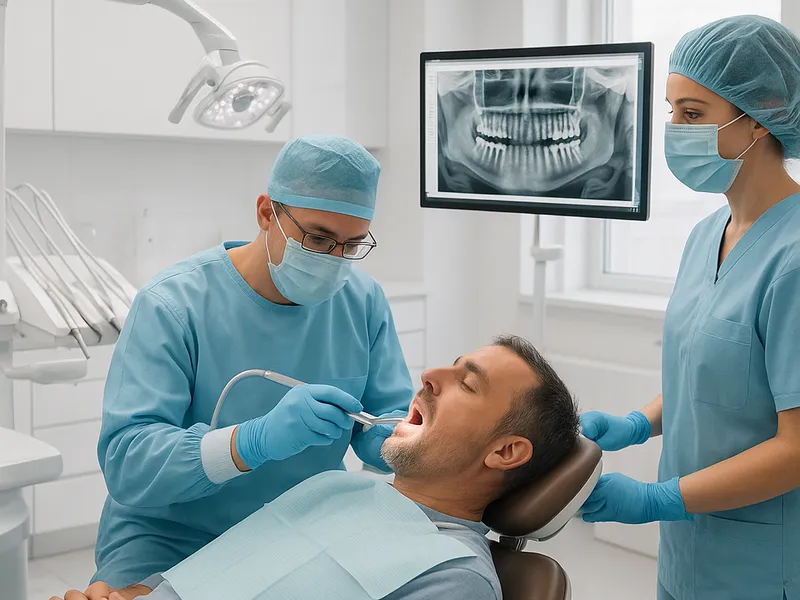
One Day Whole Mouth Dental Implants promises a dramatic transformation in a single stage by providing a fixed full arch of teeth on implants that are placed and loaded with a provisional prosthesis the same day. This approach, often referred to in clinics as same day full mouth implants or an all on full arch solution, combines digital planning, surgical precision, and fast provisional restoration to restore function, aesthetics, and confidence for patients who previously relied on dentures or couldn't chew properly. The concept is shouldered by major dental brands and clinical networks that advocate a highly coordinated process involving imaging, guided surgery, and immediate loading.
When patients explore this option, the first question is usually whether they are a suitable candidate. Candidates typically have sufficient bone density to support implants without extensive grafting, or they can achieve a stable foundation with targeted ridge augmentation if needed. Good gum health and a stable medical status are also important factors. A comprehensive evaluation includes a conversation about medical history, smoking, and expectations. Because the goal is to place and load multiple implants during one visit or within a very short window, the planning phase is crucial. This is where digital imaging, particularly three dimensional cone beam computed tomography, plays a central role. The CBCT scan allows the surgeon to map bone density, nerve locations, and sinus anatomy to determine optimal implant positions and angulations. Digital treatment planning software then translates these data into a surgical guide that ensures accurate placement during the actual procedure.
The procedure itself typically unfolds in a highly orchestrated sequence. After local anesthesia or light sedation, the surgeon places a small number of implants strategically in the jawbone, sometimes angling posterior implants to maximize stability and to avoid extensive bone grafting. A provisional fixed prosthesis is attached onto the implants, allowing the patient to leave the clinic with a functional set of teeth. This immediate loading is a defining feature of the approach, offering the benefit of function and aesthetics on the very day of surgery. Over the next weeks to months, the provisional prosthesis may be refined or replaced with a more durable final restoration, depending on healing, implant integration, and patient preferences. In some cases, staged bone grafting or tissue adjustments may still be required, but the overall trajectory remains focused on delivering a fixed solution as soon as feasible.
From a patient perspective, there are clear advantages and some considerations to weigh. The primary advantages include immediate improvement in biting strength, speech, and appearance, typically a more comfortable and secure alternative to removable dentures, and the psychological lift that comes with a fixed, natural-looking smile. For many patients, the process is life changing, enabling normal chewing, taste, and enjoyment of meals that were difficult or impossible with dentures. However, as with any major dental procedure, there are potential risks and tradeoffs. These can include temporary soreness, swelling, and the rare risk of implant failure or the need for additional grafting if healing does not proceed as planned. The success of the approach hinges on careful case selection, surgical skill, and diligent post operative care. Patients should be prepared for a recovery phase that includes meticulous oral hygiene, follow up visits, and adherence to dietary guidelines to protect the provisional and the eventual final prosthesis.
