
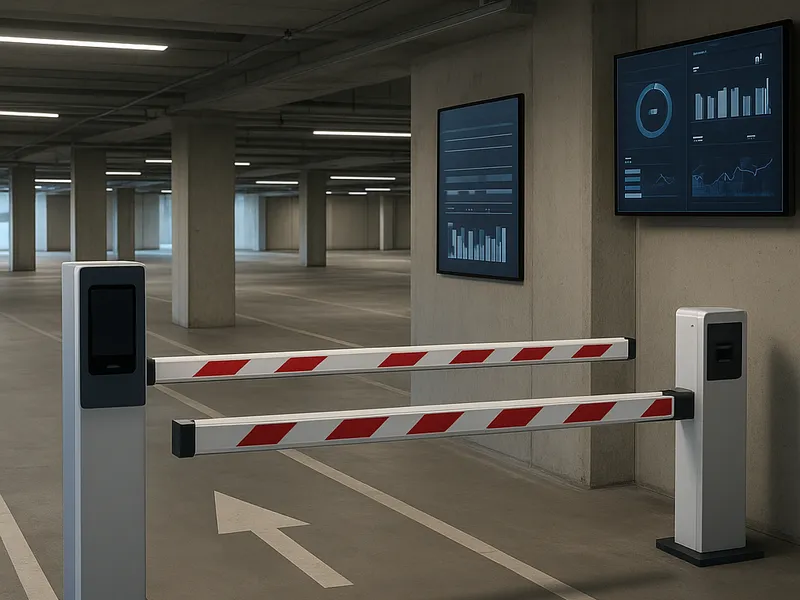
Parking Software has emerged as a cornerstone of modern urban mobility and commercial property management, turning what used to be manual ticketing and revenue collection into a data driven operation. At its core, parking software coordinates entry and exit gates, processes payments, and ties these actions to a centralized dashboard that reveals real time occupancy, turnover, and revenue performance. For city centers, airports, shopping districts, and university campuses, a well implemented system can improve space utilization, reduce congestion, and create frictionless experiences for visitors. For operators, the leverage is not merely convenience; it is the ability to forecast demand, optimize pricing, and allocate resources where they will have the most impact.
A typical parking software stack blends hardware with software as a service. On the hardware side there are entry and exit gates, ticketing kiosks, license plate recognition cameras, and payment terminals. On the software side there is a cloud based management console that handles rate setting, occupancy dashboards, anomaly alerts, and reporting. The software often includes a consumer facing mobile app or web portal for customers to locate available spaces, reserve a spot, or pay for parking remotely. Integration with third party systems such as security cameras, access control, fleet management, and city wide permit databases is common, enabling operators to synchronize parking activity with broader operational workflows. Data security and privacy are important considerations, especially for systems that process personal information or vehicle identifiers.
When it comes to choosing a vendor, several global players stand out for different strengths. Flowbird is recognized for its broad global footprint and end to end approach, combining meters, pay and display options, mobile payments, and a cloud based command center. Flowbird excels in large scale deployments like city center networks and airports, where reliability and a long term support structure are valued. SKIDATA presents a strong hardware oriented offering with a robust PARCS backbone, paired with software that emphasizes security, enterprise level reporting, and seamless integration with premium retail and transit environments. Their systems are known for durability in high traffic settings and for serving complex mixed use properties where physical access control must be tightly synchronized with payment flows. Amano McGann brings a long history in parking access revenue control with a focus on enterprise grade configurations for universities, hospitals, and municipal facilities. Their strength lies in a mature ecosystem that can be customized for intricate pricing schemes and large scale multi site operations, often with strong local service networks. T2 Systems offers flexible cloud and on premise options with a flexible API first stance, making them attractive to municipalities and universities that require tight integration with existing facilities management tools. Passport Labs, known for ParkMobile and related parking payment solutions, appeals to cities and operators prioritizing consumer facing mobile experiences and rapid deployment, supported by a strong emphasis on ease of use and city wide adoption.
In practice, the best choice depends on specific needs. If a city planner requires a scalable, aggressively supported solution that can span dozens of parking districts with a uniform experience for drivers, Flowbird or SKIDATA might be ideal. For a university campus that demands highly customized pricing, nuanced permit rules, and a robust local service presence, Amano McGann or T2 Systems could be a better fit. If the priority is a fast to deploy consumer app for motorists that helps them find spaces and pay quickly, Passport Labs can deliver strong value with a broad user base. Many operators also adopt a mixed approach, using a cloud based SaaS core for management and local hardware from a partner for gate control and sensing, enjoying the best of both worlds.
