
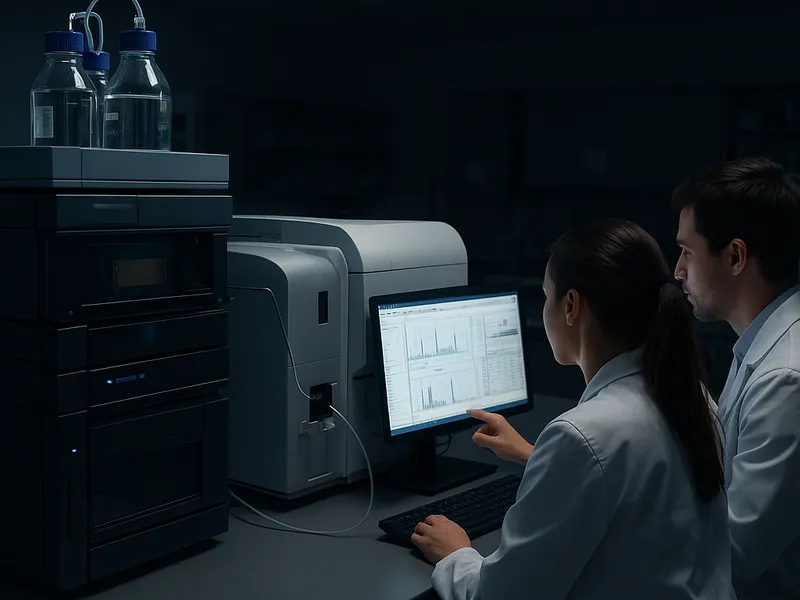
Protein mass spectrometry sits at the heart of modern proteomics, translating complex mixtures of peptides into precise molecular information that can reveal everything from protein identities to how proteins are modified and how they change in disease. The technique combines chemistry, physics and advanced computation to measure the mass to charge ratio of ions, separate thousands of species in a moment, and then record tandem fragments that illuminate sequence and structure. In practice, a typical workflow starts with a biological sample that is digested into peptides, is separated by liquid chromatography, and is then introduced into a mass spectrometer where ions are created by an ionization source, usually electrospray. The instrument first measures intact peptide ions in survey scans, and then selectively fragments a subset of ions to provide sequence information. The resulting spectra are matched against reference databases with specialized software to identify proteins and quantify their relative abundance across conditions.
The landscape of mass spectrometry has evolved into a family of platforms that trade off between speed, resolution, sensitivity and ease of use. At one end are high resolution mass analyzers such as Orbitraps and time of flight analysers, prized for accurate mass measurement and the ability to distinguish near isobaric species. In many laboratories the dominant configuration uses electrospray ionization in combination with a liquid chromatography system and a high resolution mass spectrometer in a tandem arrangement. This setup enables data dependent acquisition where the most intense ions are repeatedly selected for fragmentation, and data independent acquisition where fragmentation occurs across broader windows to build more comprehensive spectral libraries. Another common arrangement uses triple quadrupole instruments aimed at targeted quantification with exceptional sensitivity and dynamic range, which is particularly valuable for clinical assays and biomarker validation. In some cases, instruments that integrate ion mobility separation offer an extra dimension of separation in addition to m over z resolution, improving coverage of complex samples.
The major producers that supply the instruments and the broader ecosystem include a handful of large suppliers and a thriving network of service partners. Thermo Fisher Scientific is widely recognized for the Orbitrap family. The Orbitrap platforms deliver outstanding mass accuracy and resolution, and are supported by a large ecosystem of compatible software and consumables. Bruker provides a complementary portfolio that includes high resolution maXis instruments and the innovative timsTOF series that incorporate trapped ion mobility, enabling rapid data collection with rich separations of ions by shape and charge. Waters is well known for its Xevo series and SYNAPT platforms that combine high sensitivity with robust quantitative capabilities and a breadth of integrated data analysis tools. Agilent Technologies offers quadrupole time of flight and high resolution instruments with strong performance for targeted and untargeted proteomics, while Shimadzu supplies compact LCMS systems and reliable hardware that appeal to labs with constrained space or budget. For buyers and researchers, choosing among these brands comes down to the balance of performance, software integration, service availability, and total cost of ownership.
