
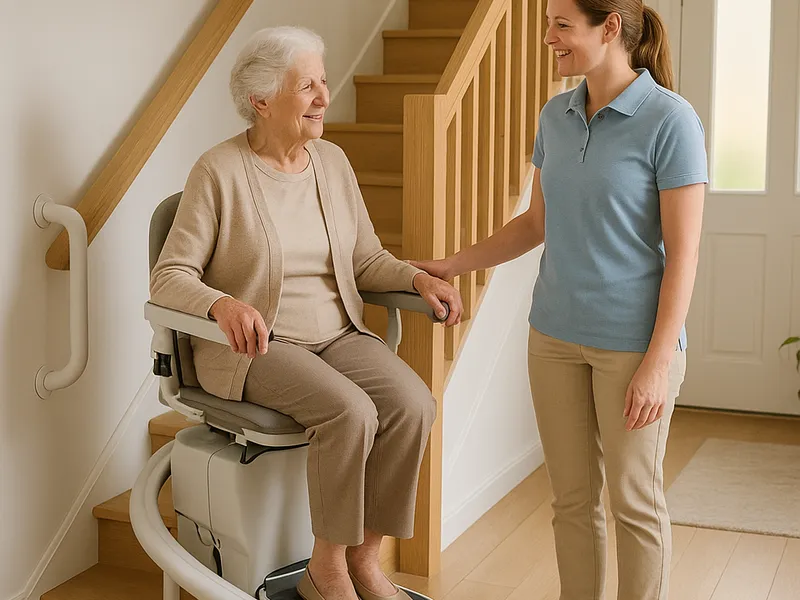
A stair lift is more than a convenience for seniors; it is a practical step toward preserving independence and safety in the home. For many older adults, stairs become a barrier to daily routines, social interaction, and medical appointments. A well-chosen stair lift can transform those obstacles into a reliable means of movement, allowing a person to stay in a familiar home environment while minimizing the risk of falls associated with climbing stairs. The decision to install a stair lift involves evaluating your staircase layout, power availability, and personal needs, then selecting a model and service plan that fit both current requirements and long-term maintenance.
Understanding what a stair lift does helps in making an informed choice. In its simplest form, a stair lift consists of a chair or kneeling platform mounted to a rail that runs along the staircase. The user sits or kneels, secures a belt or harness, and a motorized carriage moves along the track to the top or bottom landing. Modern stair lifts come with safety features such as seatbelts, swiveling seats for easy on and off, footrests that fold away automatically, and sensors that detect obstructions. Many units also offer battery backup so the lift remains operable during a power outage, a crucial consideration for elderly users. Indoor installations are the most common, but there are outdoor models designed to withstand weather exposure with protective covers and weatherproof rails.
Stair lifts come in two broad categories: straight and curved. Straight stair lifts travel along a single, unobstructed rail and are generally more affordable and quicker to install. Curved stair lifts are custom-made to fit complex staircases with landings, bends, or multiple flights, which makes them more expensive and time-consuming to install but essential for many homes. The choice between straight and curved is driven by the geometry of your stairs rather than personal preference alone. In addition to configuration, buyers should consider seat style, armrest height, and whether the unit will be installed on the left or right side of the staircase to match the user’s dominant turning direction and comfort level.
Protection for seniors also hinges on reliable service from reputable manufacturers and installers. When comparing providers, it’s helpful to focus on four areas: product range and customization, installation support, ongoing service, and warranty terms. A robust lineup of options should include both straight and curved models, indoor and outdoor capabilities, modular rails that can be extended or shortened, and various weight capacities. Installation support matters because a precise fit is essential for safety; professional installers assess stair width, landing dimensions, doorway clearances, and electrical access to ensure compliance with safety standards. Ongoing service is equally important; regular maintenance visits, battery maintenance checks, and responsive repair options help sustain performance over years of use. Warranties vary, but a strong plan typically covers mechanical parts and rails for several years, with some providers offering lifetime or long-term coverage on the rail system and motor.
