
Stair Lifts
Article
2025-12-16 • 5 min read

Stair Lifts

Stair lifts have become a practical and reliable solution to maintain independence and safety in multi level homes. These machines are designed to move a person up and down stairs with a motorized chair that travels along a track fixed to the stairs themsel...

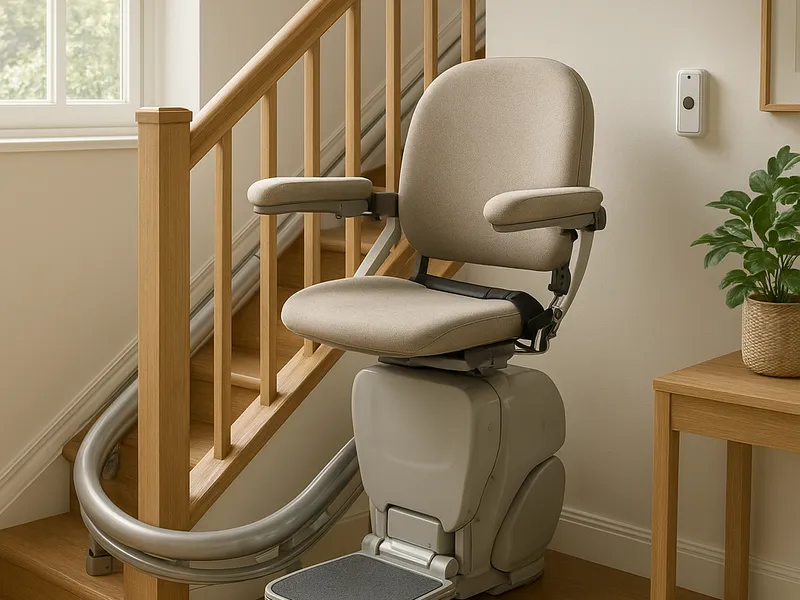
Stair lifts have become a practical and reliable solution to maintain independence and safety in multi level homes. These machines are designed to move a person up and down stairs with a motorized chair that travels along a track fixed to the stairs themselves. They are not only for the elderly; people recovering from surgery, dealing with temporary mobility issues, or caregivers looking for safer daily routines also benefit from them. Today’s stair lifts come in two main configurations that cover most homes: straight stair lifts, which run on a simple, linear track, and curved stair lifts, which navigate landings, bends, and irregular staircases. Both categories share core features such as a powered carriage, a foldable seat, a footrest, and a safety belt, but the complexity and price can vary significantly based on the staircase layout and the options chosen.

A modern stair lift is more than a chair on a rail. The track is typically anchored to the stairs, and in many cases it is possible to fold away the seat and footrest when not in use, helping to preserve space on narrow stairs. A common power setup includes battery backup so the lift can operate during a power outage, which is a meaningful safety feature for many households. The control system usually comprises a wall-mounted switch, a handheld remote, and sometimes a joystick on the armrest for ease of use. Some models offer swivel seats that rotate toward the landing for easier mounting and dismounting, and a retractable seatbelt for additional security. For busy households, the ability to fold the track away means doors, hallways, or furniture can remain unobstructed when the lift is not in use.

Choosing between straight and curved stair lifts is typically the first decision. Straight lifts are generally simpler and quicker to install because the track is a straight line along the stairs. Curved lifts require a track that matches the exact geometry of the staircase, including bends and landings, which can entail more precise measurements, customized manufacturing, and longer lead times. The challenge of curved tracks often leads to a higher installation cost but yields a seamless fit in homes with non linear staircases. Other factors that influence the choice include stair width, the presence of landings, turning radii, door placement, and whether there are stairs with a landing that requires a go around. It is also important to consider weight capacity, seat width, and the reach of the controls. A safer, more durable machine may cost more upfront but can reduce maintenance needs and service calls over time.

Stair Lifts

Several manufacturers dominate the stair lift landscape, each with its own strengths and service networks. Stannah Stairlifts is widely regarded for reliability and a broad installation footprint across many regions. Their offerings span both straight and curved configurations, and they are known for strong after-sales support and durable construction. Bruno Independent Living Aids has a long history in the United States and offers robust options for both straight and curved lifts, with emphasis on engineering that supports heavy usage and long-term servicing. Handicare focuses on comfort and quiet operation, delivering streamlined curved solutions that integrate well with architectural details and interior design. Harmar is recognized for modular, adaptable systems that can integrate with wheelchairs or other accessibility equipment, a practical choice for customers seeking a comprehensive home accessibility solution. Acorn Stairlifts has built a distinct market presence through straightforward online consultation and standardized models, often appealing to homeowners looking for a quicker, simpler procurement experience. Otolift, a European brand, is frequently praised for its premium curved lifts and refined finishing, offering a blend of aesthetics and performance. When evaluating these brands, customers should consider not only the price but also the local service network, the availability of spare parts, and the speed of support after installation.

Cost and value in stair lifts vary considerably. Straight lifts tend to be cheaper and quicker to install than curved lifts, with pricing influenced by the length of the track and the motor’s features, including battery capacity and safety extras. Curved lifts, because they require specialized manufacturing to fit irregular staircases, generally command higher prices. Beyond the upfront price, long-term value depends on installation quality, ongoing maintenance, and warranty terms. Most reputable manufacturers offer warranties that cover mechanical components and the motor for several years, with separate terms for battery life and wear parts. Regular maintenance, performed by certified technicians, can prolong the life of a stair lift and reduce the likelihood of unexpected repairs. Some providers offer service plans or bundled maintenance packages, which can be beneficial for households aiming to minimize downtime.

For potential buyers, a practical path to acquiring a stair lift includes a home assessment from an authorized dealer. A professional will measure the stairs, verify structural integrity, and determine whether the current electrical system can supply dedicated power for the lift. They will discuss options such as rail color and finish to harmonize with the interior, belt or seat options, and the ideal seat width for convenience and safety. After the assessment, expect a written quote that outlines the model, installation timeline, and post-installation support. If budget is a concern, inquire about financing options, potential insurance coverage, or country-specific programs that assist with aging in place or disability access projects. It is wise to request references or case studies from similar stair configurations and to ask about the availability of loaner lifts or temporary alternatives during installation.

In sum, a stair lift can transform daily life by removing barriers and enhancing safety. The best choice hinges on the staircase geometry, the user’s mobility needs, and the level of service one desires after installation. By comparing straight and curved models and weighing the strengths of leading manufacturers, homeowners can select a solution that feels like a natural extension of the home rather than an intrusive device. The right stair lift becomes a dependable partner in independence, enabling smooth transitions between floors and peace of mind for both users and caregivers.

← Back to all articles