
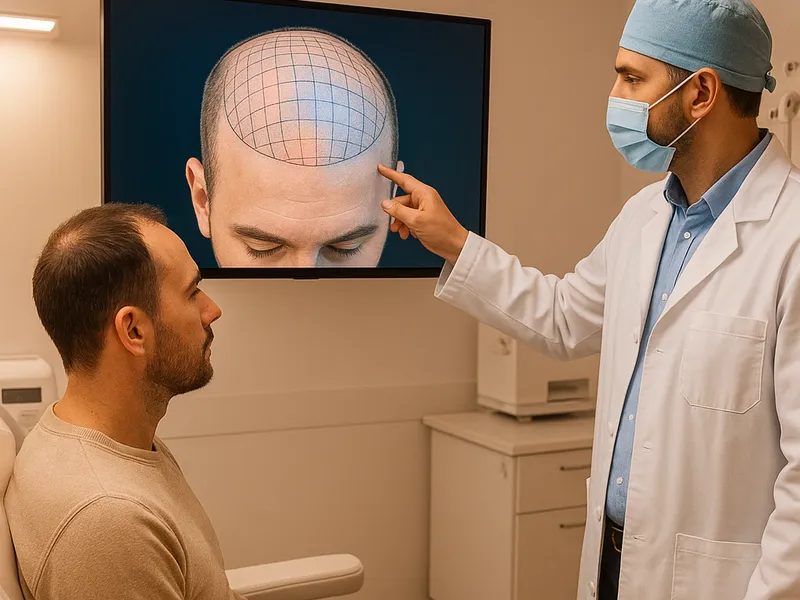
Hair restoration has moved beyond a niche luxury and into a practical option for many people experiencing pattern baldness or significant thinning. While the idea of moving hair from one part of the scalp to another might seem straightforward, the modern landscape of Transplante Capilar is a careful blend of science, artistry, and logistics. The best outcomes come from understanding the two dominant techniques, evaluating the reputation of clinics, and aligning expectations with what is realistically achievable given your donor site and hair characteristics.
In clinical practice the two most common methods are follicular unit extraction and follicular unit transplantation with a strip method. Follicular unit extraction, or FUE, involves removing individual follicular units directly from the donor area with a micro punch and transplantting them to thinning regions. The appeal of FUE lies in minimal visible scarring and the ability to place grafts with a natural direction and density. Follicular unit transplantation FUT, often referred to as the strip method, removes a strip of scalp from the donor area, from which individual follicular units are dissected under magnification before being implanted. FUT can offer dense packing when large areas need coverage but leaves a linear scar in the donor region. Some clinics now combine approaches or tailor the plan to a patient’s pattern of hair loss and donor density. Robotic assistance exists for FUE in some centers, offering precision improvements but not replacing the clinician’s judgment and appointment planning.
Selecting a clinic is the most consequential decision. Credentials matter as much as the technology used. Look first for surgeons with specific hair restoration credentials and demonstrable results. Request a gallery of before and after photos, ideally from patients with similar hair type, color, and degree of loss as yours. Ask about graft survival rates, which reflect how many transplanted hairs actually grow in the recipient area, and about the experience level of the surgical team, including assistants and anesthesia providers. The best clinics welcome you to a no-pressure consultation where you can review a personalized plan rather than a generic package.
