
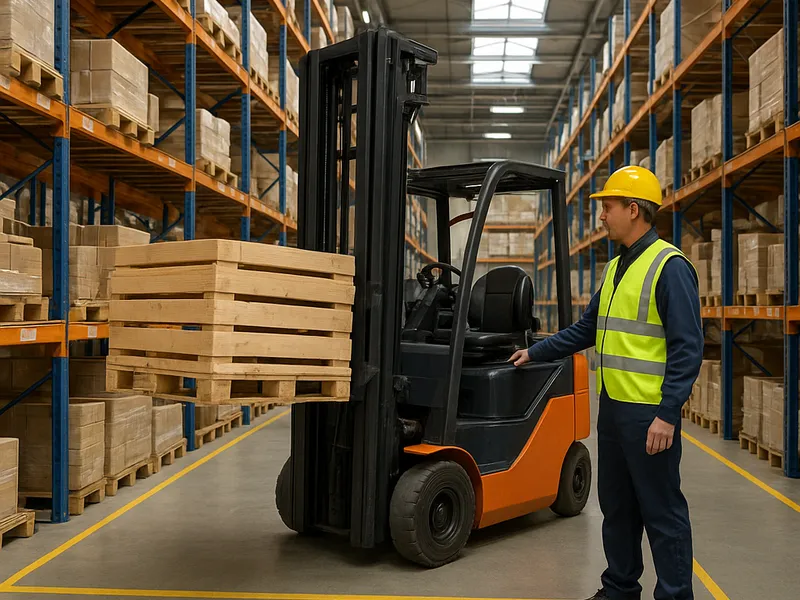
Warehouse floors hum with the quiet power of machines that lift and move bulk goods with precision and speed. In today’s distribution networks, forklifts are more than just tools; they are the backbone of efficiency, enabling accurate inventory management, faster order fulfillment, and safer handling of heavy loads. As warehouses scale, the role of the forklift evolves from a simple workhorse to a smart, integrated element of the supply chain, capable of adapting to tighter aisles, higher racks, and evolving safety standards. From small urban warehouses to expansive regional distribution centers, the right forklift strategy can cut cycle times, reduce damage to goods, and improve overall throughput.
The market now offers a broad spectrum of machines designed for specific spaces and tasks. The standard counterbalance forklift remains the workhorse of many fleets, featuring a robust chassis and a load carriage at the front balanced by the rear for stability. For high racks and narrow aisles, reach trucks and very narrow aisle models maximize vertical storage without requiring excessive floor space. Order pickers bring operators to the tiered levels of a rack to retrieve items directly from shelves, while pallet jacks provide a low cost, simple solution for lighter loads and compact environments. It is common to combine several types in a single operation to match different storage zones, loading docks, and handling requirements. The choice is not just about lift height and weight capacity; it is also about maneuverability in confined spaces, turning radius, and how the machine interfaces with the operator through controls, visibility, and seats.
Power choices shape both performance and operating costs. Electric forklifts, typically powered by deep cycle batteries, excel indoors where fumes, noise, and heat must be minimized. They offer lower maintenance and quieter operation, with growing advances in battery technology and fast charging that keep fleets productive. Internal combustion models fueled by diesel or propane are favored for heavy outdoor work, long shifts, or environments where rapid duty cycles are necessary and charging infrastructure is limited. Hybrid and dual-fuel options exist for facilities with varying needs. Beyond power, modern fleets increasingly rely on telematics and fleet management software that monitor usage, optimal charging, maintenance schedules, and safety compliance. Real time data helps managers schedule service before a component fails, reducing unplanned downtime.
Safety and training anchors every forklift decision. Operators should be certified and refreshed on load handling, stability principles, and workplace traffic rules. Some facilities implement speed governors, audible alerts for near misses, and cameras or sensors to assist visibility and load placement. Regular inspections of forks, chains, tires, hydraulics, and mast assemblies prevent performance degradation and enhance safety. Maintenance planning is not a luxury; it directly affects uptime, the longevity of equipment, and the total cost of ownership. In a mature fleet, preventive maintenance, battery care, and proper charging practices reduce both the risk of accidents and the expense of replacements.
