
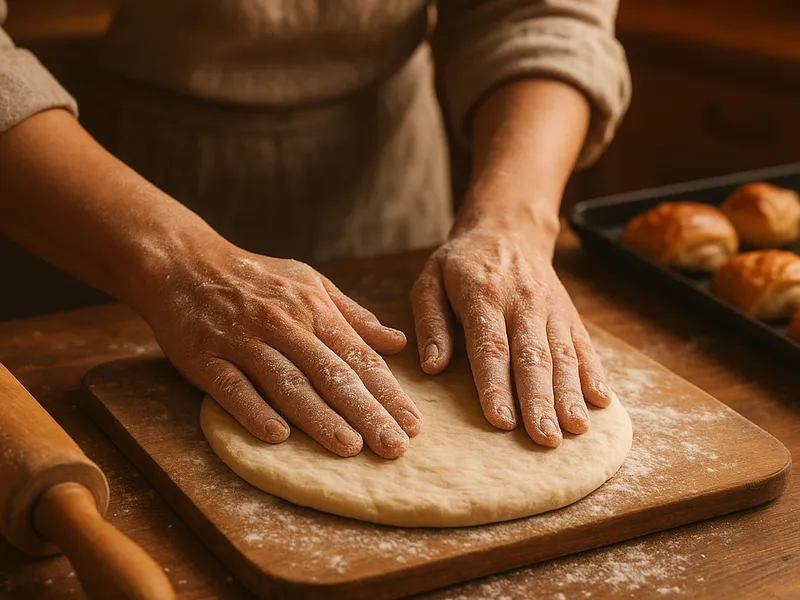
The best things to make with a basic dough are pizza, focaccia, flatbreads, dinner rolls and garlic knots, cinnamon rolls, dumplings, and fresh pasta. And if you only keep one dough on hand, make it a simple yeasted dough — flour, water, salt, and yeast at roughly 60–65% hydration (that is, 600–650g of water per 1,000g of flour). That single dough handles the first five items on the list with no changes beyond shaping; only dumplings and pasta call for a different, unleavened dough. Beginner guides consistently point to that 60–65% hydration range as the most forgiving place to start, with a rise of about 1 to 1.5 hours, or until doubled.
At a glance
- Pizza — the fastest route from dough ball to dinner; bake at 500–550°F
- Focaccia — the most forgiving option for beginners; 425°F, no shaping skill needed
- Flatbreads — no oven required; cook in a hot skillet in minutes
- Dinner rolls and garlic knots — great use for a half-batch of leftover dough
- Cinnamon rolls — the same dough, enriched with butter and sugar; 350°F
- Dumplings — a two-ingredient flour-and-water dough, boiled, steamed, or pan-fried
- Fresh pasta — 100g flour per egg, rested 30 minutes, rolled thin
Pizza
Pizza is the highest-reward use of a basic yeasted dough, and it asks the least of you: stretch, top, bake. Divide your dough into 250–280g balls, stretch each gently from the center outward (pressing, not rolling, preserves the airy rim), and keep toppings light so the crust cooks through.
Heat matters more than anything else. Set your oven as hot as it goes — 500–550°F is the sweet spot for home ovens — and bake on a preheated pizza stone or steel. A steel conducts heat far more efficiently than stone, cutting bake times to roughly 4–6 minutes versus 8–10 on stone, but either needs a long preheat: 45 minutes to an hour so the surface fully absorbs heat. If you want topping combinations beyond margherita, our roundup of top pizza recipes covers sauces, cheeses, and styles worth trying.
Focaccia
If pizza stretching intimidates you, focaccia is the answer. There is no shaping at all: press the dough into an oiled sheet pan, let it rise, dimple the surface with oiled fingertips, drizzle generously with olive oil, and scatter flaky salt and rosemary on top. The dimples hold small pools of oil that soak into the bread as it bakes.
Bake at 425°F for about 25 minutes, until deeply golden. Focaccia also tolerates neglect well — many recipes actually improve with an overnight rest in the refrigerator, which builds flavor while you sleep. Leftovers split beautifully for sandwiches.
Flatbreads
Flatbreads prove you do not need an oven at all. Divide the dough into golf-ball-sized pieces, roll each to about a quarter-inch thick, and cook in a dry cast-iron skillet over medium-high heat for one to two minutes per side, until puffed and charred in spots. Brush with melted butter or garlic oil straight off the heat.
This is the fastest option on the list, and flatbreads pair with almost anything: curries, grilled meats, hummus, or eggs.
Dinner rolls and garlic knots
A half-batch of dough that is not enough for a full pizza is exactly enough for rolls. Portion the dough into 50–60g pieces, round each into a tight ball, and let them rise until puffy before baking at 375°F until golden, roughly 15–20 minutes. For garlic knots, roll each piece into a rope, tie a loose knot, bake, then toss the hot knots in melted butter, minced garlic, parsley, and parmesan.
Both freeze well after baking.
Cinnamon rolls
Add butter, sugar, an egg, and milk to a basic dough and you have an enriched dough — the base for cinnamon rolls. Roll it into a rectangle, spread with softened butter, sprinkle generously with cinnamon sugar, roll into a log, and slice into rounds. After a second rise, bake at 350°F for about 20–25 minutes, until golden; if you own an instant-read thermometer, the centers are done at an internal temperature of around 190°F.
This is the most equipment-dependent project here — a rolling pin, a bench scraper, and a thermometer all earn their keep. If you are still building out your kit, see our guide to the best baking tools for beginners.
