
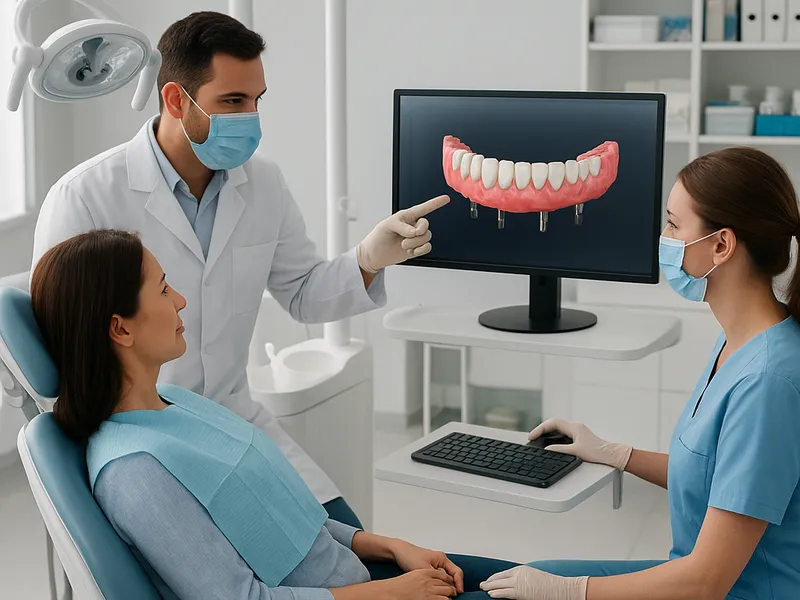
Whole Mouth Dental Implants: A Comprehensive Guide to Full Arch Rehabilitation
Whole mouth dental implants represent a treatment philosophy that aims to restore an entire set of teeth with a fixed, implant supported prosthesis. This approach is most commonly implemented as a full-arch restoration on each jaw, sometimes described in the industry by terms like all-on-one or full-arch implants. The goal is to provide a stable, comfortable bite, improved aesthetics, and the ability to eat a wider range of foods without worrying about slipping dentures. While the specifics vary by case, the underlying principle is to anchor a durable prosthetic to several strategically placed implants, creating a robust and predictable outcome for most patients who have lost most or all of their natural teeth.
How the concept works in practice
In a typical full-arch implant plan, four to six implants are placed in each jaw to support a fixed prosthesis that spans the arch. The surgeon’s plan considers bone quality, bite forces, and the planned position of the teeth to distribute stress evenly. One widely known protocol is the four-implant approach that uses two implants in the front and two in the back of each jaw, allowing a rigid bridge to be firmly screwed into place. Some cases may employ more implants for additional support or to accommodate surgeries that require bone augmentation. Digital planning tools, CT imaging, and sometimes surgical guides help the clinician position implants precisely, minimizing surgical time and enhancing predictability.
Candidates and planning
Most adults who have experienced extensive tooth loss, long-term denture wear, or severe decay can be considered for full-arch implants, provided they are in reasonably good health and willing to commit to meticulous oral hygiene. Candidates with insufficient bone mass may need bone grafting or sinus lift procedures before implant placement, though advances in implant design and surgical technique have increased the success rate even in challenging cases. A comprehensive evaluation typically includes medical history review, clinical examination, radiographs, and digital scans that feed into a customized treatment plan. A provisional fixed prosthesis may be placed soon after surgery to restore aesthetics and function while the healing process continues, followed by a final, custom-made prosthesis after osseointegration has progressed.
The procedure and aftercare
The journey usually unfolds in stages. First, a thorough consultation and imaging are performed to map out the implant plan. Then comes the surgical phase, where titanium implants are inserted into the jawbone. After placement, a healing period allows osseointegration, during which the implants fuse with the bone. A temporary prosthesis may be attached to restore function and appearance. Once healing is complete, the clinician attaches abutments and secures a final, highly customized prosthetic that mimics natural teeth in appearance and bite dynamics. Long-term success depends on regular maintenance: diligent brushing and flossing around the implants, routine dental checkups, professional cleanings, and attention to any signs of wear or loosening of the prosthetic components.
Benefits, costs, and expectations
The major advantages of full-arch implants include improved bite stability, enhanced chewing efficiency, better speech, and a more natural look compared with traditional dentures. Comfort increases because the prosthesis is anchored rather than moved by suction or flexible tissues. That said, this option involves significant upfront costs, typically higher than conventional dentures but potentially offering longer lifespan and lower ongoing maintenance. Expenses vary widely by geography, the clinician’s experience, the chosen implant system, laboratory fees, and whether bone augmentation is needed. Financing options and bundled care plans are commonly available through clinics to help patients manage the investment. Longevity is favorable when implants are well maintained, with many patients enjoying functional restorations for ten to twenty years or longer, though individual results vary.
