
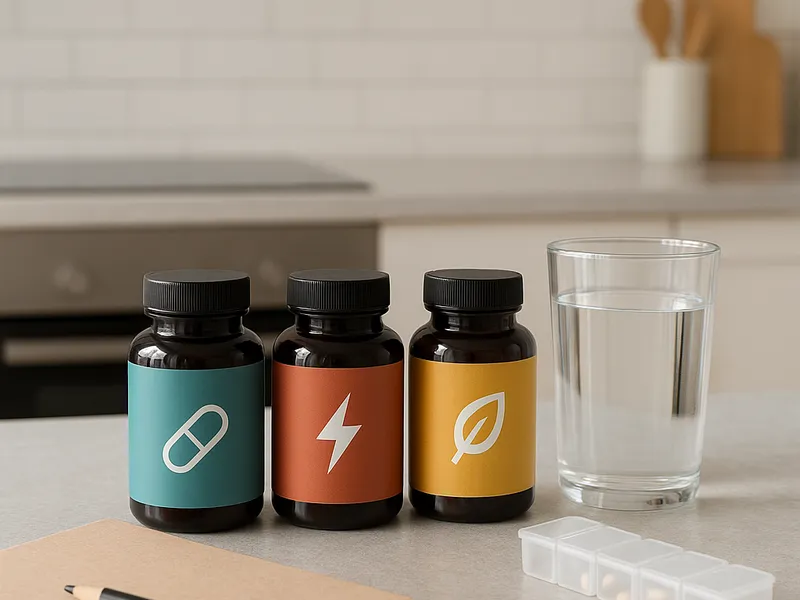
If you want the single best-supported energy supplement, our pick is creatine monohydrate for its deep evidence base and real effect on physical and mental output, with caffeine (ideally paired with L-theanine) as the most reliable acute pick-me-up. The honest truth, though, is that the supplement that helps *you* depends entirely on what is actually draining you. Most "energy" pills are overhyped unless they fix a specific deficiency or bottleneck, so we would start by matching the supplement to the cause of your fatigue.
Our picks at a glance
- Creatine monohydrate (Thorne, Klean Athlete, or Optimum Nutrition) — best overall evidence for physical and cognitive output — best for anyone training, busy, or sleep-deprived.
- Caffeine + L-theanine — fastest, most reliable acute energy without the jitters — best for focus and workouts on demand.
- Iron (only if deficient) — fixes the most common real cause of unexplained fatigue — best for people, especially menstruating women, with diagnosed low iron.
- Vitamin B12 (only if low) — restores energy when a genuine deficiency exists — best for vegans, older adults, and those on metformin/acid blockers.
- Rhodiola rosea — modest help for mental fatigue under stress — best for high-stress periods and burnout.
- CoQ10 (ubiquinol) — supports cellular energy when levels are low — best for older adults and statin users.
How to choose
The biggest mistake is buying a generic "energy" blend and hoping. Here is what actually matters.
- Identify the cause first. Fatigue from low iron will not respond to B12, and stress-driven exhaustion will not respond to iron. If you are deficient in something, correcting that deficiency is the only intervention that reliably restores energy. If you are already replete, adding more does little.
- Demand third-party testing. Supplements are loosely regulated. Look for NSF Certified for Sport, Informed Choice/Informed Sport, or USP marks, which verify the label matches the bottle and screen for contaminants. This matters most if you compete in a tested sport.
- Pick proven forms and doses. Creatine *monohydrate* is the studied form (3-5 g/day); skip pricier "advanced" versions. Caffeine works at roughly 3-6 mg/kg body weight. CoQ10 trials use 100-300 mg/day.
- Be honest about timelines. Caffeine works in under an hour. Creatine, iron, B12, and CoQ10 take weeks to show effects, so do not judge them after a few days.
- Treat supplements as a top-up, not a fix. Reviewers and clinicians consistently note that sleep, hydration, movement, and nutrition outperform any pill. Supplements help at the margins.
Creatine monohydrate
Creatine is one of the most researched supplements in existence. It helps your cells regenerate ATP quickly, which improves strength, high-intensity performance, and lean muscle, and there is growing evidence it supports cognition, especially when you are sleep-deprived or older.
- Pros: Strong evidence, cheap per serving, safe long-term, benefits both body and brain.
- Cons: Not an instant "buzz"; takes a couple of weeks to saturate; may cause slight water retention early on.
- Best for: Almost anyone wanting a foundational daily supplement, particularly active or busy people.
- Skip it if: You want an immediate energy hit rather than a steady baseline improvement.
We would choose a single-ingredient, tested option such as Thorne Creatine or Klean Athlete (both NSF Certified for Sport) for purity, or Optimum Nutrition Micronized Creatine (Informed Choice) on a budget. Price tier: $ to $$.
Caffeine + L-theanine
For genuine on-demand energy, nothing beats caffeine. Pairing it with L-theanine (an amino acid found in tea) smooths the experience, reducing the jitters and crash while preserving the focus.
- Pros: Fast, reliable, well-studied for both endurance and mental focus; cheap.
- Cons: Tolerance builds; can disrupt sleep if taken late; not a cure for underlying fatigue.
- Best for: Workouts, deadlines, and the afternoon slump.
- Skip it if: You are sensitive to stimulants, pregnant, or struggle with sleep or anxiety.
Look for capsules pairing roughly 100-200 mg caffeine with 200 mg L-theanine, or simply add L-theanine to your coffee. Price tier: $.
Iron (only if deficient)
Iron carries oxygen in your blood, and low iron is one of the most common and overlooked causes of real exhaustion, especially in menstruating women, endurance athletes, and plant-based eaters.
- Pros: Dramatic energy recovery when you are genuinely deficient.
- Cons: Useless and potentially harmful if you are not low; can cause constipation and nausea.
- Best for: People with confirmed low ferritin or iron-deficiency anemia.
- Skip it if: You have not tested low. Do not supplement iron blindly; get bloodwork first.
Gentler forms like ferrous bisglycinate are easier on the stomach. Price tier: $.
Vitamin B12 (only if low)
B12 is essential for red blood cell formation and energy metabolism. A deficiency causes fatigue, but if you are already replete, extra B12 will not give you a further lift despite the marketing on energy shots.
