
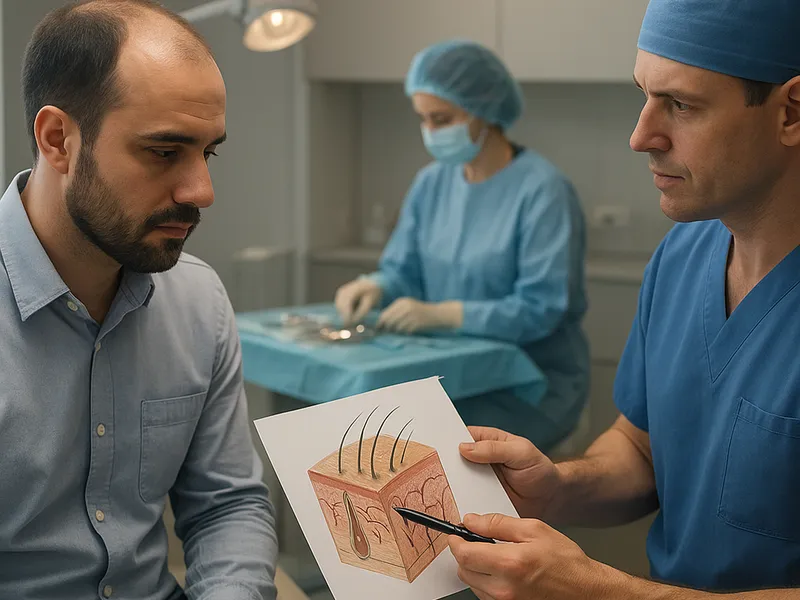
Hair restoration has evolved into a mature field that blends surgical precision with aesthetic goals. For many people dealing with thinning hair or balding, a hair transplant offers a lasting solution that can restore confidence and facial framing. Whether you’re considering moving from dense, natural-looking hairline design to a fuller crown or simply want to replace a receding front, the decision involves not just choosing a technique but selecting a clinic and a surgeon whose approach aligns with your expectations.
The most common surgical approaches are follicular unit extraction and follicular unit transplantation. In FUE, individual follicle units are harvested from a donor area and implanted into thinning or balding regions. FUT, also known as strip harvesting, involves removing a strip of scalp from the donor area, dissecting it into follicular units, and transplanting them. FUE tends to leave minimal scarring and often allows a quicker recovery, while FUT can be efficient for larger graft counts and can be cost-effective in some clinics. A newer variant is robotic-assisted FUE, which uses computer-guided extraction and placement to optimize precision and consistency. Each method has its own considerations regarding scarring, recovery time, graft yield, and the surgeon’s expertise.
Before any surgery, most clinics require a thorough consultation that includes your medical history, scalp examination, and a personalized plan for graft numbers and hairline design. The donor area must supply enough healthy follicles to achieve your goals, and the surgeon will assess scalp elasticity, hair characteristics such as curl and shaft diameter, and your future expectations. A reputable clinic will show you donor area density, preoperative photos, and a realistic timeline for results. It is essential to understand that hair transplantation does not create new hair growth where there is no follicle population; rather, it relocates existing follicles to denser regions.
The post-operative course is an important part of the journey. Expect some swelling, mild discomfort, and a scalp that feels tight for several days. Grafts need time to anchor securely, so patients are advised to avoid strenuous activity for a period and to follow strict hygiene guidelines. Results typically emerge gradually as the transplanted hair sheds its initial “shock” phase and regrows in three to six months, with the full effect visible at around a year. Maintenance treatments such as minoxidil or finasteride may be recommended post-transplant to preserve existing hair and maximize density. Realistic expectations are crucial, as the final density depends on donor supply, scalp laxity, and the number of grafts implanted.
With global demand for hair transplants, several clinics and networks have established strong reputations for quality, safety, and patient care. Bosley, based in the United States, has built a long-standing brand around hair restoration with a range of options from FUE to advanced consultation services. Online resources emphasize before-and-after galleries and surgeon profiles, but pricing and availability vary by location. DHI Global Medical Group operates through a networked model that promotes Direct Hair Implantation with standardized protocols and international centers. This approach can offer consistency across clinics, but potential patients should review surgeon experience and local outcomes rather than relying on brand alone.
