
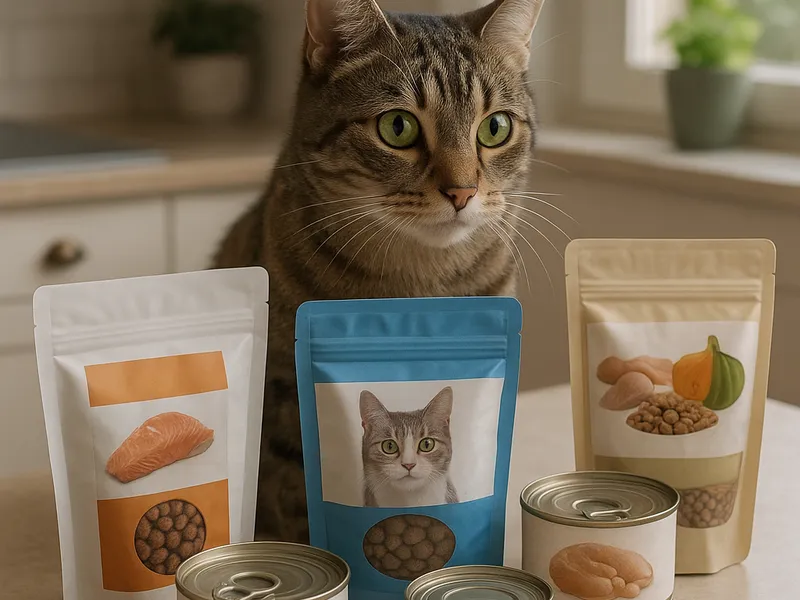
If you just want a reliable, vet-trusted answer, our pick is Purina Pro Plan for most cats: it has one of the deepest research bases, runs real feeding trials, and offers a formula for almost every life stage and sensitivity. For a science-backed alternative we would also happily feed Hill's Science Diet, and for a high-moisture, high-protein wet option we would choose Tiki Cat or the everyday-affordable Fancy Feast.
Our picks at a glance
- Purina Pro Plan — huge research base and feeding-trial-tested formulas — best for most owners who want a proven all-rounder.
- Hill's Science Diet — strong clinical research and life-stage depth — best for cats with specific health needs or who see a vet often.
- Royal Canin — precise nutrition by breed, age, and condition — best for purebreds, kittens, or seniors needing targeted formulas.
- Tiki Cat — very high protein, low/no carbs, lots of moisture — best for cats that do well on a meat-forward wet diet.
- Fancy Feast — affordable, palatable, endless variety — best for picky eaters and budget-conscious households.
How to choose
Cat food marketing is loud, but only a few things actually matter when you buy.
- AAFCO statement. Look on the label for a line saying the food is "complete and balanced" for your cat's life stage (kitten, adult, or all life stages). This is the single most important box to tick. Foods that were "formulated to meet" standards are fine; those that passed "feeding trials" are the gold standard.
- Animal protein first. Cats are obligate carnivores. A named meat (chicken, turkey, salmon, beef) should lead the ingredient list rather than corn, wheat, or vague "meat by-products" alone.
- Wet, dry, or both. Wet food adds moisture, which helps cats prone to urinary or kidney issues and helps with weight control; dry food is cheaper, stores easily, and works in automatic feeders. Many vets suggest a mix.
- Life stage and health needs. Kittens, adults, and seniors have different requirements, and cats with conditions (kidney disease, allergies, weight problems) may need a prescription or specialty line. Match the food to your cat, not to the prettiest bag.
- Price tier and consistency. A food your cat will eat consistently beats a "perfect" food it refuses. Budget ($), mid ($$), and premium ($$$) lines from reputable makers are all viable.
Purina Pro Plan
A mainstream, widely vet-recommended line that spans dry and wet, every life stage, and many specialty needs (sensitive skin and stomach, weight management, indoor, hairball).
Pros: Deep nutritional research, runs actual feeding trials, consistent quality control, easy to find, broad range so you can stay in one brand as your cat ages.
Cons: Some lines include grains and by-products that ingredient-purists dislike; premium sub-lines push into $$$.
Best for: Almost any owner who wants a proven, no-fuss food. Skip it if you specifically want a grain-free, meat-only formula above all else.
Hill's Science Diet
A long-standing, science-led brand veterinarians frequently trust, with strong clinical research and a formula for nearly every age and condition.
Pros: Rigorous testing aligned with AAFCO standards, excellent life-stage and therapeutic depth, reliable for cats with medical needs.
Cons: Mid-to-premium pricing ($$ to $$$); ingredient decks emphasize formulation over trendy "clean label" marketing.
Best for: Cats with specific health concerns or owners who want a vet-aligned brand. Skip it if you are shopping purely on price.
Royal Canin
Known for unusually targeted formulas, including breed-specific, kitten, senior, and prescription diets, all meeting AAFCO guidelines.
Pros: Precise nutrition by need, broad veterinary backing, distinctive kibble shapes designed to encourage chewing.
Cons: Premium pricing ($$$); the breed-specific angle is more useful for some cats than others.
